Loading...
Done


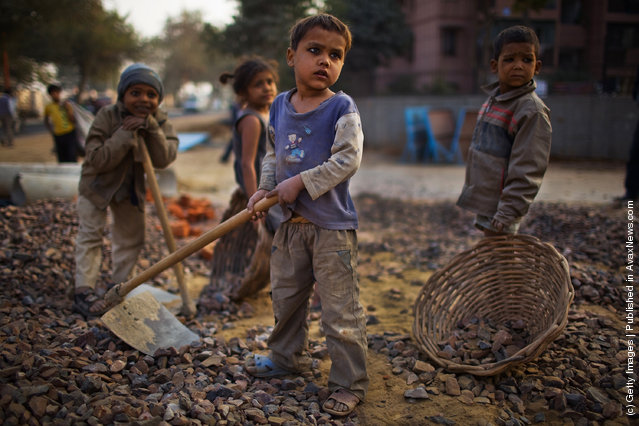
Indian children work nearby to their parents at a construction project in front of the Jawaharlal Nehru Stadium on January 30, 2010 in New Delhi, India. The children accompany their parents to the work site, where if they are prepared to work, they will receive money for bread an milk and be provided with dinner by the contractor. The sheer scale of the project has drawn an enormous population of migrant workers from all over India.
Details
20 May 2011 07:00:00


The original costumes for Star Wars character Darth Vader stand on display at “Star Wars: The Exhibition” at County hall on May 04, 2007 in London, England. (Photo by MJ Kim/Getty Images)
Details
14 Sep 2011 01:37:00
A rare 52.82-carat white diamond ring

A Sotheby's employee holds a rare 52.82-carat white diamond ring at Sotheby's auction house on April 12, 2010 in London, England. Price: 7 million USD. (Photo by Dan Kitwood/Getty Images)
Details
05 Oct 2011 13:21:00
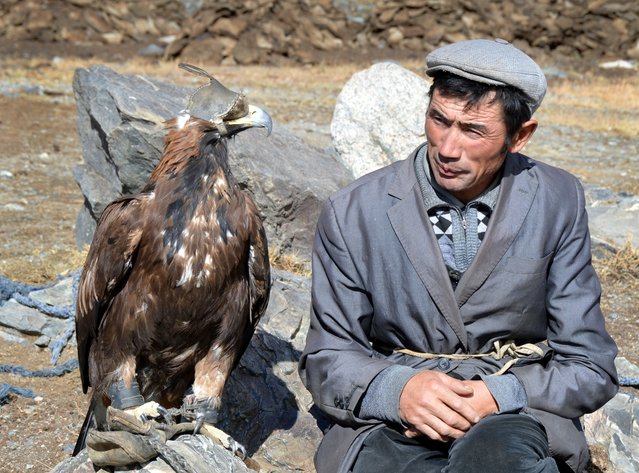
Hunter Berek and his eagle outside his home. (Photo by Brad Ruoho/The Star Tribune)

“I’d come to the Altai Mountains on an Adventure Sherpas tour. Our group of 12 was made up mostly of Minnesotans who’d left warm weather and falling leaves for frosty Mongolia. We’d come to sleep in cozy ger tents, the traditional yurt abode of the Mongolian steppe; sip mare’s milk tea; climb mountain glaciers; ride horses to an ancient battle site, and attend the annual Eagle Hunting Festival in Ölgiy...”. – Kathryn Kysar via The Star Tribune. Here: hunter Berek and his eagle outside his home. (Photo by Brad Ruoho/The Star Tribune)
Details
11 Jan 2015 12:57:00
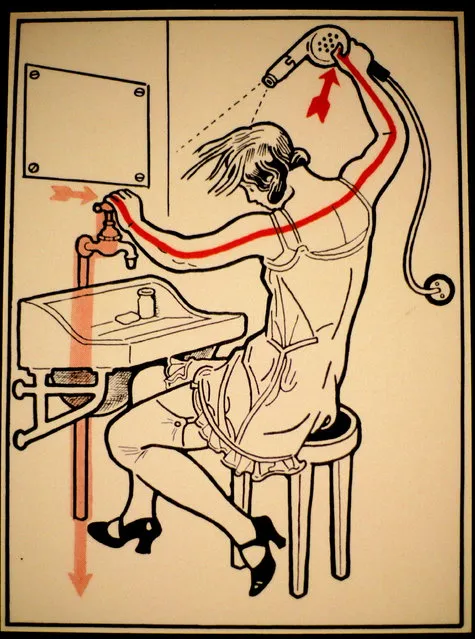
The book “Elektroschutz in 132 Bildern” (Electrical Protection in 132 Pictures) was published in Vienna in the early 1900s by a Viennese physician named Stefan Jellinek (1878-1968, a founder of the Electro-Pathological Museum). The pictures are nice and direct and unambiguous; they teach, graphically, that the surest way to kill yourself with electricity is to form a complete path from source (usually the bright red arrow) to ground (the screened back, pink arrow). Arrowheads provide the path for current flow. (Photo by The Vienna Technical Museum)

The book “Elektroschutz in 132 Bildern” (Electrical Protection in 132 Pictures) was published in Vienna in the early 1900s by a Viennese physician named Stefan Jellinek (1878-1968, a founder of the Electro-Pathological Museum). The pictures are nice and direct and unambiguous; they teach, graphically, that the surest way to kill yourself with electricity is to form a complete path from source (usually the bright red arrow) to ground (the screened back, pink arrow). Arrowheads provide the path for current flow. (Photo by The Vienna Technical Museum)
Details
11 Aug 2014 11:10:00
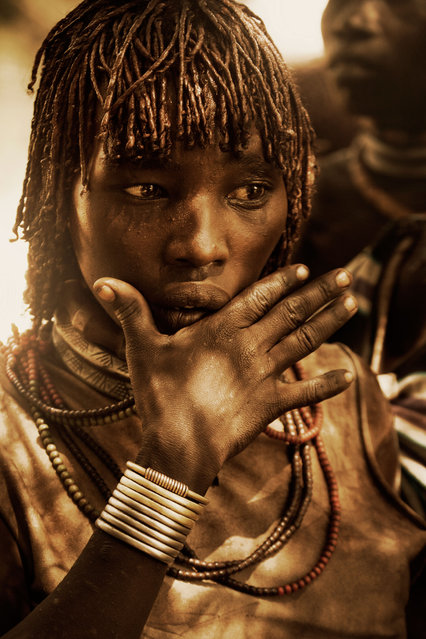
The Hamar people traditionally use red ocher clay to braid the hair of their women. (Photo by Diego Arroyo)

During his time in Ethiopia, New York-based art director and photographer Diego Arroyo spent time with the Hamar, Mursi, Dassanech, and Arbore Tribes. They, along with several others tribes, make up the 200,000 people situated in Africa’s Great Rift Valley. The people of the Omo Valley are still primarily herders and farmers, living an isolated and simple life. While they have yet to be truly touched by globalization, they could soon disappear. Their way of life is being threatened by a massive hydroelectric dam. (Photo by Diego Arroyo)
Details
13 Aug 2014 10:00:00
Pfc. Sebastian Rodriguez, machine gunner, Weapons Platoon, Lima Company, 3rd Battalion, 3rd Marine Regiment, Marine Rotational Force – Darwin, fires an M240 machine gun during a night squad-attack exercise, here, May 22, 2013. (Photo by Sgt. Sarah Fiocco/U.S. Marines)

Pfc. Sebastian Rodriguez, machine gunner, Weapons Platoon, Lima Company, 3rd Battalion, 3rd Marine Regiment, Marine Rotational Force – Darwin, fires an M240 machine gun during a night squad-attack exercise, here, May 22, 2013. (Photo by Sgt. Sarah Fiocco/U.S. Marines)
Details
17 Aug 2014 08:48:00
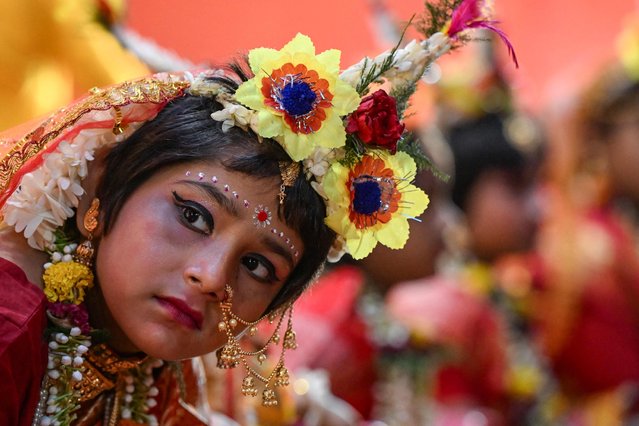
A young girl dressed as Hindu Goddess “Durga” sits near the deity's idol during the traditional “Kumari Puja” as a part of the Durga Puja festival in Kolkata on October 11, 2024. (Photo by Dibyangshu Sarkar/AFP Photo)

A young girl dressed as Hindu Goddess “Durga” sits near the deity's idol during the traditional “Kumari Puja” as a part of the Durga Puja festival in Kolkata on October 11, 2024. (Photo by Dibyangshu Sarkar/AFP Photo)
Details
26 Oct 2024 02:47:00