Loading...
Done
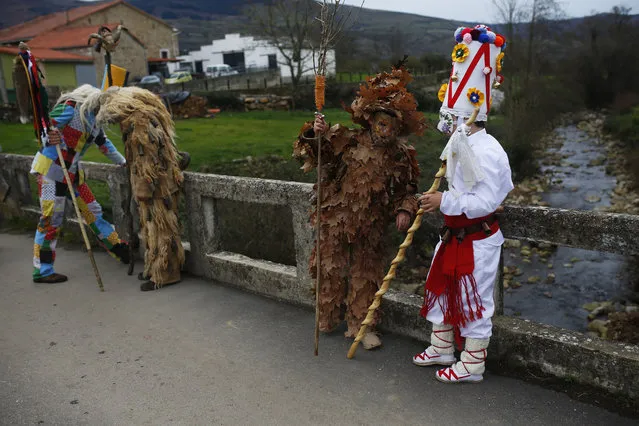
People dressed in costumes have a break while marching during the Vijanera Festival, in the small village of Silio, northern Spain, Sunday, January 3, 2016. The Vijanera masquerade, of pre-Roman origin, is the first carnival of the year in Europe symbolizing the triumph of good over evil and involving the participation of crowds of residents wearing different masks, animal skins and brightly coloured clothing with its own complex function and symbolism and becoming the living example of the survival of archaic cults to nature. (Photo by Francisco Seco/AP Photo)

People dressed in costumes have a break while marching during the Vijanera Festival, in the small village of Silio, northern Spain, Sunday, January 3, 2016. The Vijanera masquerade, of pre-Roman origin, is the first carnival of the year in Europe symbolizing the triumph of good over evil and involving the participation of crowds of residents wearing different masks, animal skins and brightly coloured clothing with its own complex function and symbolism and becoming the living example of the survival of archaic cults to nature. (Photo by Francisco Seco/AP Photo)
Details
04 Jan 2016 10:17:00
Revellers continue to party and dance through the night and day during the second day of the San Fermin Running Of The Bulls festival, on July 7, 2014 in Pamplona, Spain. The annual Fiesta de San Fermin, made famous by the 1926 novel of US writer Ernest Hemmingway “The Sun Also Rises”, involves the running of the bulls through the historic heart of Pamplona. (Photo by Christopher Furlong/Getty Images)

Revellers continue to party and dance through the night and day during the second day of the San Fermin Running Of The Bulls festival, on July 7, 2014 in Pamplona, Spain. The annual Fiesta de San Fermin, made famous by the 1926 novel of US writer Ernest Hemmingway “The Sun Also Rises”, involves the running of the bulls through the historic heart of Pamplona. (Photo by Christopher Furlong/Getty Images)
Details
08 Jul 2014 13:44:00
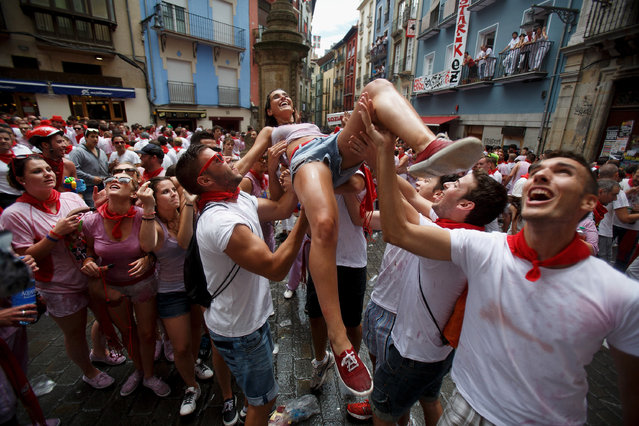
Revelers throw a woman to the air during the opening and the firing of the “Chupinazo” rocket which starts the 2014 Festival of the San Fermin Running of the Bulls on July 6, 2014 in Pamplona, Spain. The annual Fiesta de San Fermin, made famous by the 1926 novel of US writer Ernest Hemmingway entitled “The Sun Also Rises”, involves the daily running of the bulls through the historic heart of Pamplona to the bull ring. (Photo by Pablo Blazquez Dominguez/Getty Images)

Revelers throw a woman to the air during the opening and the firing of the “Chupinazo” rocket which starts the 2014 Festival of the San Fermin Running of the Bulls on July 6, 2014 in Pamplona, Spain. The annual Fiesta de San Fermin, made famous by the 1926 novel of US writer Ernest Hemmingway entitled “The Sun Also Rises”, involves the daily running of the bulls through the historic heart of Pamplona to the bull ring. (Photo by Pablo Blazquez Dominguez/Getty Images)
Details
12 Jul 2014 16:00:00
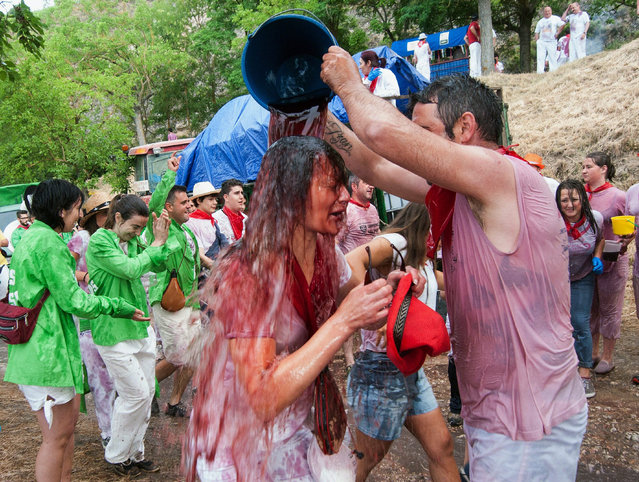
People pour wine at each other during the traditional “Battle of Wine” held as part of the Haro Wine Festival in the La Rioja region in Haro, Spain, 29 June 2016. Every year on 29 June inhabitants and tourists celebrate San Pedro's day by trowing at each other thousands of liters of Riojan wine. (Photo by Abel Alonso/EPA)

People pour wine at each other during the traditional “Battle of Wine” held as part of the Haro Wine Festival in the La Rioja region in Haro, Spain, 29 June 2016. Every year on 29 June inhabitants and tourists celebrate San Pedro's day by trowing at each other thousands of liters of Riojan wine. (Photo by Abel Alonso/EPA)
Details
30 Jun 2016 11:51:00
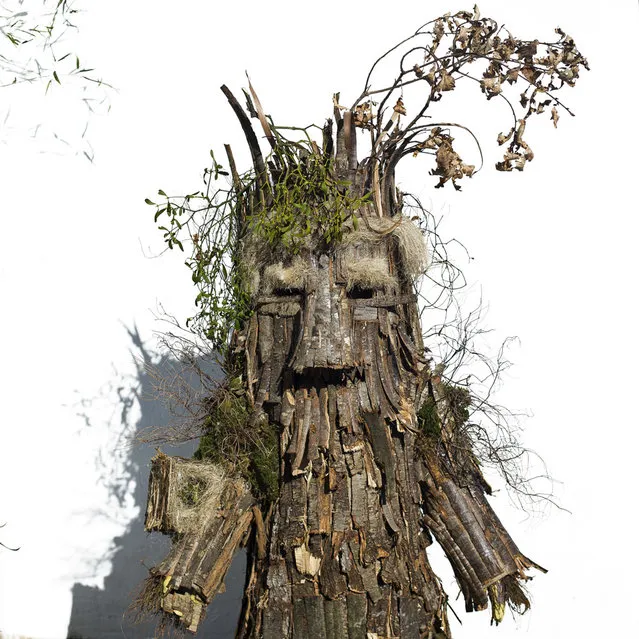
A man dressed as a  “Trapajon”, representing entities of nature, poses for a picture after taking part in the Vijanera Festival in Silio, northern Spain, Sunday, Jan. 6, 2013. The Vijanera masquerade, of pre-Roman origin, is the first carnival of the year in Europe symbolizing the triumph of good over evil and involving the participation of crowds of residents wearing different masks, animal skins and brightly colored clothing with its own complex function and symbolism and becoming the living example of the survival of archaic cults to nature. (Photo by Daniel Ochoa de Olza/AP Photo)

A man dressed as a “Trapajon”, representing entities of nature, poses for a picture after taking part in the Vijanera Festival in Silio, northern Spain, Sunday, Jan. 6, 2013. The Vijanera masquerade, of pre-Roman origin, is the first carnival of the year in Europe symbolizing the triumph of good over evil and involving the participation of crowds of residents wearing different masks, animal skins and brightly colored clothing with its own complex function and symbolism and becoming the living example of the survival of archaic cults to nature. (Photo by Daniel Ochoa de Olza/AP Photo)
Details
19 Jan 2013 13:01:00
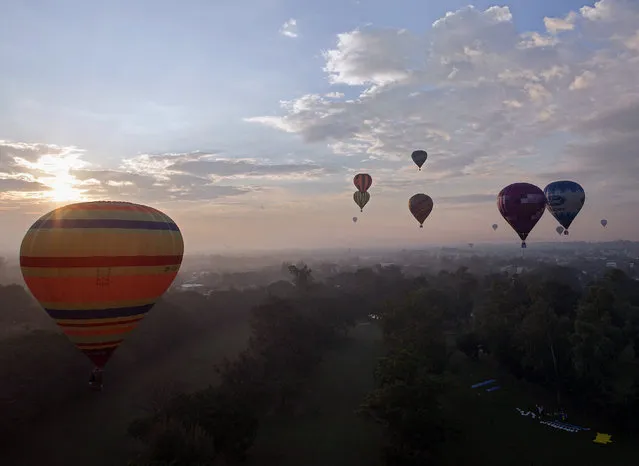
Hot air balloons fly over the sky in Chiang Mai province, northern Thailand, December 6, 2014. The two-day International Balloon festival 2014 featuring balloon pilots from Germany, Spain, Netherlands, Britain, and Czech Republic is held on December 06-07 2014 to celebrate Thai King Bhumibol Adulyadej's 87th birthday and also aimed to promote the tourism industry in Chiang Mai northern city. (Photo by Pongmanat Tasiri/EPA)

Hot air balloons fly over the sky in Chiang Mai province, northern Thailand, December 6, 2014. The two-day International Balloon festival 2014 featuring balloon pilots from Germany, Spain, Netherlands, Britain, and Czech Republic is held on December 06-07 2014 to celebrate Thai King Bhumibol Adulyadej's 87th birthday and also aimed to promote the tourism industry in Chiang Mai northern city. (Photo by Pongmanat Tasiri/EPA)
Details
13 Dec 2014 11:55:00
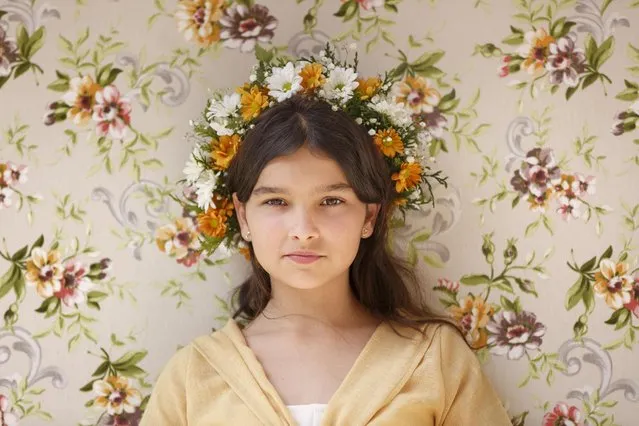
A “Maya” girl sits in an altar during the traditional celebration of “Las Mayas” on the streets in Madrid, Spain Sunday, May 10, 2015. The festivity of the Maya comes from pagan rites and dates from the medieval age, appearing in ancient documents. It takes place every year in the beginning of May and celebrates the beginning of the spring. (Photo by Daniel Ochoa de Olza/AP Photo)

A “Maya” girl sits in an altar during the traditional celebration of “Las Mayas” on the streets in Madrid, Spain Sunday, May 10, 2015. The festivity of the Maya comes from pagan rites and dates from the medieval age, appearing in ancient documents. It takes place every year in the beginning of May and celebrates the beginning of the spring. Girls between 7 and 11 years old are chosen as “Maya” and should sit still, serious and quiet for a couple of hours in altars on the street decorated with flowers and plants and afterwards they walk to the church with their family where they attend a ceremony. (Photo by Daniel Ochoa de Olza/AP Photo)
Details
14 May 2015 11:12:00
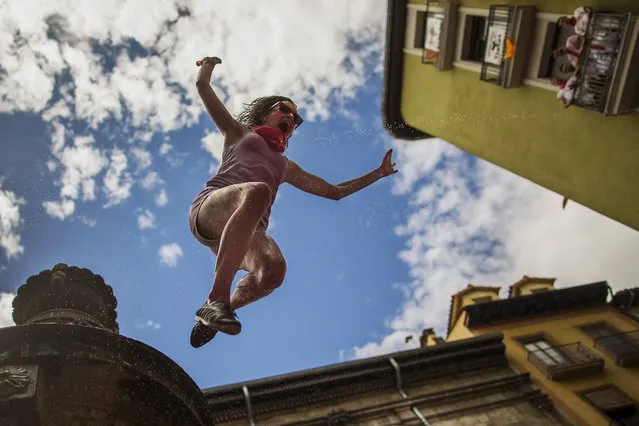
A reveler jumps from a fountain onto the crowd below, after the launch of the “Chupinazo” rocket, to celebrate the official opening of the 2014 San Fermin fiestas in Pamplona, Spain, Sunday, July 6, 2014. Revelers from around the world turned out here to kick off the festival with a messy party in the Pamplona town square, one day before the first of eight days of the running of the bulls glorified by Ernest Hemingway's 1926 novel “The Sun Also Rises”. (Photo by Andres Kudacki/AP Photo)

A reveler jumps from a fountain onto the crowd below, after the launch of the “Chupinazo” rocket, to celebrate the official opening of the 2014 San Fermin fiestas in Pamplona, Spain, Sunday, July 6, 2014. Revelers from around the world turned out here to kick off the festival with a messy party in the Pamplona town square, one day before the first of eight days of the running of the bulls glorified by Ernest Hemingway's 1926 novel “The Sun Also Rises”. (Photo by Andres Kudacki/AP Photo)
Details
09 Jul 2014 12:53:00