Loading...
Done
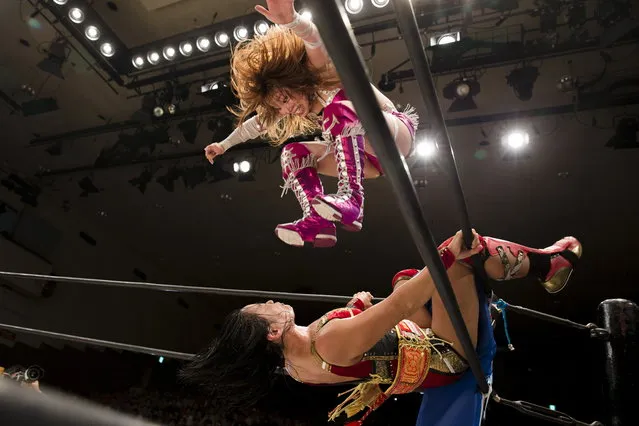
Wrestler Kairi Hojo jumps at her opponent Mieko satomura during their Stardom female professional wrestling show at Korakuen Hall in Tokyo, Japan, July 26, 2015. Professional women's wrestling in Japan means body slams, sweat, and garish costumes. But Japanese rules on hierarchy also come into play, with a culture of deference to veteran fighters. The brutal reality of the ring is masked by a strong fantasy element that feeds its popularity with fans, most of them men. (Photo by Thomas Peter/Reuters)

Wrestler Kairi Hojo jumps at her opponent Mieko satomura during their Stardom female professional wrestling show at Korakuen Hall in Tokyo, Japan, July 26, 2015. Professional women's wrestling in Japan means body slams, sweat, and garish costumes. But Japanese rules on hierarchy also come into play, with a culture of deference to veteran fighters. The brutal reality of the ring is masked by a strong fantasy element that feeds its popularity with fans, most of them men. (Photo by Thomas Peter/Reuters)
Details
14 Dec 2016 07:58:00
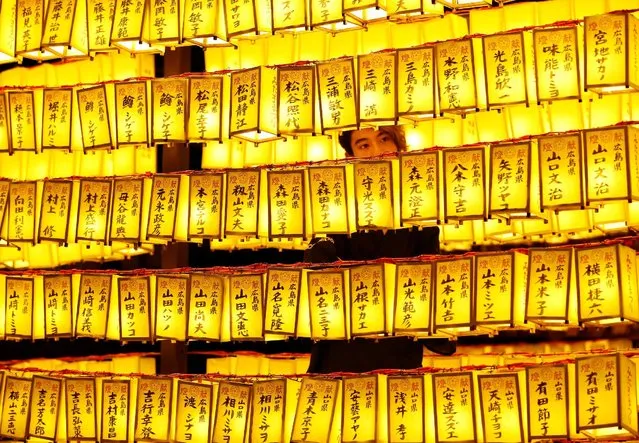
A man stands between thousands of paper lanterns, which were displayed and lit up the precincts of the shrine, where more than 2.4 million war-dead are enshrined, during the Mitama Festival at Yasukuni Shrine in Tokyo, Japan July 13, 2016. “Mitama” is a respectful word that means “the soul of a dead person” in Japanese, and this “Soul Festival” honors just that. The Yasukuni Shrine is dedicated to the honoring of the souls of those who gave their lives to defend Japan, and this festival is an early step towards the Japanese holiday season of Obon, during which Japanese people honor their deceased ancestors. (Photo by Issei Kato/Reuters)

A man stands between thousands of paper lanterns, which were displayed and lit up the precincts of the shrine, where more than 2.4 million war-dead are enshrined, during the Mitama Festival at Yasukuni Shrine in Tokyo, Japan July 13, 2016. “Mitama” is a respectful word that means “the soul of a dead person” in Japanese, and this “Soul Festival” honors just that. (Photo by Issei Kato/Reuters)
Details
14 Jul 2016 09:37:00
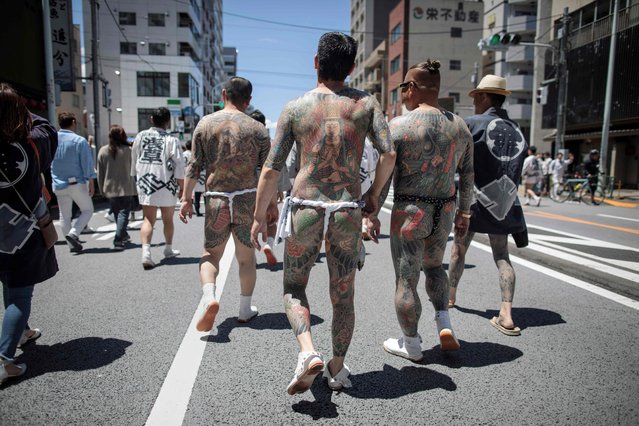
Participants with traditional Japanese tattoos (Irezumi), related to the Yakuza, walk through the Asakusa district during the annual Sanja Matsuri festival in Tokyo on May 20, 2018. Sanja Matsuri festival is a celebration for the three founders of Sensoji Temple in the Asakusa neighbourhood with nearly two million people visiting during the three-day event. (Photo by Behrouz Mehri/AFP Photo)

Participants with traditional Japanese tattoos (Irezumi), related to the Yakuza, walk through the Asakusa district during the annual Sanja Matsuri festival in Tokyo on May 20, 2018. Sanja Matsuri festival is a celebration for the three founders of Sensoji Temple in the Asakusa neighbourhood with nearly two million people visiting during the three-day event. (Photo by Behrouz Mehri/AFP Photo)
Details
17 Jul 2018 00:05:00
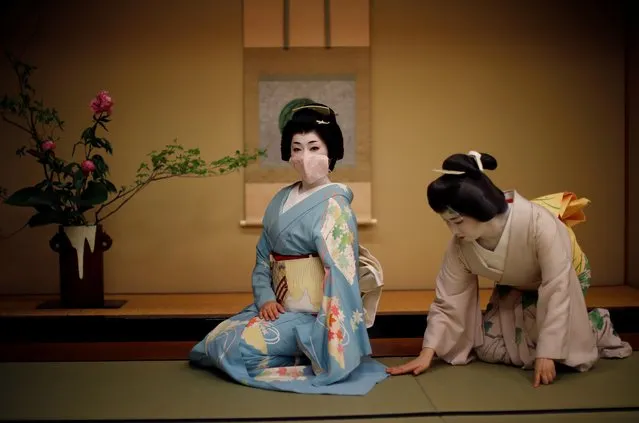
Mayu adjusts Koiku’s kimono, as Koiku wears a protective face mask while posing for a photograph, before they work at a party where they will entertain with other geisha at Japanese luxury restaurant Asada in Tokyo, Japan, June 23, 2020. The coronavirus pandemic has made Tokyo's geisha fear for their centuries-old profession as never before. Though the number of geisha - famed for their witty conversation, beauty and skill at traditional arts - has been falling for years, they were without work for months due to Japan's state of emergency and now operate under awkward social distancing rules. Engagements are down 95 percent, and come with new rules: no pouring drinks for customers or touching them even to shake hands, and sitting 2 meters apart. Masks are hard to wear with their elaborate wigs, so they mostly don't. “I was just full of anxiety”, said Mayu, 47. “I went through my photos, sorted my kimonos ... The thought of a second wave is terrifying”. (Photo by Kim Kyung-Hoon/Reuters)

Mayu adjusts Koiku’s kimono, as Koiku wears a protective face mask while posing for a photograph, before they work at a party where they will entertain with other geisha at Japanese luxury restaurant Asada in Tokyo, Japan, June 23, 2020. (Photo by Kim Kyung-Hoon/Reuters)
Details
23 Jul 2020 00:03:00


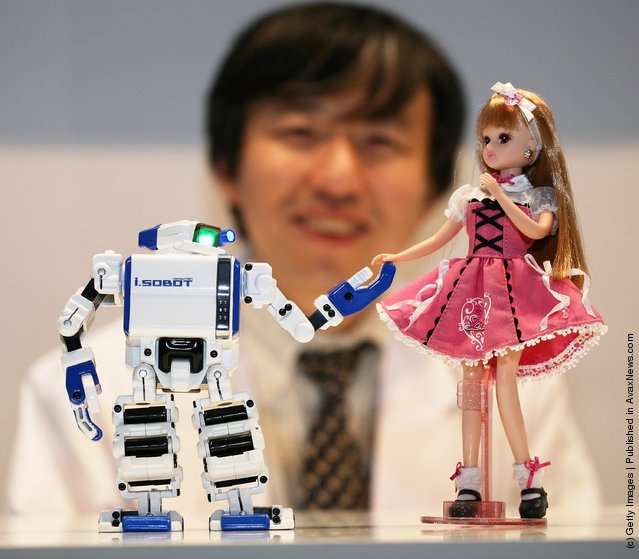
Japanese toy maker Takara Tomy's world's smallest humanoid robot “i-Sobot” is displayed during the Toy Forum 2007 on January 23, 2007 in Tokyo, Japan. The 165mm height robot is able to walk, play the drums and keep its balance. (Photo by Koichi Kamoshida/Getty Images)
Details
19 Apr 2011 13:01:00
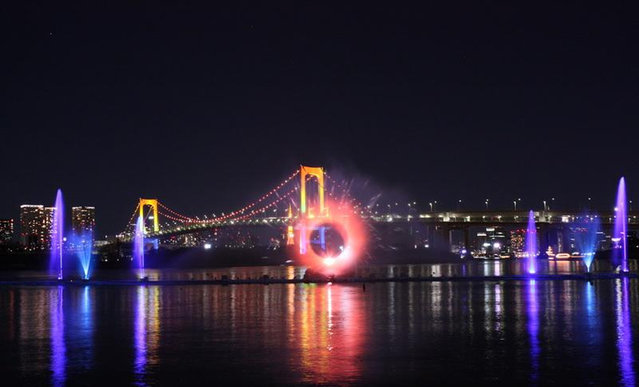
Japan Odaiba Water Illumination

An image of a breaching whale is projected on a screen created by a water fountain during the Odaiba water illumination show in Tokyo. The show, which projects images of whales, sharks, tropical fish and Easter Island statues on a water screen 23 meters tall and 60 meters wide, will be held through April 11.
Details
09 Aug 2012 12:20:00
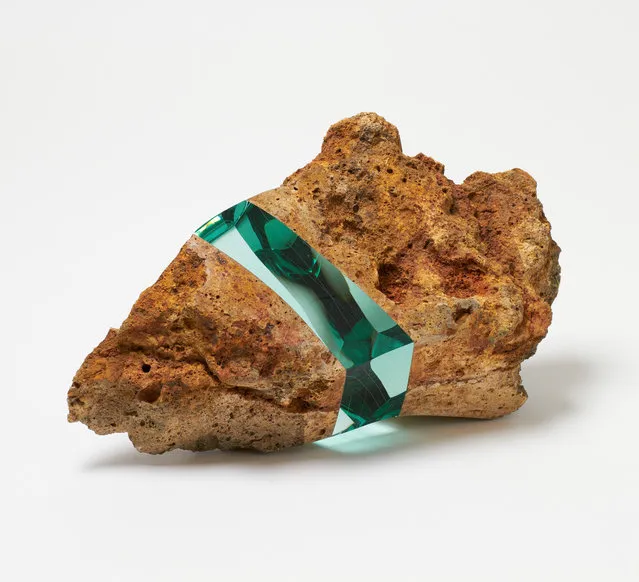
Stone with Glass Layer By Ramon Todo

Born in Tokyo, Dusseldorf-based artist Ramon Todo creates beautiful textural juxtapositions using layers of glass in unexpected places. Starting with various stones, volcanic rock, fragments of the Berlin wall, and even books, the artist inserts perfectly cut glass fragments that seem to slice through the object resulting in segments of translucence where you would least expect it.
Details
07 Nov 2013 09:28:00
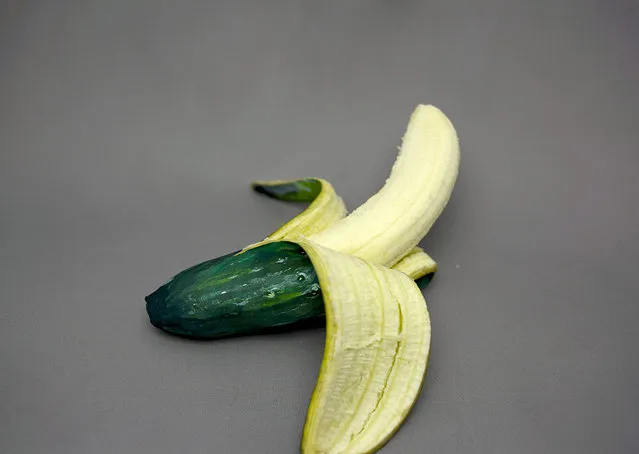
It’s Not What It Seems By Artist Hikaru Cho

Japanese artist Hikaru Cho is already well-known for her bizarre and realistic body paintings, but now the Tokyo-based artist has applied her talent to everyday food items as well. In her playful “It’s Not What It Seems” series, she turns common foods into other kinds of food using only acrylic paint and her extraordinary talent.
Details
22 Mar 2014 11:32:00