Loading...
Done
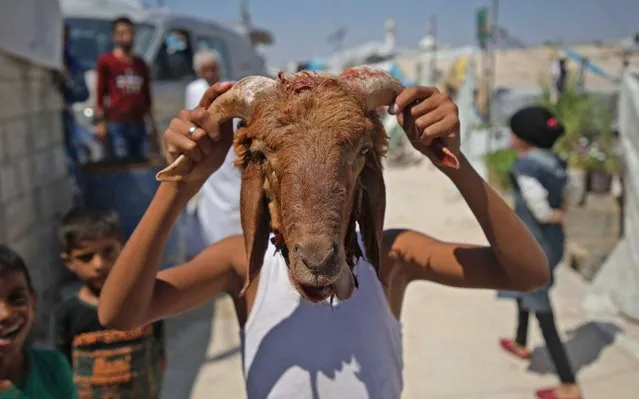
A Syrian boy plays with the head of a sacrificed sheep at a DIP camp for Interally Displaced Persons near the town of Aqrabat in Syria's northern Idlib province on August 12, 2019. Known as the “big” festival, Eid Al-Adha is celebrated each year by Muslims sacrificing various animals according to religious traditions, including cows, camels, goats and sheep. The festival marks the end of the Hajj pilgrimage to Mecca and commemorates Prophet Abraham's readiness to sacrifice his son to show obedience to God. (Photo by Aaref Watad/AFP Photo)

A Syrian boy plays with the head of a sacrificed sheep at a DIP camp for Interally Displaced Persons near the town of Aqrabat in Syria's northern Idlib province on August 12, 2019. Known as the “big” festival, Eid Al-Adha is celebrated each year by Muslims sacrificing various animals according to religious traditions, including cows, camels, goats and sheep. The festival marks the end of the Hajj pilgrimage to Mecca and commemorates Prophet Abraham's readiness to sacrifice his son to show obedience to God. (Photo by Aaref Watad/AFP Photo)
Details
15 Aug 2019 00:05:00
A woman with “I'm Charlie” written on her hand takes part in a Hundreds of thousands of French citizens solidarity march (Marche Republicaine) in the streets of Paris January 11, 2015. French citizens will be joined by dozens of foreign leaders, among them Arab and Muslim representatives, in a march on Sunday. (Photo by Yves Herman/Reuters)

A woman with “I'm Charlie” written on her hand takes part in a Hundreds of thousands of French citizens solidarity march (Marche Republicaine) in the streets of Paris January 11, 2015. French citizens will be joined by dozens of foreign leaders, among them Arab and Muslim representatives, in a march on Sunday in an unprecedented tribute to this week's victims following the shootings by gunmen at the offices of the satirical weekly newspaper Charlie Hebdo, the killing of a police woman in Montrouge, and the hostage taking at a kosher supermarket at the Porte de Vincennes. (Photo by Yves Herman/Reuters)
Details
12 Jan 2015 14:49:00
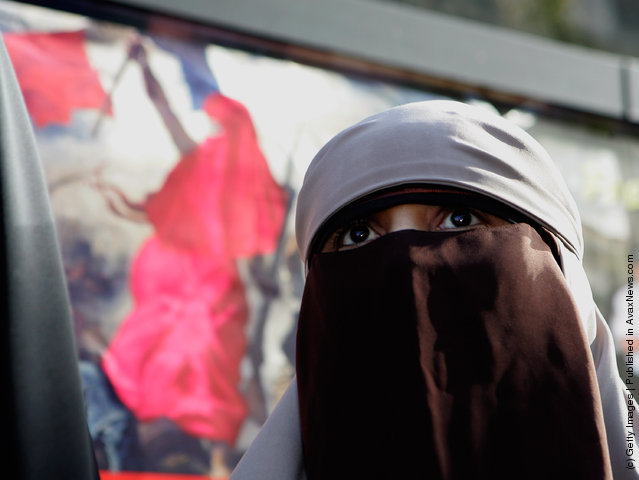
Kenza Drider, 32, announces her candidacy for France's 2012 Presidential election

Kenza Drider, 32, announces her candidacy for France's 2012 Presidential election on September 22, 2011 in Meaux, France. Drider is the first French Muslim woman to wear a niqab and run for President despite France's nationwide ban on the face veil, which today saw 32-year-old mother of three Hind Ahmas and Najate Nait Ali both being fined after being caught wearing the niqab in public in the Parsisan district of Meaux back in May when the law first came into force. (Photo by Franck Prevel/Getty Images)
Details
23 Sep 2011 10:00:00
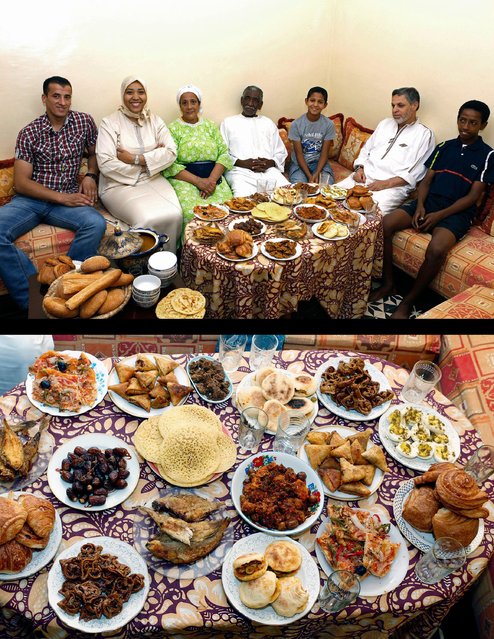
This combination of two photos taken on July 5, 2014, shows the Aazzab family waiting to break their fast, top, and their meal, bottom, during the holy month of Ramadan in Casablanca, Morocco. (Photo by Abdeljalil Bounhar/AP Photo)

This combination of two photos taken on July 5, 2014, shows the Aazzab family waiting to break their fast, top, and their meal, bottom, during the holy month of Ramadan in Casablanca, Morocco. For the millions of Muslims abstaining from food and drink from sunrise to sunset every day during Islam's holiest month of Ramadan, that first sip of water after a grueling fast is by far the most anticipated moment of the day. (Photo by Abdeljalil Bounhar/AP Photo)
Details
29 Jul 2014 11:37:00
Protestors Demonstrate Against The UN Intervention In Libya

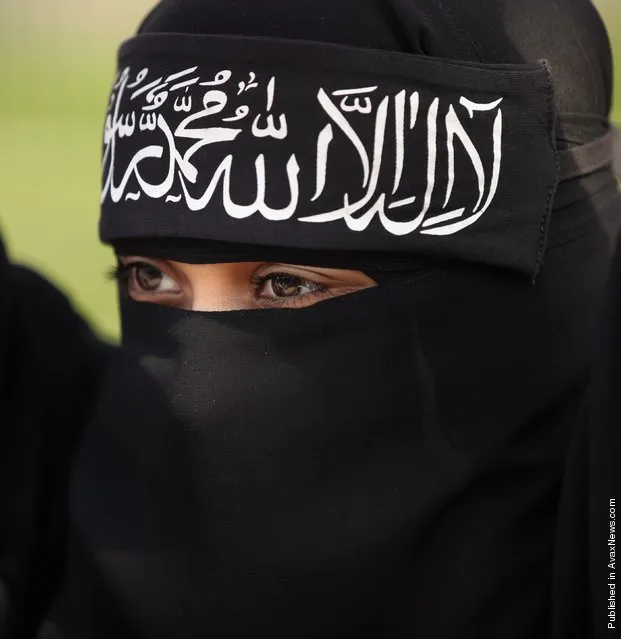
A muslim woman protests opposite Downing street against the military action taken by the UK, USA and France against Libya on March 21, 2011 in London, England. The Pentagon says that United States and United Kingdom military forces have fired more than 110 missiles, with French planes attacking pro-Gaddafi forces near rebel-held Benghazi. (Photo by Oli Scarff/Getty Images)
Details
21 Mar 2011 18:40:00
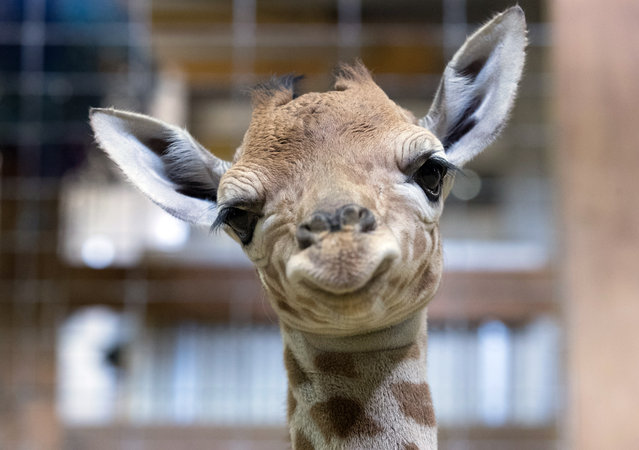
One-day-old baby giraffe calf Gus looks at the camera at Noah's Ark farm on May 12, 2017 in Bristol, England. The baby giraffe was born yesterday at the zoo farm in North Somerset. In the wild, populations of giraffes are suffering from a continuing decline, with 97,500 estimated in Africa in 2015. Since 1985 the total giraffe population has fallen by 35%. New arrival Gus joins brothers George, 4 and Geoffrey, 2. (Photo by Matt Cardy/Getty Images)

One-day-old baby giraffe calf Gus looks at the camera at Noah's Ark farm on May 12, 2017 in Bristol, England. The baby giraffe was born yesterday at the zoo farm in North Somerset. In the wild, populations of giraffes are suffering from a continuing decline, with 97,500 estimated in Africa in 2015. Since 1985 the total giraffe population has fallen by 35%. New arrival Gus joins brothers George, 4 and Geoffrey, 2. (Photo by Matt Cardy/Getty Images)
Details
14 May 2017 08:05:00
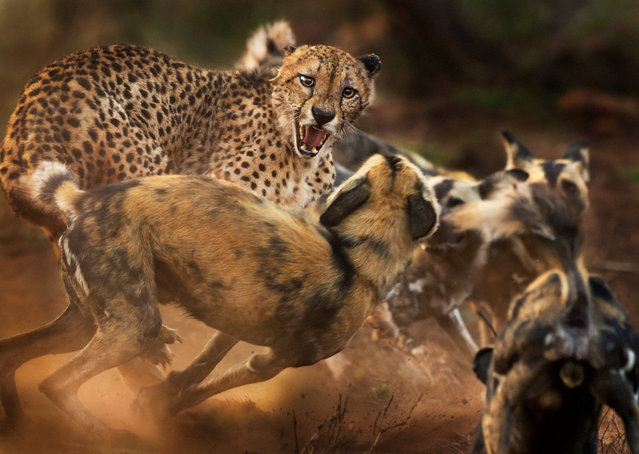
A lone male cheetah is set upon by a pack of African wild dogs. Peter Haygarth had been following the dogs as they hunted in Zimanga Private Game Reserve in KwaZulu-Natal, South Africa. On first encountering the cheetah, the dogs were wary, but as the rest of the pack arrived, their confidence grew and they began to encircle the cat. Peter kept his focus on the cat’s face. In a few minutes the spat was over as the cheetah fled. (Behaviour: mammals category). (Photo by Peter Haygarth)

A lone male cheetah is set upon by a pack of African wild dogs. Peter Haygarth had been following the dogs as they hunted in Zimanga Private Game Reserve in KwaZulu-Natal, South Africa. On first encountering the cheetah, the dogs were wary, but as the rest of the pack arrived, their confidence grew and they began to encircle the cat. Peter kept his focus on the cat’s face. In a few minutes the spat was over as the cheetah fled. (Behaviour: mammals category). (Photo by Peter Haygarth)
Details
10 Sep 2019 00:03:00


“The Red River Hog (Potamochoerus porcus), also known as the Bush Pig (but not to be confused with P. larvatus, common name “Bushpig”), is a wild member of the pig family living in Africa, with most of its distribution in the Guinean and Congolian forests. It is rarely seen away from rainforests, and generally prefers areas near rivers or swamps.

Red River Hogs eat grass, berries, roots, insects, molluscs, small vertebrates and carrion. They are capable of causing damage to plantations. Red River Hogs typically live in herds of 6-20 members led by a dominant boar. Sows rear 3-6 piglets at a time.”

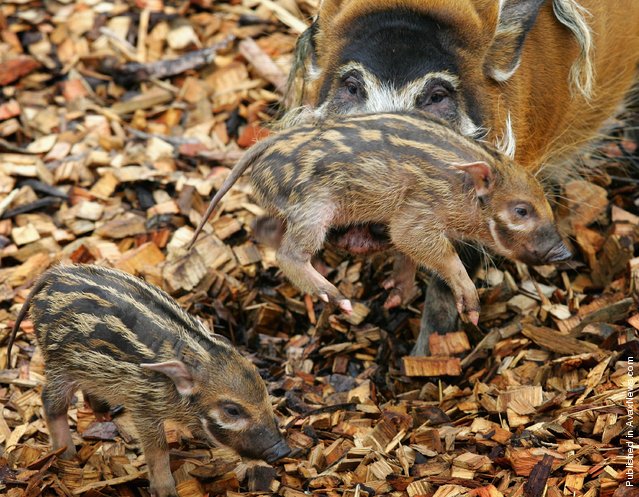
Photo: Two 17 day old red river hoglet twins forage for food next to their mother Bahiti at London Zoo on August 23, 2007 in London, England. Red River hoglets inhabit the forests and swamps of West and Central Africa. The recent additions to the London Zoo pig pen have been eagerly awaited by zoo keepers. (Photo by Chris Jackson/Getty Images)
Details
18 Mar 2011 15:15:00