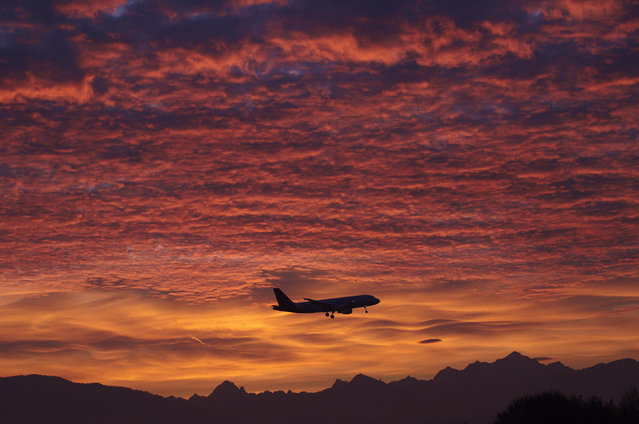
A Brussels Airlines aircraft prepares for landing in Cointrin airport during sunrise over the Mont Blanc in Geneva December 1, 2011. (Photo by Denis Balibouse/Reuters)
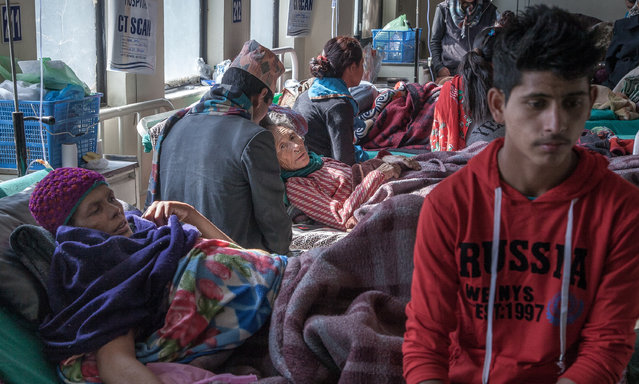
One of the most significant challenges related to cancer in Nepal is the lack of awareness around the prognosis of the disease, as many patients, their families and even healthcare professionals consider cancer to be an incurable disease at any stage. This results in significant delays in bringing patients to hospitals, and high rates of advanced stage cancers and mortality. (Photo by Omar Havana)
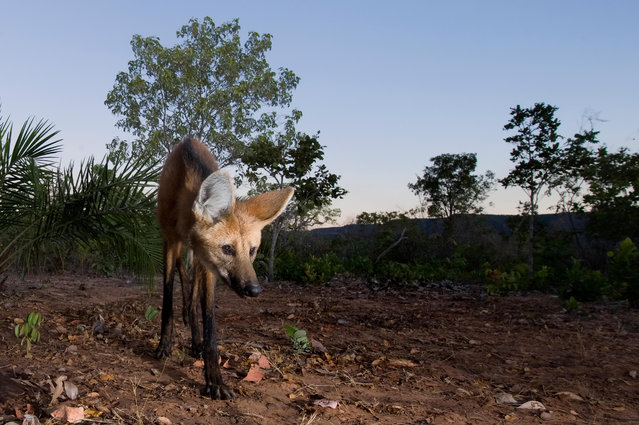
Global wildlife populations will decline by 67% by 2020 unless urgent action is taken to reduce human impact on species and ecosystems, warns the biennial Living Planet Index report from WWF (World Wide Fund for Nature) and ZSL (Zoological Society of London). From elephants to eels, here are some of the wildlife populations most affected by human activity. Here: The maned wolf is among the large mammals in the Brazilian Cerrado that are threatened by the increasing conversion of grasslands into farmland for grazing and growing crops. (Photo by Ben Cranke/Nature Picture Library/Alamy Stock Photo)
The Bridge “Rakotzbrücke” is pictured against trees in autumn colours in the the eastern German town of Kromlau November 4, 2014. (Photo by Hannibal Hanschke/Reuters)
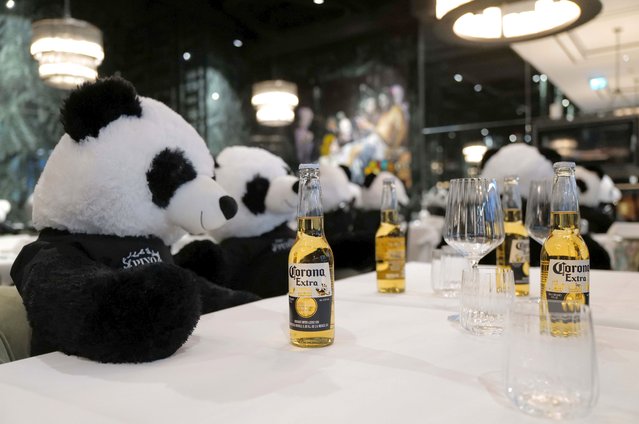
Fluffy toy panda bears as part of the art installation “Panda mie” by Italian restaurant owner Giuseppe “Pino” Fichera sit over beers at his restaurant “Pino's” to raise awareness of the COVID-19 lockdown's business impact on gastronomy in Frankfurt, Germany, November 24, 2020. (Photo by Kai Pfaffenbach/Reuters)
Drinkers celebrated on the last Friday before Christmas in York, United Kingdom on December 18, 2020. Black Eye Friday, affectionately named for its tendency to prompt drink-fuelled punch ups as the Christmas cheer spills over, has been dampened this year by the global coronavirus pandemic shutting bars and banning socialising. (Photo by Nb press ltd)