Loading...
Done
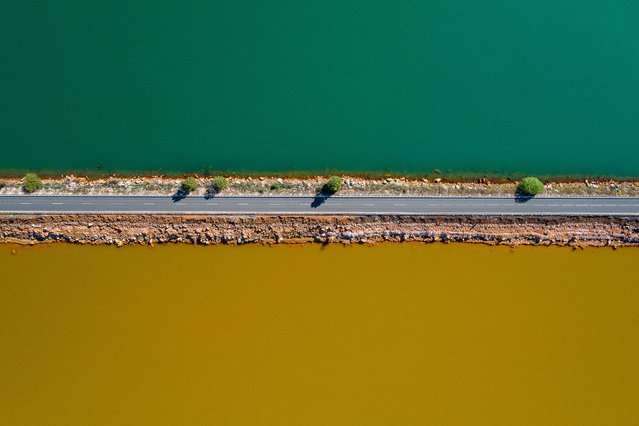
Shortlisted: The Life: A narrow strip, Río Tinto, Huelva, Spain. A narrow strip of road divides ochre-coloured and fresh waters. Trees wait on the fresh side of the road opposite the toxic waters of a nearby mine reservoir. (Photo by Roberto Bueno/CIWEM Environmental Photographer of the Year 2021)

Shortlisted: The Life: A narrow strip, Río Tinto, Huelva, Spain. A narrow strip of road divides ochre-coloured and fresh waters. Trees wait on the fresh side of the road opposite the toxic waters of a nearby mine reservoir. (Photo by Roberto Bueno/CIWEM Environmental Photographer of the Year 2021)
Details
10 Nov 2021 08:04:00
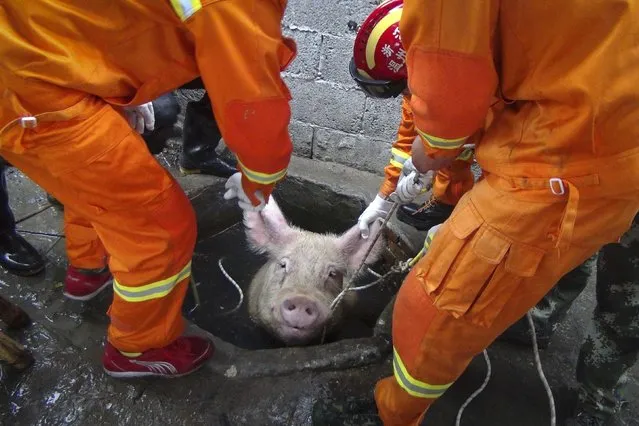
Firefighters pull a pig as they try to rescue it from a well at a pig farm in Huanghua township of Leqing, Zhejiang province, April 25, 2014. Seven local firefighters successfully rescued a 300 kg (661 lbs) pig which fell down a well on Friday morning, local media reported. (Photo by Reuters/China Daily)

Firefighters pull a pig as they try to rescue it from a well at a pig farm in Huanghua township of Leqing, Zhejiang province, April 25, 2014. Seven local firefighters successfully rescued a 300 kg (661 lbs) pig which fell down a well on Friday morning, local media reported. (Photo by Reuters/China Daily)
Details
26 Apr 2014 12:44:00
On August 31, 2012, a long filament of solar material that had been hovering in the sun's atmosphere, the corona, erupted out into space at 4:36 p.m. EDT. The coronal mass ejection, or CME, traveled at over 900 miles per second. The CME did not travel directly toward Earth, but did connect with Earth's magnetic environment, or magnetosphere, causing aurora to appear on the night of Monday, September 3. (Photo by NASA/GSFC/SDO)

On August 31, 2012, a long filament of solar material that had been hovering in the sun's atmosphere, the corona, erupted out into space at 4:36 p.m. EDT. The coronal mass ejection, or CME, traveled at over 900 miles per second. The CME did not travel directly toward Earth, but did connect with Earth's magnetic environment, or magnetosphere, causing aurora to appear on the night of Monday, September 3. (Photo by NASA/GSFC/SDO via The Atlantic)
Details
14 Sep 2012 09:01:00
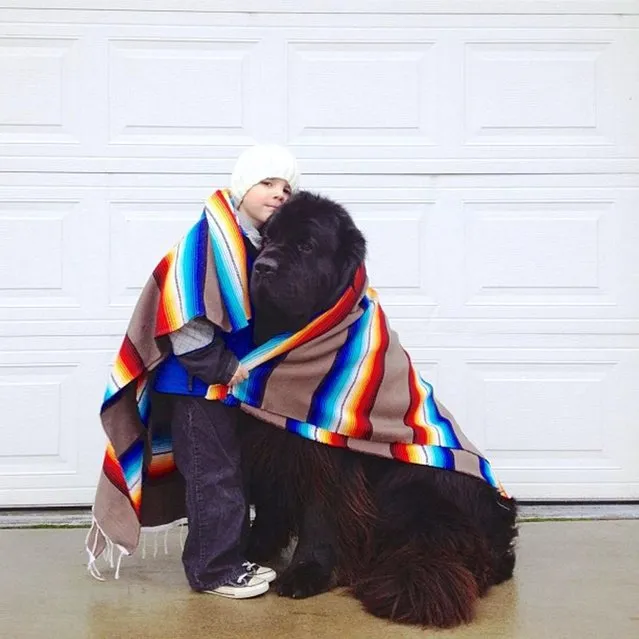
Hats off (or on) to Julian for sharing his blanket with his good buddy. Not that the furry beast needs it... (Photo by Stasha Becker/Rex Features)

Five-year-old Julian Becker and his 165 pound pet Newfoundland Max have been best buds around all their lives. To commemorate the friendship and to keep Julian's father, a Naval officer who is often away, in the loop, Julian's mom Stasha began taking photos. Photo: Hats off (or on) to Julian for sharing his blanket with his good buddy. Not that the furry beast needs it... (Photo by Stasha Becker/Rex Features)
Details
12 Apr 2013 11:29:00
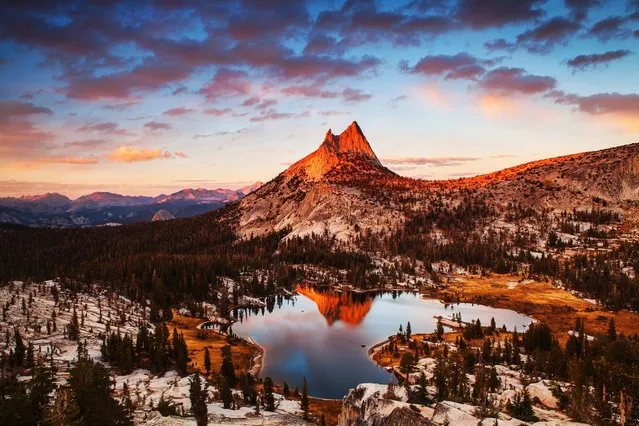
Of the epic landscape, the California-based photographer said: “It was an incredible moment and I'm just glad I decided that day to pick up my camera and give it a go because I don't know if I will ever get the chance again”. (Photo by Nolan Nitschke/Caters News)

Of the epic landscape, the California-based photographer said: “It was an incredible moment and I'm just glad I decided that day to pick up my camera and give it a go because I don't know if I will ever get the chance again”. (Photo by Nolan Nitschke/Caters News)
Details
29 Apr 2013 11:07:00
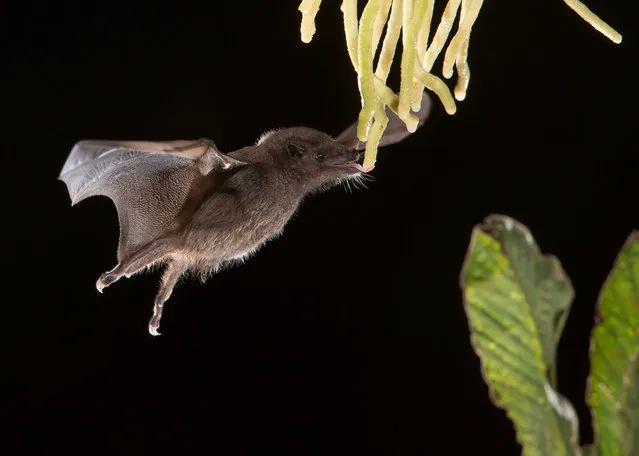
Anoura Geoffroy’s tailless bat by Nicolas Reusens. The Perfect Moment category; Adult runner up. (Photo by Nicolas Reusens/ZSL Animal Photography Prize 2015)

Attracting more than 450 entries from around the world, the winners are selected by a panel of expert judges including ZSL honorary conservation fellow and television presenter Kate Humble, and renowned ornithologist Bill Oddie. Here: Anoura Geoffroy’s tailless bat by Nicolas Reusens. The Perfect Moment category; Adult runner up. (Photo by Nicolas Reusens/ZSL Animal Photography Prize 2015)
Details
22 Nov 2015 08:04:00
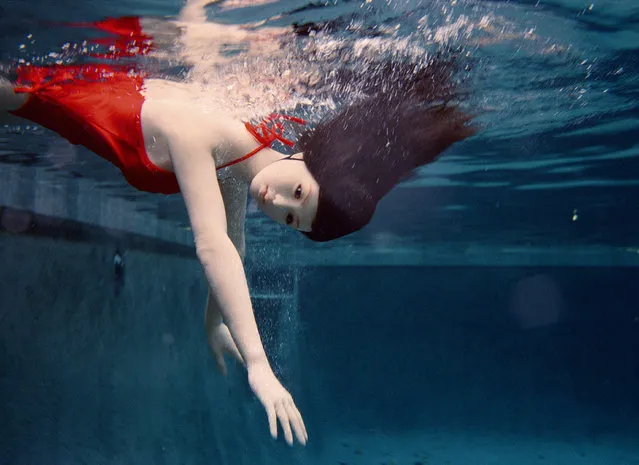
«Underwater». Laurie Simmons discovered this silicone s*x doll in a shop while on holiday in Japan and was immediately interested in the type of generic beauty their looks could add to her work. She went on to create the Love Doll series, in which she places silicone s*x dolls in positions that explore a woman’s interior life. (Photo by Laurie Simmons/Salon 94/The Guardian)

«Underwater». Laurie Simmons discovered this silicone sеx doll in a shop while on holiday in Japan and was immediately interested in the type of generic beauty their looks could add to her work. She went on to create the Love Doll series, in which she places silicone sеx dolls in positions that explore a woman’s interior life. (Photo by Laurie Simmons/Salon 94/The Guardian)
Details
28 Sep 2017 07:38:00
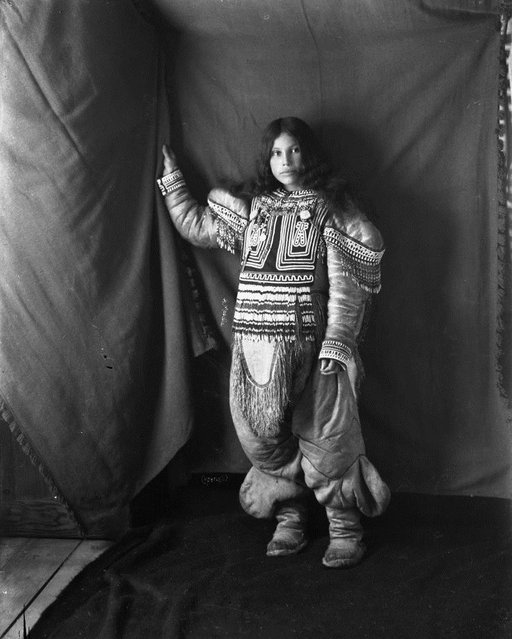
Moodie was born in 1854 in Toronto, and after a move to England she met and married John Douglas Moodie in 1878, and had six children. Here: Inuit woman, Kootucktuck, in her beaded attigi. Fullerton Harbour, Nunavut, February 1905. (Photo by Geraldine Moodie/The Guardian)

Geraldine Moodie overcame harsh conditions to become western Canada’s first professional female photographer, capturing beautiful images in the country’s most remote regions. An exhibition, “North of Ordinary: The Arctic Photographs of Geraldine and Douglas Moodie”, is at Glenbow, Calgary, 18 February – 10 September. Here: Inuit woman, Kootucktuck, in her beaded attigi. Fullerton Harbour, Nunavut, February 1905. (Photo by Geraldine Moodie/The Guardian)
Details
17 Feb 2017 00:04:00