Loading...
Done
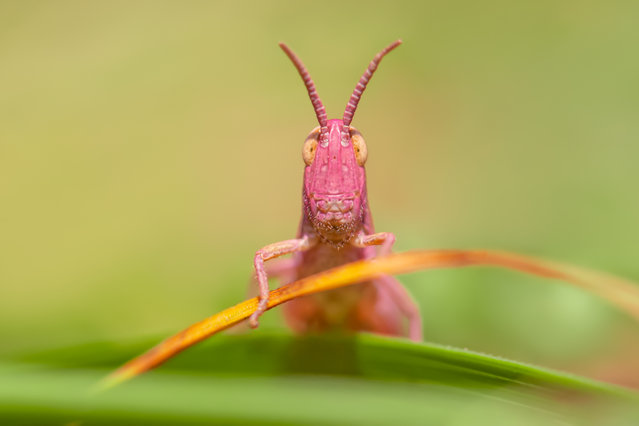
A rare grasshopper shines bright against its leafy background in North Holland, Netherlands in the first decade of October 2024. The insects are usually brown or green but turn pink due to a genetic mutation. (Photo by Roeselien Raimond/Media Drum Images)

A rare grasshopper shines bright against its leafy background in North Holland, Netherlands in the first decade of October 2024. The insects are usually brown or green but turn pink due to a genetic mutation. (Photo by Roeselien Raimond/Media Drum Images)
Details
09 Feb 2025 04:34:00
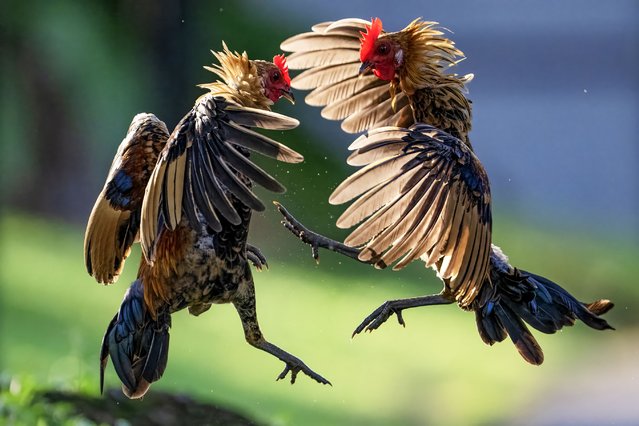
A pair of red junglefowl fight over territory in Pasir Ris Park, Singapore in the second decade of February 2025. (Photo by Liew Tong Leng/Solent News)

A pair of red junglefowl fight over territory in Pasir Ris Park, Singapore in the second decade of February 2025. (Photo by Liew Tong Leng/Solent News)
Details
23 Feb 2025 03:16:00
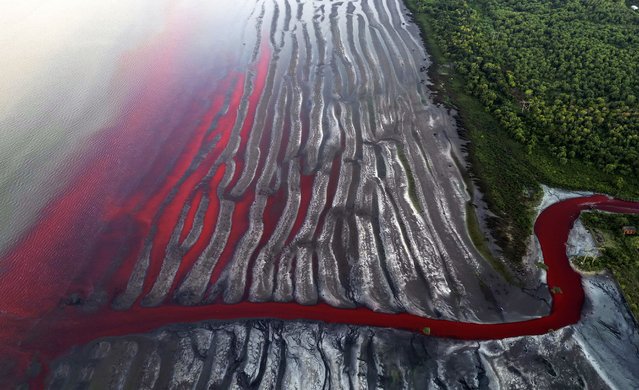
The “Sarandi” stream, dyed red due to unknown contaminants allege residents, flows into the Río de la Plata on the outskirts of Buenos Aires, Argentina, February 6, 2025. (Photo by Rodrigo Abd/AP Photo)

The “Sarandi” stream, dyed red due to unknown contaminants allege residents, flows into the Río de la Plata on the outskirts of Buenos Aires, Argentina, February 6, 2025. (Photo by Rodrigo Abd/AP Photo)
Details
04 Mar 2025 04:27:00
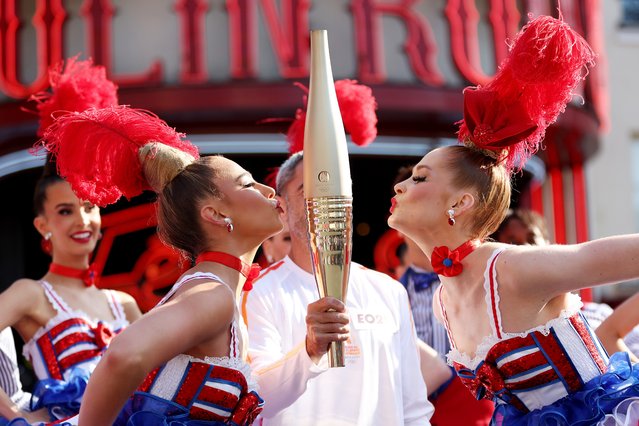
Performers kiss the Olympic Torch as Julien Segui carries the Olympic Torch at Moulin Rouge during the second day of the Paris 2024 Olympic Torch Relay on July 15, 2024 in Paris, France. (Photo by Maja Hitij/Getty Images)

Performers kiss the Olympic Torch as Julien Segui carries the Olympic Torch at Moulin Rouge during the second day of the Paris 2024 Olympic Torch Relay on July 15, 2024 in Paris, France. (Photo by Maja Hitij/Getty Images)
Details
25 Nov 2025 05:30:00
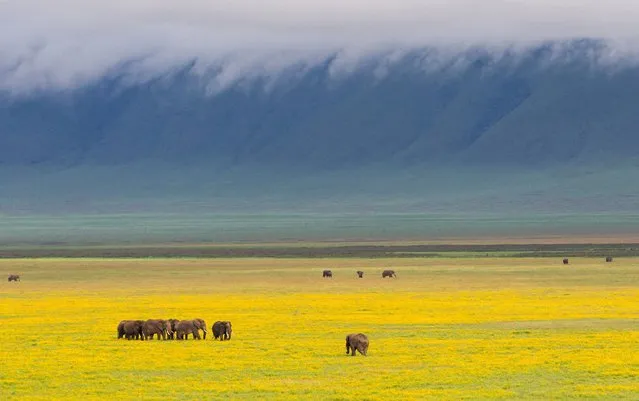
Ngorongoro Crater (Tanzania). At 610m deep and 260 sq km, this is the largest unflooded caldera in the world. A blue-green vision from above it's a haven for engangered wildlife and Maasai livestock. The crater was formed three million years ago when a giant volcano, which could have been as high as Kilimanjaro, exploded and collapsed. The caldera formed the concentric fractures in the crust cracked down to a magma reservoir deep underground. (Photo by John Bryant/Getty Images)

Ngorongoro Crater (Tanzania). At 610m deep and 260 sq km, this is the largest unflooded caldera in the world. A blue-green vision from above it's a haven for engangered wildlife and Maasai livestock. The crater was formed three million years ago when a giant volcano, which could have been as high as Kilimanjaro, exploded and collapsed. The caldera formed the concentric fractures in the crust cracked down to a magma reservoir deep underground. (Photo by John Bryant/Getty Images)
Details
28 Mar 2014 08:08:00
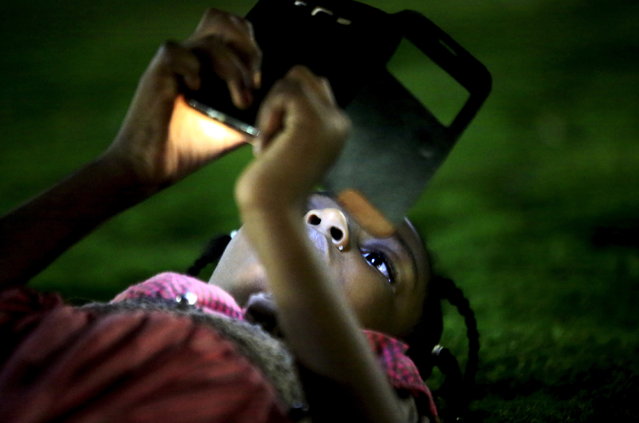
A girl uses her mobile phone during the evening at the National Park in Khartoum, Sudan, April 24, 2015. (Photo by Mohamed Nureldin Abdallah/Reuters)

A girl uses her mobile phone during the evening at the National Park in Khartoum, Sudan, April 24, 2015. (Photo by Mohamed Nureldin Abdallah/Reuters)
Details
14 Jul 2015 13:23:00
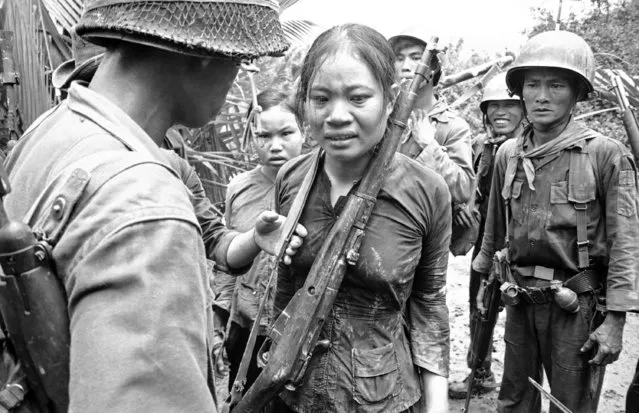
A Russian-made rifle, carried by this woman when she was captured in Nearby Brush, is slung around her neck by South Vietnamese soldiers before they began their interrogation of her as Viet Cong suspect near AP La Ghi in Vietnam, August 25, 1965. The girl behind the woman, also was captured in the brush. (Photo by AP Photo)

A Russian-made rifle, carried by this woman when she was captured in Nearby Brush, is slung around her neck by South Vietnamese soldiers before they began their interrogation of her as Viet Cong suspect near AP La Ghi in Vietnam, August 25, 1965. The girl behind the woman, also was captured in the brush. (Photo by AP Photo)
Details
26 Aug 2015 09:55:00
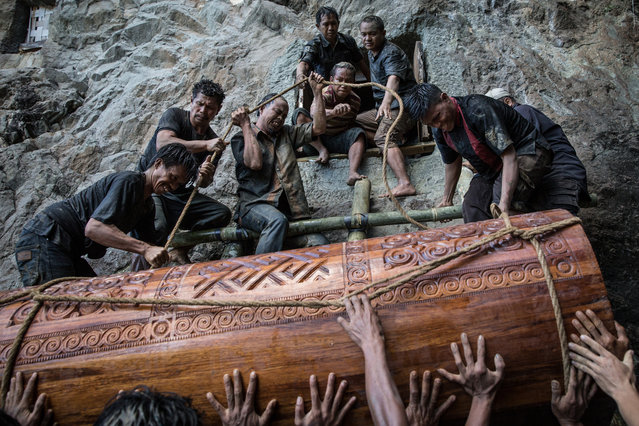
It is said that Torajans are people who “live to die”. For this Indonesian ethnic group, funerals are such extravagant events that they sometimes attract tourists. Families can postpone burials years (and the deceased are considered sick and hosted at home until the funeral) until the family can raise enough money and gather as many relatives as possible. And then it’s a jubilant multiday social event with a parade, dances and animal sacrifices. Agung Parameswara photographed these funerary practices when he traveled to South Sulawesi province, where the Torajans live. But often, their funeral isn’t the last time the dead are seen. In August, crypts are opened, coffins are slid back out and bodies delicately unsheathed. This tender ritual is known as Ma’Nene, which is customarily performed every few years. (Photo by Agung Parameswara/The Washington Post)

It is said that Torajans are people who “live to die”. For this Indonesian ethnic group, funerals are such extravagant events that they sometimes attract tourists. Families can postpone burials years (and the deceased are considered sick and hosted at home until the funeral) until the family can raise enough money and gather as many relatives as possible. And then it’s a jubilant multiday social event with a parade, dances and animal sacrifices. Agung Parameswara photographed these funerary practices when he traveled to South Sulawesi province, where the Torajans live. (Photo by Agung Parameswara/The Washington Post)
Details
06 Oct 2016 09:15:00