A passenger plane, with a full Harvest moon seen behind, makes its final landing approach towards Heathrow Airport in London, Britain, October 5, 2017. (Photo by Toby Melville/Reuters)
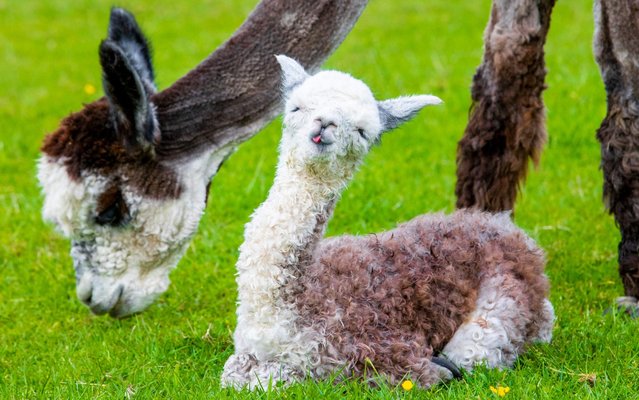
Staff at a Scottish farm say they are “absolutely delighted” to have welcomed a baby alpaca into the world this morning, June 6, 2019. Mum, Nunavut, gave birth to the baby boy huacaya alpaca, which has not yet been named, weighing 9.6kg. Stuart Ramsay, the owner of Velvet Hall Alpacas, in Innerleithen, Scottish Borders said he was surprised when the baby was born an “unusual rose grey colour”. (Photo by South West News Service)
Parade-goers walk in the annual West Indian Day Parade on September 02, 2019 in the Brooklyn borough of New York City. The annual celebration of Caribbean culture is one of the largest of its kind and features dozens of floats and costumed participants that make their way down Flatbush Avenue. (Photo by Yana Paskova/Getty Images)
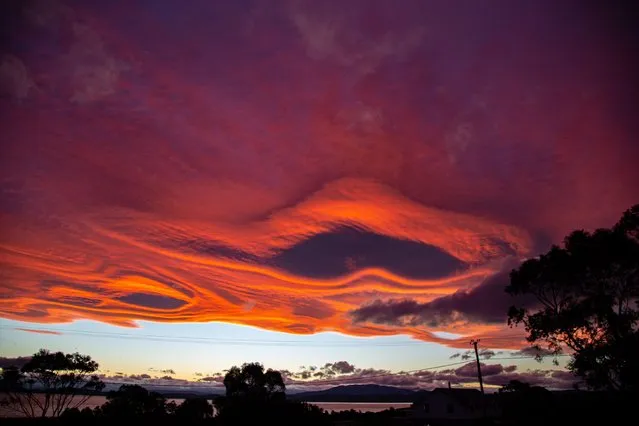
Wayne Painter, 70, saw the sun set beneath lenticular clouds 20km wide in Tasmania, Australia in November 2021. Some likened the image to a near-miss with Mars. (Photo by Wayne Painter/Kennedy News)
French tennis champion Suzanne Lenglen (1899–1938) high-kicking during a doubles match at the Wimbledon Lawn Tennis Championships. (Photo by Kirby/Topical Press/Getty Images). 1924
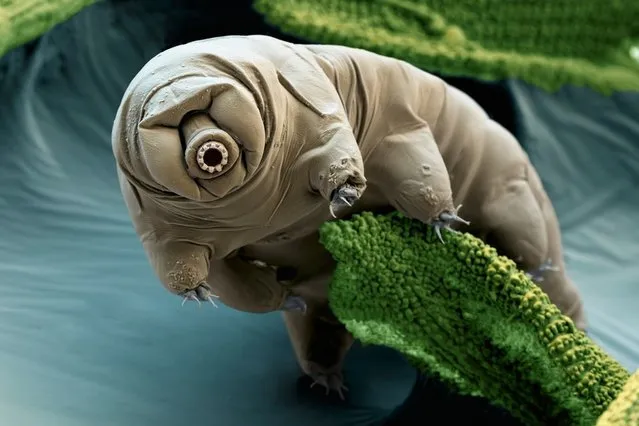
“Tardigrades (commonly known as waterbears or moss piglets) are small, water-dwelling, segmented animals with eight legs. Tardigrades were first discovered in 1773 by Johann August Ephraim Goeze, who called them kleiner Wasserbär, meaning “little water bear” in German. The name Tardigrada means “slow walker” and was given by Lazzaro Spallanzani in 1777. The name water bear comes from the way they walk, reminiscent of a bear's gait. The biggest adults may reach a body length of 1.5 millimetres (0.059 in), the smallest below 0.1 mm. Freshly hatched tardigrades may be smaller than 0.05 mm”. – Wikipedia. Photo: Tardigrades. (Photo by SPL/East News)
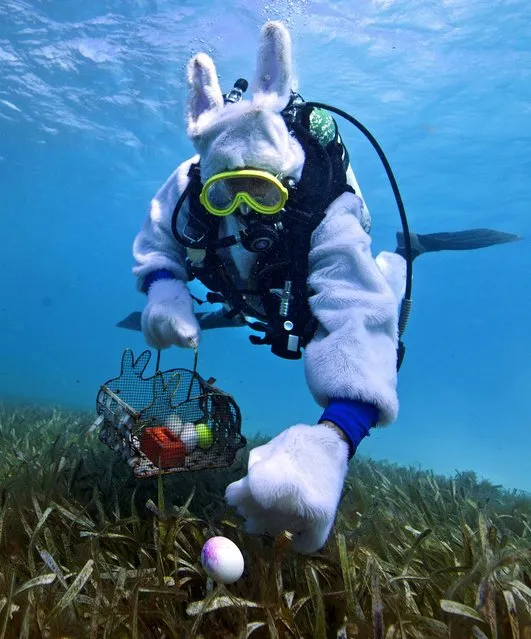
Spencer Slate, costumed as a scuba-diving Easter bunny, is shown in this handout photo provided by the Florida Keys News Bureau as he hides eggs amid eel grass, in the Florida Keys National Marine Sanctuary off Key Largo, Florida March 31, 2013. About 80 adults and children participated in an Underwater Easter Egg Hunt, seeking real hard-boiled eggs painted with non-toxic food coloring to avoid adverse effects on the marine ecosystem. (Photo by Bob Care/Reuters/Florida Keys News Bureau)