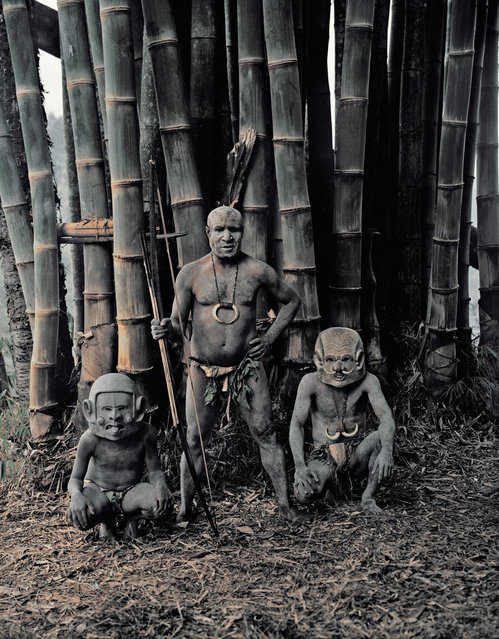
“Asaro from the Eastern Highlands”. The mudmen could not cover their faces with mud because the people of Papua New Guinea thought that the mud from the Asaro river was poisonous. So instead of covering their faces with this alleged poison, they made masks from pebbles that they heated and water from the waterfall, with unusual designs such as long or very short ears either going down to the chin or sticking up at the top, long joined eyebrows attached to the top of the ears, horns and sideways mouths. (Photo and caption by Jimmy Nelson)
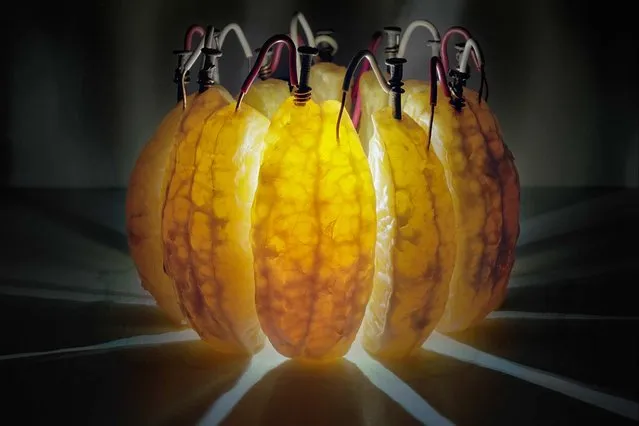
Wedges of an orange generate enough current and electrical juice – 3.5 volts – to power an LED. The fruit’s citric acid helps electrons flow from galvanized nails to copper wire in this 14-hour exposure. This image was published in September’s Visions of Earth, a trio of photos that appear in each issue of National Geographic. (Photo by Caleb Charland/National Geographic)
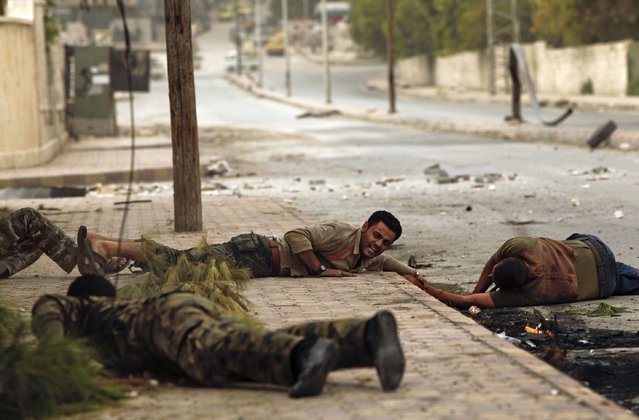
Members of the Al-Baraa bin Malek batallion, part of the Free Syria Army's Al-Fatah brigade, duck to the ground as they pull a man (R) who was shot by a sniper twice in the Bustan al-Basha district of the northern city of Aleppo on October 20, 2012. (Photo by Javier Manzano/AFP Photo)
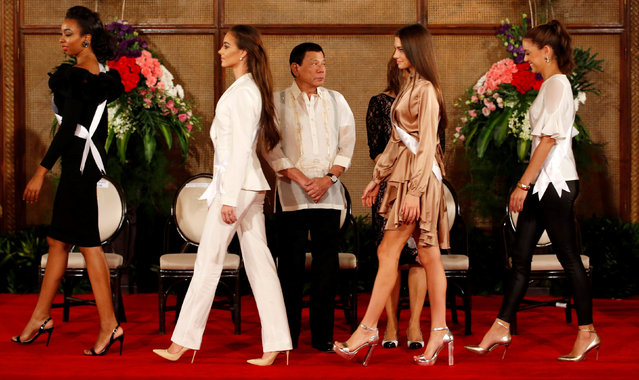
Philippine President Rodrigo Duterte looks at Miss Universe candidates at the presidential palace in Manila, Philippines January 23, 2017. (Photo by Erik De Castro/Reuters)
Spanish director Pedro Almodovar and actress Penelope Cruz chat before the start of the Spanish Film Academy's Goya Awards ceremony in Madrid, Spain, February 4, 2017. (Photo by Paul Hanna/Reuters)
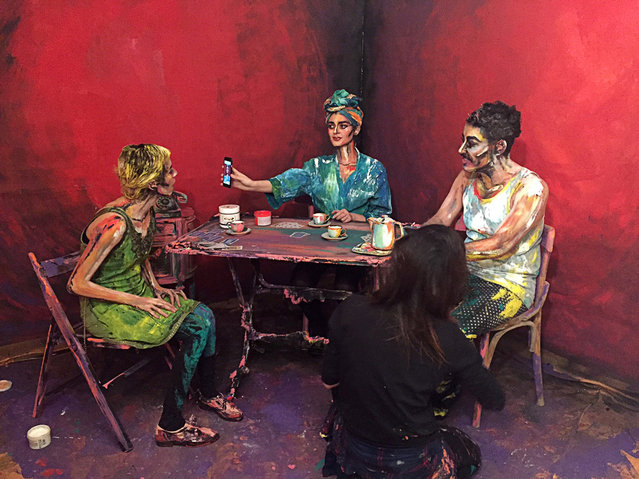
Cairo-based artist Chanel Arif's paints for her art project called After Dinner that uses humans and their surroundings as her canvas, in her gallery in the capital of Cairo, Egypt March 2, 2017. (Photo by Sherif Fahmy/Reuters)