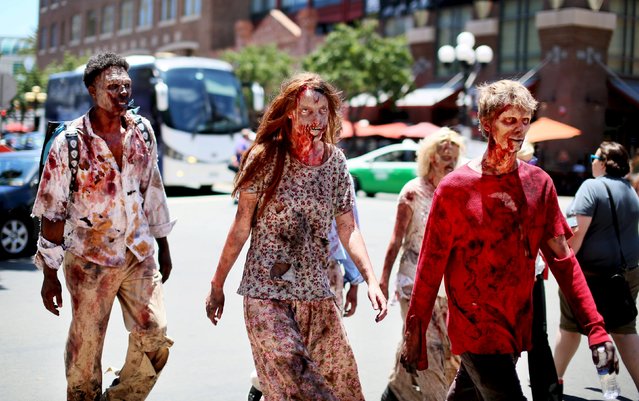
Attnedees dressed in Zombie outfits walk down the Gaslamp Quarter outside of the 2015 Comic-Con International in San Diego, California July 8, 2015. (Photo by Sandy Huffaker/Reuters)
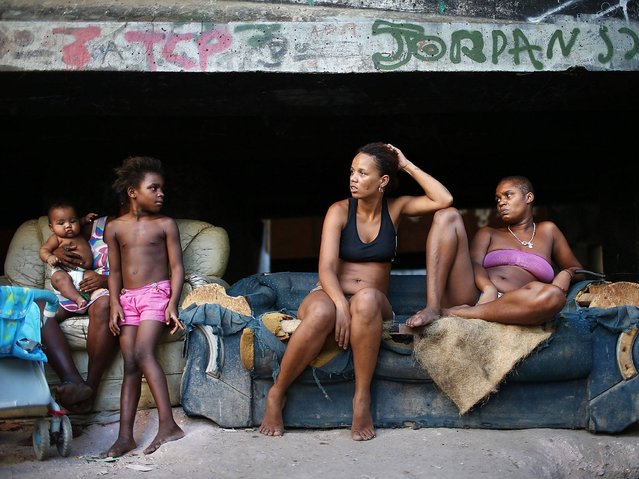
Residents (R to L) Luiza, Janubie, Leiticia and Lucas sit beneath an overpass near their houses in an impoverished area in the unpacified Complexo da Mare slum complex, one of the largest “favela” complexes in Rio, on March 18, 2014 in Rio de Janeiro, Brazil. (Photo by Mario Tama/Getty Images)
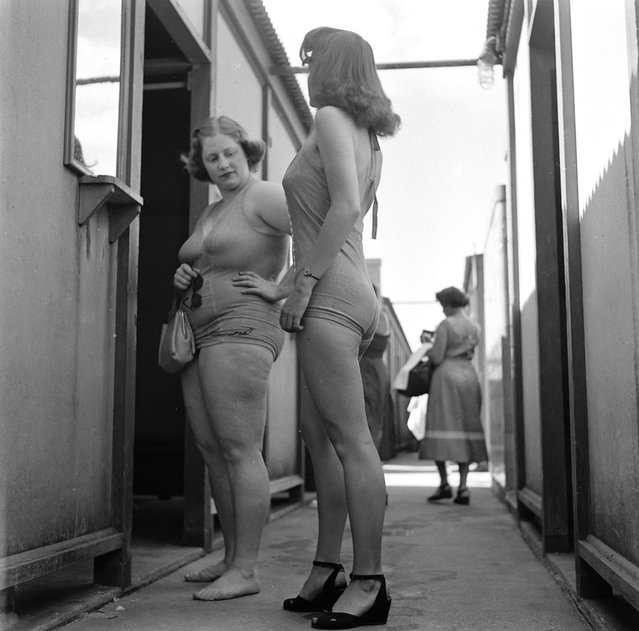
“The most serious health problem in the U.S. today is obesity.” Sounds familiar, doesn’t it? But that pronouncement about obesity’s primacy in the hierarchy of national health problems is not new. Rather, it’s the opening line to a remarkable article published 60 years ago in LIFE magazine. This photographs made by Martha Holmes to illustrate that March 1954 article, titled “The Plague of Overweight.” Photo: Dorothy Bradley (left), photographed for LIFE magazine article on obesity, 1949. (Photo by Martha Holmes/Time & Life Pictures)
The Belgian photographer Anton Kusters spent two years photographing the Yakuza, Japan’s most notorious gang. He returned with some amazing images that he made into a book called “Odo Yakuza Tokyo”. (Odo means “the way of the cherry blossom” and is the credo of the Yakuza family he followed. Photo: An erotic danser picks up fake 2-dollar bills during a private dance with a Yakuza customer in a strip tease bar in Kabukicho, a bar which is controlled by the ODO family – 2010. (Photo and caption by Anton Kusters)
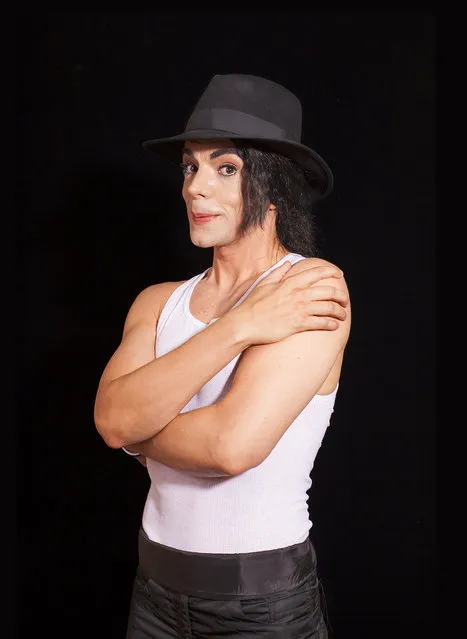
“Michael Jackson, the performer, consistently transcended racial and gender perceptions; Michael Jackson tribute artists, impersonators and lookalikes reflect this in that they embody a wide span of inspiration and intention. The current crop of impersonators are people who take great care in their appearance – some spend a lot of money and time on their make up and clothing, while others are more concerned with the physical gestures associated with his dances while expressing very little concern in the creation of an illusion”. – Lorena Turner. (Photo and caption by Lorena Turner)
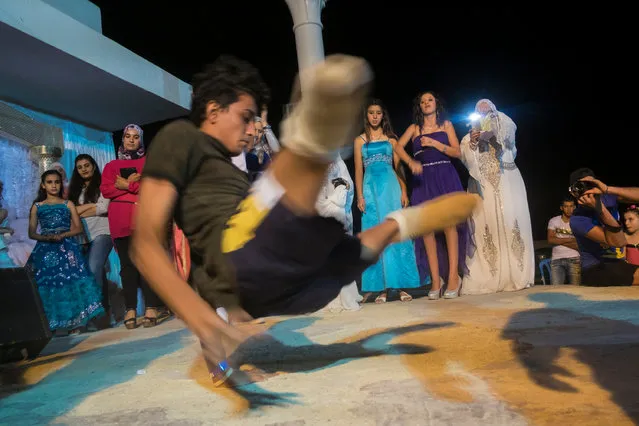
Street photographer Yassine Alaoui Ismaili follows 16-year-old Emeer Guesmi, aka B-boy Zulu Rema, as he trains and performs breakdance moves – all without the use of his legs. At a breakdance championship in Tunisia, Casablanca-based street photographer Yassine Alaoui Ismaili noticed an unusual competitor: Emeer Guesmi, dancing without the aid of his lower legs. He started following him as he trained and performed. (Photo by Yassine Alaoui Ismaili/The Guardian)
Photographer Pol Kurucz’s vivid collection of photos explores issues faced by black Brazilian women, from political misrepresentation to unrealistic beauty standards. Kolor Collective is a Rio de Janeiro-based creative group that challenges the struggle faced by black women in Brazil through theatrical and provocative art. It was founded in 2015 by Franco-Hungarian photographer Pol Kurucz, who often touches on his own experiences of discrimination to call out sensitive social problems. (Photo by Kolor Art Collective/The Guardian)
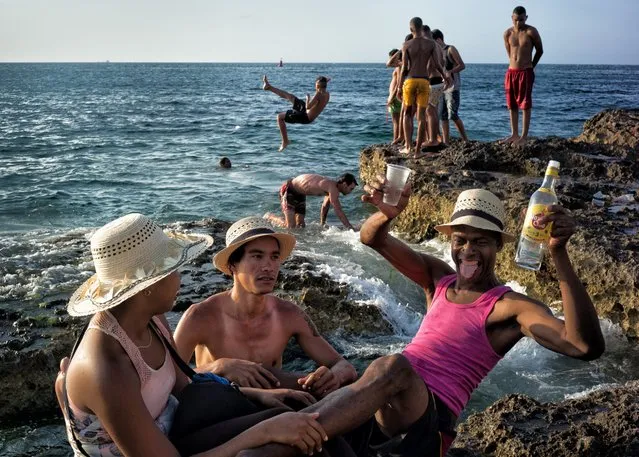
Photographer Dotan Saguy visited Cuba expecting to find resentment toward Americans, but he says that, instead, “Every Cuban I met was warm and welcoming despite me being an American”. Here: Several groups of locals relax on the Malecon in Old Havana, Cuba May 1, 2016. Some chat and drink rum while others dive into the warm Caribbean Sea. (Photo by Dotan Saguy)