Loading...
Done
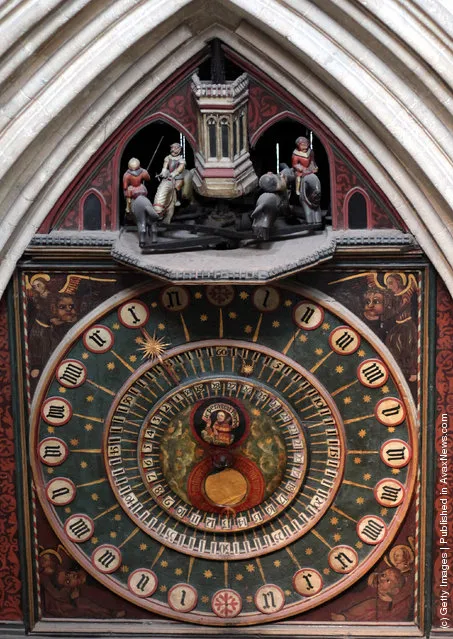
Wells Clock – World's Oldest Mechanical Clock

“Wells Cathedral is a Church of England cathedral in Wells, Somerset, England. Built between 1175 and 1490, Wells Cathedral has been described as “the most poetic of the English Cathedrals”. The Wells clock, an astronomical clock, is located in the north transept. The surviving mechanism, dated to between 1386 and 1392, was replaced in the 19th century, and was eventually moved to the Science Museum in London, where it continues to operate. It is the second-oldest surviving clock in England”. – Wikipedia

Photo: The clock face of world's oldest continually-working mechanical clock is seen as it is hand wound for the very last time on August 21, 2010 in Wells, England. (Photo by Matt Cardy/Getty Images)
Details
10 Aug 2011 11:23:00
Performers take part in a rain soaked Notting Hill Carnival on August 25th, 2014 in London, England. Despite the bad weather over 1 million visitors are expected to attend the two-day event which is the largest of its kind in Europe. The event has taken place on the West London streets every August Bank Holiday weekend since 1964. (Photo by Mary Turner/Getty Images)

Performers take part in a rain soaked Notting Hill Carnival on August 25th, 2014 in London, England. Despite the bad weather over 1 million visitors are expected to attend the two-day event which is the largest of its kind in Europe. The event has taken place on the West London streets every August Bank Holiday weekend since 1964. (Photo by Mary Turner/Getty Images)
Details
21 Oct 2016 12:46:00
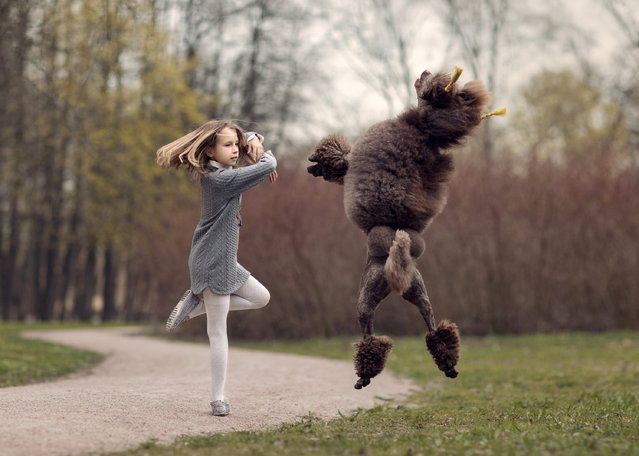
Nine year old Maria Palkina dancing with dogs. (Photo by Andrey Seliverstov/Caters News Agency)

This beautiful set of images capture the moment a young ballet dancer interacts with her four-legged friends against some iconic backdrops including the Church of the Savior on Blood and the Admiralty building in Saint Petersburg. The enchanted photos were taken by Andrey Seliverstov, 59 from Saint Petersburg, Russia. Here: Nine year old Maria Palkina dancing with dogs. (Photo by Andrey Seliverstov/Caters News Agency)
Details
15 Oct 2017 07:56:00
Artists wearing Japanese traditional clown masks march during the First Konpira Festival at Kotohiragu shrine in Tokyo Wednesday, January 10, 2018. The shrine is dedicated to sailors and seafaring. (Photo by Eugene Hoshiko/AP Photo)

Artists wearing Japanese traditional clown masks march during the First Konpira Festival at Kotohiragu shrine in Tokyo Wednesday, January 10, 2018. The shrine is dedicated to sailors and seafaring. (Photo by Eugene Hoshiko/AP Photo)
Details
30 Jan 2018 06:32:00
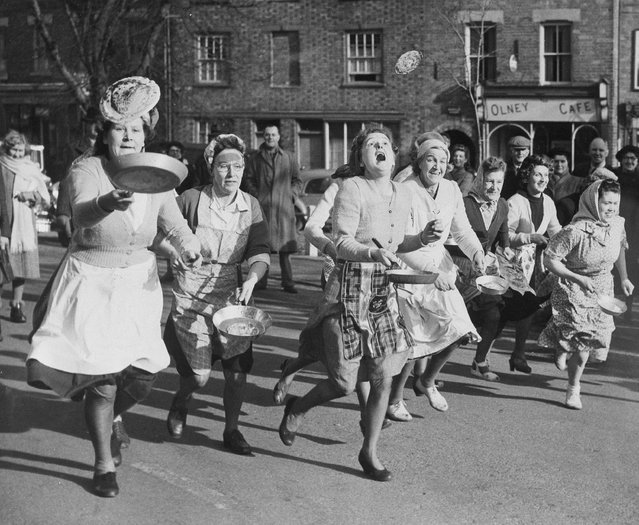
British housewives toss pancakes in skillets as they run through the streets of Olney, England, in the community's annual race which follows a 500-year-old tradition, February 6, 1951. Mrs. Isabel Dix, 22, extreme right, won the race covering the 415 yards from the Parish pump to the door of Sts. Peter and Paul church in one minute, 12.1 seconds. (Photo by AP Photo)

British housewives toss pancakes in skillets as they run through the streets of Olney, England, in the community's annual race which follows a 500-year-old tradition, February 6, 1951. Mrs. Isabel Dix, 22, extreme right, won the race covering the 415 yards from the Parish pump to the door of Sts. Peter and Paul church in one minute, 12.1 seconds. (Photo by AP Photo)
Details
20 Mar 2018 00:03:00
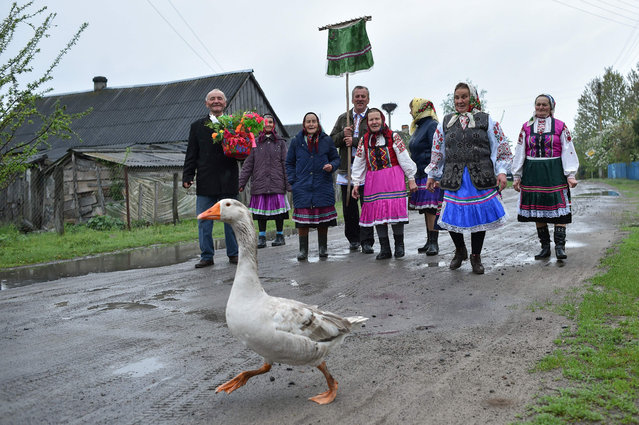
A goose walks on the road as Belarusian villagers take part in the Yurya religious rite to bring a good harvest in the village of Lutki, some 270 km south of Minsk, on May 6, 2019. (Photo by Sergei Gapon/AFP Photo)

A goose walks on the road as Belarusian villagers take part in the Yurya religious rite to bring a good harvest in the village of Lutki, some 270 km south of Minsk, on May 6, 2019. (Photo by Sergei Gapon/AFP Photo)
Details
02 Jan 2020 00:01:00
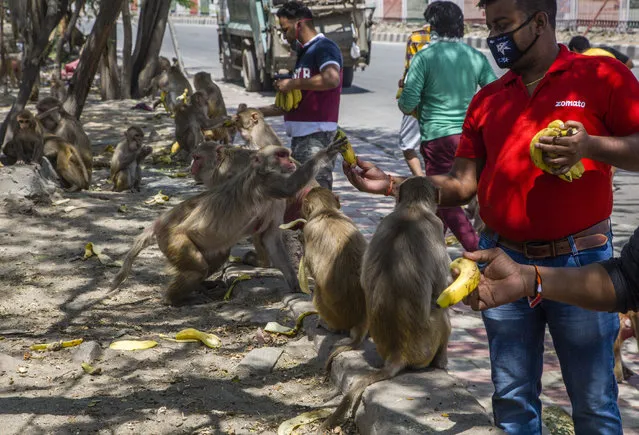
Men give bananas to monkeys gathered on the side of the road as India remains under an unprecedented lockdown over the highly contagious coronavirus (COVID-19) on April 08, 2020 in New Delhi, India. Wild animals, including monkeys, are roaming human settlements in India as people are staying indoors due to the 21-day lockdown. With India's 1.3 billion population and tens of millions of cars off the roads, wildlife is moving towards areas inhabited by humans. Wild animals in many countries have been seen roaming streets. A study says some 60 percent of the new diseases found around the globe every year are zoonotic, meaning they originate in animals and are passed on to humans. COVID-19 is a zoonotic disease that is suspected to have come from the wet markets of Wuhan, China. (Photo by Yawar Nazir/Getty Images)

Men give bananas to monkeys gathered on the side of the road as India remains under an unprecedented lockdown over the highly contagious coronavirus (COVID-19) on April 08, 2020 in New Delhi, India. Wild animals, including monkeys, are roaming human settlements in India as people are staying indoors due to the 21-day lockdown. (Photo by Yawar Nazir/Getty Images)
Details
12 Apr 2020 00:05:00
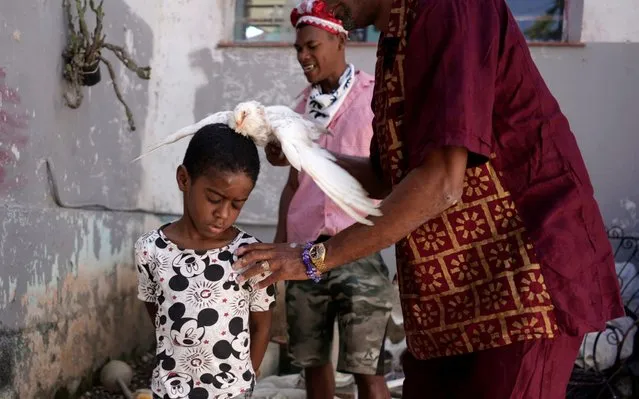
Jose Zamora, 8, has a dove rubbed over his body during the Afro-Cuban religion Santeria ceremony amid concerns about the spread of the coronavirus disease (COVID-19) outbreak, in Havana, Cuba, March 28, 2020. (Photo by Alexandre Meneghini/Reuters)

Jose Zamora, 8, has a dove rubbed over his body during the Afro-Cuban religion Santeria ceremony amid concerns about the spread of the coronavirus disease (COVID-19) outbreak, in Havana, Cuba, March 28, 2020. (Photo by Alexandre Meneghini/Reuters)
Details
06 May 2020 00:05:00