Loading...
Done
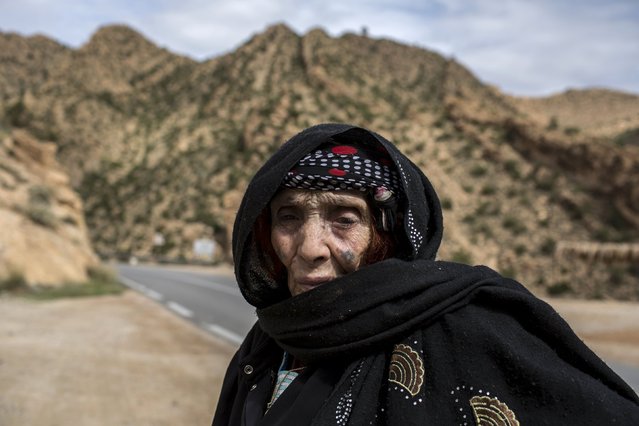
Mazouza Bouglada, 86, a berber woman from the Chaouia region, who has facial tattoos, poses for a photograph in Taghit in the Aures Mountain, Algeria October 8, 2015. Bouglada was tattooed aged 7 by a nomadic man from the Sahara region. She was advised by her mother to get tattooed. The more she got tattooed the more she showed off. Even if she still remembers the pain, she felt beautiful once it was done, Bouglada said. (Photo by Zohra Bensemra/Reuters)

Mazouza Bouglada, 86, a berber woman from the Chaouia region, who has facial tattoos, poses for a photograph in Taghit in the Aures Mountain, Algeria October 8, 2015. Bouglada was tattooed aged 7 by a nomadic man from the Sahara region. She was advised by her mother to get tattooed. The more she got tattooed the more she showed off. Even if she still remembers the pain, she felt beautiful once it was done, Bouglada said. She was very proud of her stars on her cheeks. Her eldest sister had been tattooed before her and she wanted to imitate her. Bouglada said she has now given away all her silver jewellery to atone for the sin that believers told her she had committed by being tattooed. (Photo by Zohra Bensemra/Reuters)
Details
01 Nov 2015 08:02:00
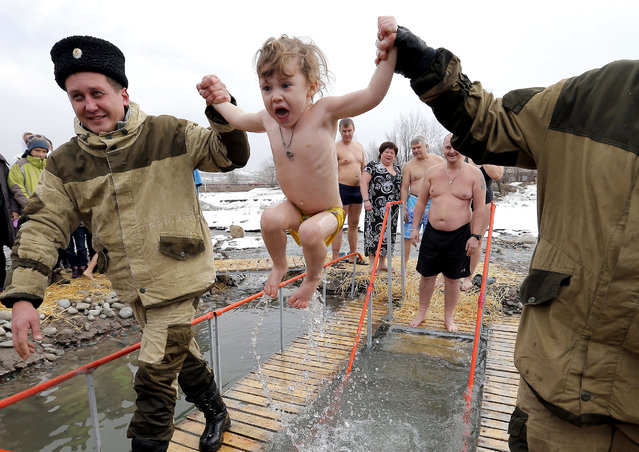
An Orthodox child is given an icy dip in a lake in celebration of Epiphan, near the village of Vorontsovka, some 20 km from the Kyrgyz capital of Bishkek, Kyrgyzstan, 19 January 2019. People believe that bathing in blessed waters during the holiday of Epiphany strengthens their spirit and body. (Photo by Igor Kovalenko/EPA/EFE)

An Orthodox child is given an icy dip in a lake in celebration of Epiphan, near the village of Vorontsovka, some 20 km from the Kyrgyz capital of Bishkek, Kyrgyzstan, 19 January 2019. People believe that bathing in blessed waters during the holiday of Epiphany strengthens their spirit and body. (Photo by Igor Kovalenko/EPA/EFE)
Details
21 Feb 2019 00:05:00
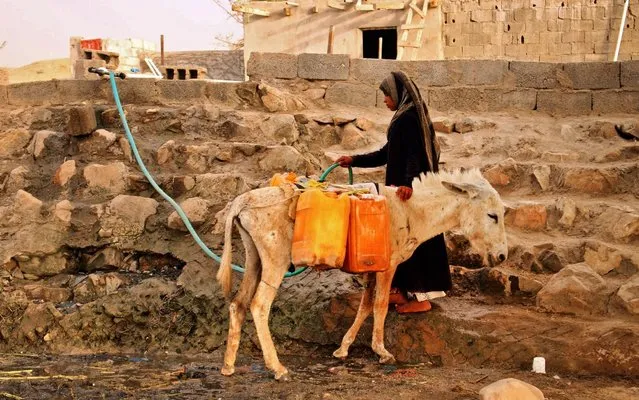
A displaced Yemeni woman from Hodeida fills water containers at a make-shift camp in a village in the northern district of Abs in the country's Hajjah province, on May 9, 2019. The Yemeni conflict has triggered what the United Nations describes as the world's worst humanitarian crisis, with 3.3 million people still displaced and 24.1 million in need of aid. (Photo by Essa Ahmed/AFP Photo)

A displaced Yemeni woman from Hodeida fills water containers at a make-shift camp in a village in the northern district of Abs in the country's Hajjah province, on May 9, 2019. The Yemeni conflict has triggered what the United Nations describes as the world's worst humanitarian crisis, with 3.3 million people still displaced and 24.1 million in need of aid. (Photo by Essa Ahmed/AFP Photo)
Details
13 May 2019 00:03:00
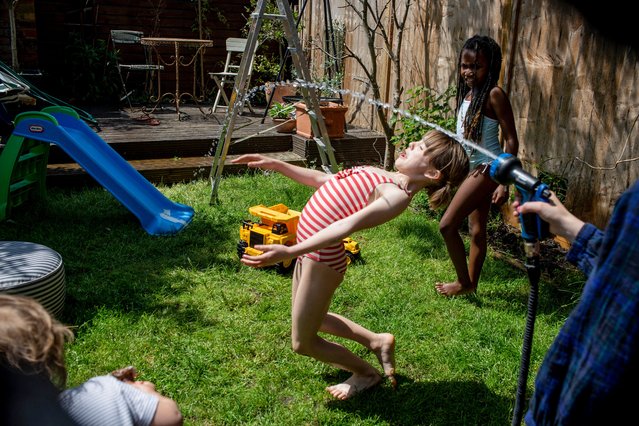
Stefania and Mariah play with a hose in South Norwood, United Kingdom on June 1, 2021. (Photo by Joe Plimmer/The Guardian)

Stefania and Mariah play with a hose in South Norwood, United Kingdom on June 1, 2021. (Photo by Joe Plimmer/The Guardian)
Details
23 Jul 2021 09:14:00
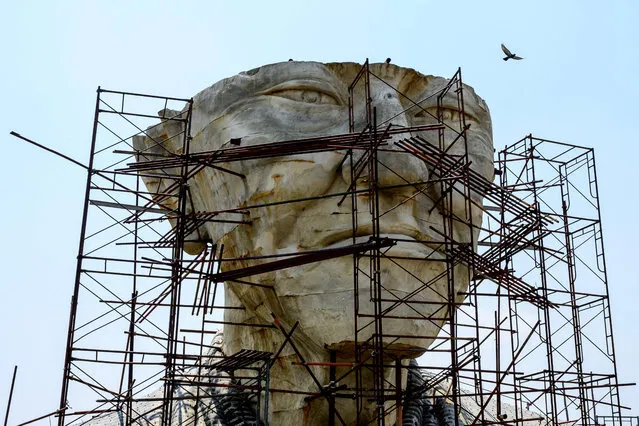
A bird flies over the abandoned giant sculpture of a Buddhist monk in Cha-am outside Hua Hin, 145km south of Bangkok, on February 25, 2021. (Photo by Mladen Antonov/AFP Photo)

A bird flies over the abandoned giant sculpture of a Buddhist monk in Cha-am outside Hua Hin, 145km south of Bangkok, on February 25, 2021. (Photo by Mladen Antonov/AFP Photo)
Details
09 Mar 2021 11:51:00
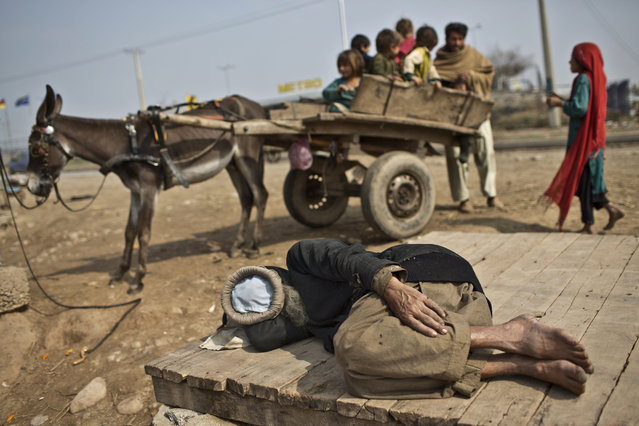
Children play on a donkey cart belonging to an elderly Afghan refugee sleeping on a roadside on the outskirts of Islamabad, Pakistan, Wednesday, February 18, 2015. (Photo by Muhammed Muheisen/AP Photo)

Children play on a donkey cart belonging to an elderly Afghan refugee sleeping on a roadside on the outskirts of Islamabad, Pakistan, Wednesday, February 18, 2015. (Photo by Muhammed Muheisen/AP Photo)
Details
06 Apr 2015 08:57:00
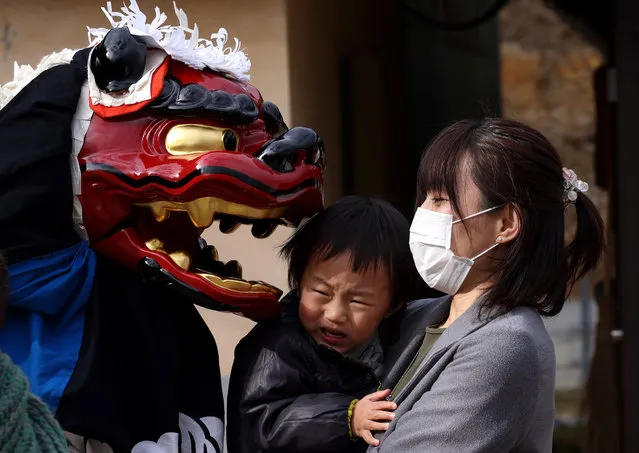
A performer wearing a lion mask performs the Ise Daikagura lion dance at the remote village of Yamanawa on February 08, 2021 in Ryuo, Japan. Ise Daikagura is a group of traditional Lion Dance performers who pray in front of farmers houses and businesses for good grain harvests and disease-free lives. Performers play sacred music using drums and flutes with two lion mask dancers. A lion mask is considered a symbol of God, who enters the house and performs in front of the Shinto God, a statue placed inside the house, mostly in the kitchen. These prayers are called “Kamodo Barai”. After the prayers, they are gifted with money, rice, sake and Japanese sweets from the householders. A group can travel for more than one hundred days to thousands of households and businesses throughout rural-villages in western Japan, and pray to those who are unable to visit the country’s most sacred shrine, the Grand Ise Shrine in Mie Prefecture. The group started its performance in the Edo era between 1603 to 1868 according to Japanese history. The Japanese government designated it as an important folk cultural national property in 1981. (Photo by Buddhika Weerasinghe/Getty Images)

A performer wearing a lion mask performs the Ise Daikagura lion dance at the remote village of Yamanawa on February 08, 2021 in Ryuo, Japan. Ise Daikagura is a group of traditional Lion Dance performers who pray in front of farmers houses and businesses for good grain harvests and disease-free lives. (Photo by Buddhika Weerasinghe/Getty Images)
Details
18 Feb 2021 09:27:00
A woman with a snake on her body, taken in Rio de Janeiro, Brazil, April 2017. A holistic therapist uses snakes to massage her clients – claiming it cures depression and even helps victims of abuse. Instead of traditional massaging techniques, Sarah Zaad uses up to six pythons and boa constrictors on brave customers who want to relax or be treated for mental disorders. The flamboyant therapist from Rio de Janeiro, Brazil believes her snakes have a magic touch, which can benefit people by massaging their bodies. (Photo by Kadeh Ferreira/Barcroft Images)

A woman with a snake on her body, taken in Rio de Janeiro, Brazil, April 2017. A holistic therapist uses snakes to massage her clients – claiming it cures depression and even helps victims of abuse. Instead of traditional massaging techniques, Sarah Zaad uses up to six pythons and boa constrictors on brave customers who want to relax or be treated for mental disorders. The flamboyant therapist from Rio de Janeiro, Brazil believes her snakes have a magic touch, which can benefit people by massaging their bodies. (Photo by Kadeh Ferreira/Barcroft Images)
Details
15 Apr 2017 09:14:00