Loading...
Done
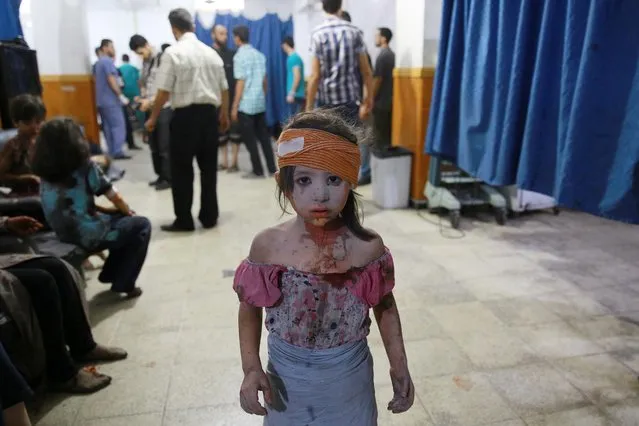
A wounded Syrian girl looks on at a make shift hospital in the rebel-held area of Douma, east of the capital Damascus, following shelling and air raids by Syrian government forces on August 22, 2015. (Photo by Abd Doumany/AFP Photo)

A wounded Syrian girl looks on at a make shift hospital in the rebel-held area of Douma, east of the capital Damascus, following shelling and air raids by Syrian government forces on August 22, 2015. At least 20 civilians and wounded or trapped 200 in Douma, a monitoring group said, just six days after regime air strikes killed more than 100 people and sparked international condemnation of one of the bloodiest government attacks in Syria's war. (Photo by Abd Doumany/AFP Photo)
Details
25 Aug 2015 10:52:00
A 17 year old girl lays dead next to her doll after she and her friend were killed by unknown motorcycle-riding gunmen, in an alley in Manila, Philippines early October 26, 2016. According to the police, a sign on a cardboard reading “Tulak ka, hayop ka”, which translates to “You are a (drug) pusher, you are an animal” was found with the body of girl's friend. (Photo by Damir Sagolj/Reuters)

Damir Sagolj has won Reuters photojournalist of the year for his 2016 work, which included documenting the deadly Philippine drug war and the North Korea congress. Here: A 17 year old girl lays dead next to her doll after she and her friend were killed by unknown motorcycle-riding gunmen, in an alley in Manila, Philippines early October 26, 2016. According to the police, a sign on a cardboard reading “Tulak ka, hayop ka”, which translates to “You are a (drug) pusher, you are an animal” was found with the body of girl's friend. (Photo by Damir Sagolj/Reuters)
Details
06 Mar 2017 00:03:00
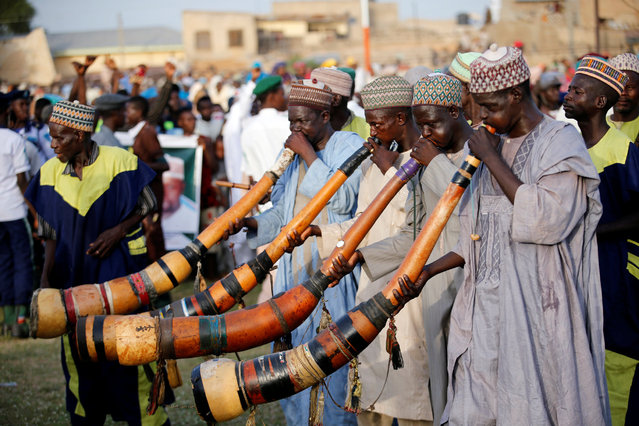
Traditional trumpeters perform during the durbar festival on the second day of Eid-al-Fitr celebrations in Nigeria's northern city of Kano, July 7, 2016. (Photo by Akintunde Akinleye/Reuters)

Traditional trumpeters perform during the durbar festival on the second day of Eid-al-Fitr celebrations in Nigeria's northern city of Kano, July 7, 2016. The Durbar festival begins with prayers, followed by a parade of the Emir and his entourage on horses, accompanied by music players, and ending at the Emir's palace. The Durbar festival had been in hausaland for more than 500 years. It was introduced by sarki muhammadu rumfa of kano in the late 14th century, as a way of demonstrating military power and skills before going to war. The festival is also an opportunity for local leaders to pay homage to emir throughout the jahi cheering. (Photo by Akintunde Akinleye/Reuters)
Details
09 Jul 2016 09:35:00
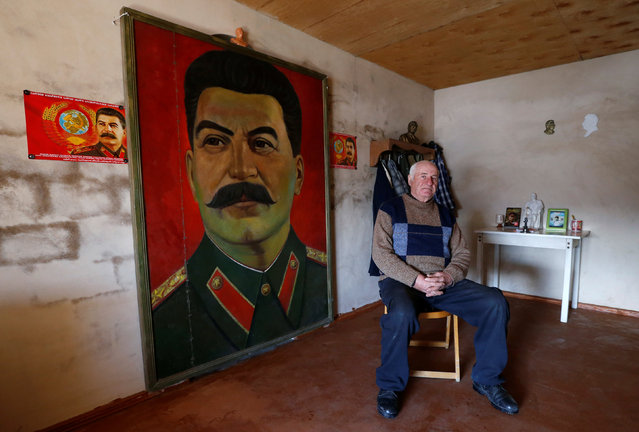
Retired builder Vasili Sidamonidze, 70, poses for a portrait at his home in Gori, Georgia, December 6, 2016. “Unfortunately, Stalin is not popular nowadays. Our people don't respect him. Only we, members of the (Communist) Party, respect him”, Sidamonidze said. “I always try to attend Stalin's birthday anniversaries in Gori. Unfortunately many people don't want to join us even if they live nearby. They look at us from their windows”. Stalin, who was born in Gori in 1878 and died in 1953, is largely reviled today in Georgia, which regained its independence during the 1991 collapse of the Soviet Union. Over the years, his memorials have been dismantled, most recently in 2010 when authorities removed a statue of the dictator from Gori's central square. But Stalin is still revered by a small group of mainly elderly supporters who stress his role in the industrialisation of the Soviet Union and in defeating Nazi Germany in World War Two. Each Dec. 21, a few dozen people mark his birthday by gathering outside a Gori museum dedicated to Stalin, where they make speeches and walk to the square where a 6-meter-high bronze statue of him once stood, calling for it to be reinstated. Opponents say it was a symbol of Moscow's still lingering shadow. In 2008, Russia fought a brief war with Georgia and recognised its breakaway regions of Abkhazia and South Ossetia as independent states. (Photo by David Mdzinarishvili/Reuters)

Retired builder Vasili Sidamonidze, 70, poses for a portrait at his home in Gori, Georgia, December 6, 2016. “Unfortunately, Stalin is not popular nowadays. Our people don't respect him. Only we, members of the (Communist) Party, respect him”, Sidamonidze said. “I always try to attend Stalin's birthday anniversaries in Gori. Unfortunately many people don't want to join us even if they live nearby. They look at us from their windows”. (Photo by David Mdzinarishvili/Reuters)
Details
17 Dec 2016 07:59:00
Syrian Tulin Hashemi waits for a job interview at a hotel in Vidigal slum in Rio de Janeiro, Brazil, September 22, 2015. Tulin, whose mother arrived two days ago, has been living in Brazil for two months. As she does not speak Portuguese, Tulin says it is difficult for her to find a job and therefore she is staying at the slum as it is one of the cheaper neighbourhoods to live in. (Photo by Pilar Olivares/Reuters)

Syrian Tulin Hashemi waits for a job interview at a hotel in Vidigal slum in Rio de Janeiro, Brazil, September 22, 2015. Tulin, whose mother arrived two days ago, has been living in Brazil for two months. As she does not speak Portuguese, Tulin says it is difficult for her to find a job and therefore she is staying at the slum as it is one of the cheaper neighbourhoods to live in. According to the National Committee for Refugees (CONARE), 2,077 people fleeing the Syrian civil war have settled in Brazil, whilst a quarter of the 8,400 refugees in the Latin American country come from Syria. (Photo by Pilar Olivares/Reuters)
Details
25 Sep 2015 08:05:00
A woman applies lipstick in a car that is parked at a beach facing a volcanic rock called Devil's Finger outside Yuzhno-Kurilsk, the main settlement on the Southern Kurile island of Kunashir September 15, 2015. (Photo by Thomas Peter/Reuters)

A woman applies lipstick in a car that is parked at a beach facing a volcanic rock called Devil's Finger outside Yuzhno-Kurilsk, the main settlement on the Southern Kurile island of Kunashir September 15, 2015. Russian residents of the island chain at the centre of a dispute between Japan and Russia that has held up a treaty to formally end World War Two hope a diplomatic solution will lure tourists and investment to help refurbish rickety infrastructure. The Southern Kuriles are referred to in Japan as the Northern Territories. (Photo by Thomas Peter/Reuters)
Details
28 Sep 2015 08:03:00
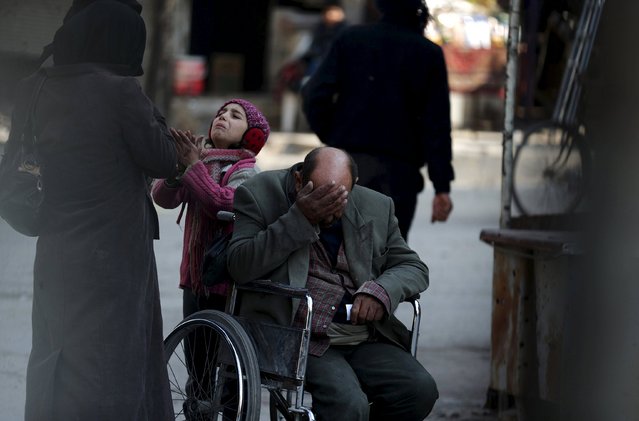
A girl asks a passerby for help to pay a medical bill as her father sits in his wheelchair in the Douma neighbourhood of Damascus Syria February 3, 2016. (Photo by Bassam Khabieh/Reuters)

Hadeel, 10, asks a passerby for help to pay a medical bill as her father Shahrour, 54, sits in his wheelchair in the Douma neighbourhood of Damascus Syria February 3, 2016. Shahrour said he developed diabetes at the beginning of the war in Syria. A lack of insulin led to his medical condition worsening and his right foot had to be amputated. Recently he also suffered a stroke that paralysed half his face. He and part of his extended family, a total of 18 people, live together and struggle to get by. (Photo by Bassam Khabieh/Reuters)
Details
12 Feb 2016 12:46:00


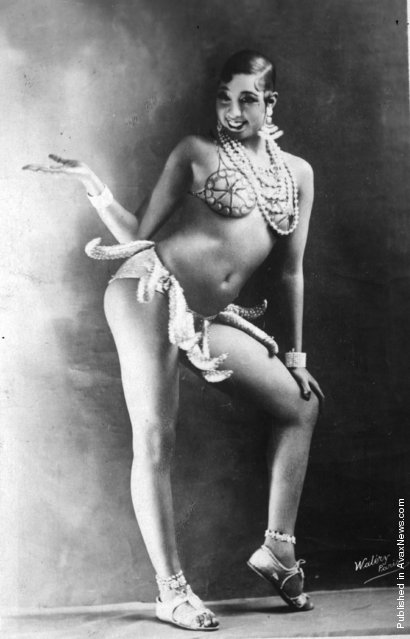
“Josephine Baker (June 3, 1906 – April 12, 1975) was an American-born French dancer, singer, and actress. Nicknamed the “Bronze Venus”, the “Black Pearl”, and even the “Créole Goddess” in anglophone nations.

Baker was the first African American female to star in a major motion picture and to integrate an American concert hall, and to become a world-famous entertainer. She is also noted for her contributions to the Civil Rights Movement in the United States (she was offered the unofficial leadership of the movement by Coretta Scott King in 1968 following Martin Luther King, Jr.'s assassination, but turned it down), for assisting the French Resistance during World War II and for being the first American-born woman to receive the French military honor, the Croix de guerre”.

Photo: American entertainer Josephine Baker in costume for her famous “banana dance”. Baker was an overnight sensation when she arrived in Paris in the mid-1920s. (Photo by Walery/Getty Images)
Details
18 Mar 2011 10:22:00