Loading...
Done
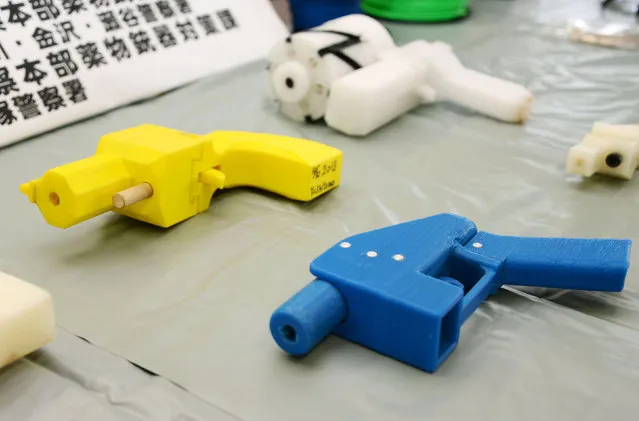
Seized plastic handguns which were created using 3D printing technology are displayed at Kanagawa police station in Yokohama, south of Tokyo, in this photo taken by Kyodo May 8, 2014. (Photo by Reuters/Kyodo)

Seized plastic handguns which were created using 3D printing technology are displayed at Kanagawa police station in Yokohama, south of Tokyo, in this photo taken by Kyodo May 8, 2014. Yoshimoto Imura became the first man to be arrested in Japan for illegal possession of two guns he created himself using 3D printing technology, Japanese media said on Thursday. The 27-year-old, a college employee in the city of Kawasaki, was arrested after police found video online posted by Imura claiming to have produced his own guns. Gun possession is strictly regulated in Japan. Police raided Imura's home and found five guns, two of which could fire real bullets, Japanese media said. (Photo by Reuters/Kyodo)
Details
12 May 2014 10:46:00
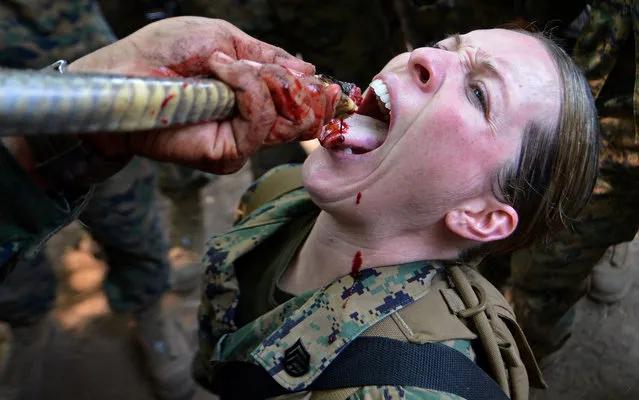
In a military base in the Thai province of Chon Buri February 20 U.S. Marines Navy with Thailand began their studies in jungle survival. The event is held in joint military exercises “Cobra Gold 2013”. During a jungle survival program February 20, 2013 taught by Royal Thai Special Forces in Sannapit, Thailand, U.S. Marines learned to catch cobras and drink their fresh blood, not to mention eat forest insects and pull the heads off of chicken. The training was part of Operation Cobra Gold 13, the 32nd edition of international military exercises hosted by the Thai. According to a U.S. Marines press release, Cobra Gold is the largest exercise of its kind in Asia and incorporates troops from five other nations in addition to the U.S. and Thailand. The Daily Mail reports that the Marines were invited to experience the local custom of drinking cobra blood after being taught to catch and kill cobras in the wild. As CNN notes, Cobra blood is believed to be a panacea and aphrodiasic in parts of Southeast Asia. In Jakarta, vendors can earn over $100 a night selling shots of cobra blood mixed with liquor. (Photo by Pornchai Kittiwongsakul/AFP Photo)

During a jungle survival program February 20, 2013 taught by Royal Thai Special Forces in Sannapit, Thailand, U.S. Marines learned to catch cobras and drink their fresh blood, not to mention eat forest insects and pull the heads off of chicken. The training was part of Operation Cobra Gold 13, the 32nd edition of international military exercises hosted by the Thai. According to a U.S. Marines press release, Cobra Gold is the largest exercise of its kind in Asia and incorporates troops from five other nations in addition to the U.S. and Thailand. The Daily Mail reports that the Marines were invited to experience the local custom of drinking cobra blood after being taught to catch and kill cobras in the wild. As CNN notes, Cobra blood is believed to be a panacea and aphrodiasic in parts of Southeast Asia. In Jakarta, vendors can earn over $100 a night selling shots of cobra blood mixed with liquor. (Photo by Pornchai Kittiwongsakul/AFP Photo)
Details
23 Feb 2013 11:52:00
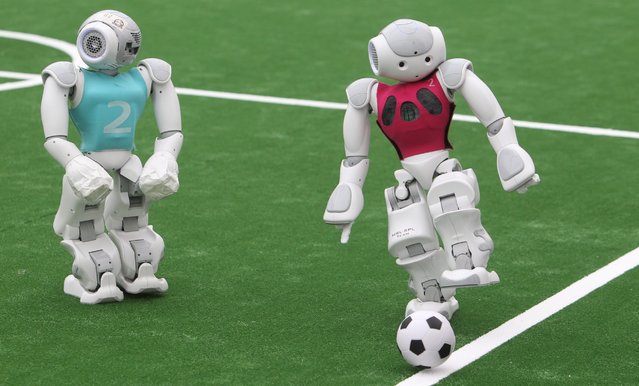
Humanoid robots compete in a group match of the 20th RoboCup in Leipzig, Germany, June 30, 2016. Thousands of participants from over 40 countries are competing this year in RoboCup 2016 with their humanoid soccer playing robots in Leipzig, Germany. “When established in 1997, the original mission was to field a team of robots capable of winning against the human soccer World Cup champions by 2050”, according to RoboCup. Now participants compete in five different soccer categories as well as RoboCup Rescue, which researches robotic effectiveness and usefulness to first responders. (Photo by Sebastian Willnow/EPA)

Humanoid robots compete in a group match of the 20th RoboCup in Leipzig, Germany, June 30, 2016. About 3,500 participants from 45 countries and regions compete in the robot world championship until 04 July. (Photo by Sebastian Willnow/EPA)
Details
02 Jul 2016 12:39:00
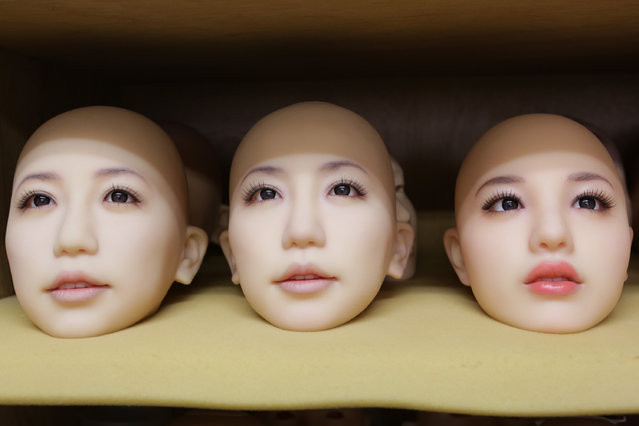
Heads of love dolls are seen on the shelf on March 9, 2017 in Tokyo, Japan. Japan's oldest and largest “love doll” maker Orient Industry, has been producing silicone love dolls since 1977, and has seen there is a trend for intimate relationships with silicone dolls in Japan. The Orient Industry's factory produces approximately 500 life size hand-made per year, and one doll, costs up to 600,000JPY (approx. 6,000 USD), takes four to five weeks to be finished. Originally, the company was marketing love dolls for disabled people, and the company continues to support the community by providing discounts and consulting their sexual urges. (Photo by Taro Karibe/Getty Images)

Heads of love dolls are seen on the shelf on March 9, 2017 in Tokyo, Japan. Japan's oldest and largest “love doll” maker Orient Industry, has been producing silicone love dolls since 1977, and has seen there is a trend for intimate relationships with silicone dolls in Japan. (Photo by Taro Karibe/Getty Images)
Details
18 Mar 2017 10:32:00
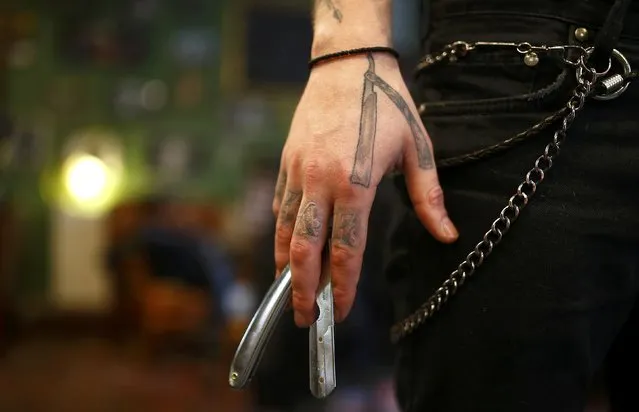
Alex “Torreto” Vellios, a 26-year old barber sports his tattoo of an open razor as he holds a real razor while preparing for his first customer of the day at his Torreto barber shop in Frankfurt, January 6, 2015. (Photo by Kai Pfaffenbach/Reuters)

Alex “Torreto” Vellios, a 26-year old barber sports his tattoo of an open razor as he holds a real razor while preparing for his first customer of the day at his Torreto barber shop in Frankfurt, January 6, 2015. Inspired by a childhood trip to the barbers with his grandfather in Greece, Vellios, a formally trained hairdresser and self-taught barber, fulfilled his dream of opening his own gentleman's barber shop five months ago and has turned it into a successful male grooming and shaving business with customers now waiting up to three to four weeks for an appointment to see him. (Photo by Kai Pfaffenbach/Reuters)
Details
09 Jan 2015 13:00:00
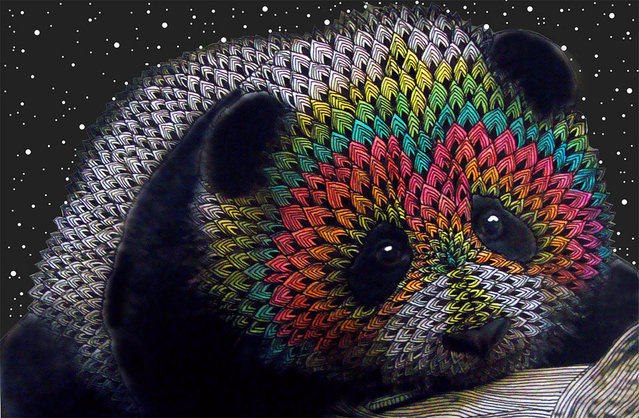
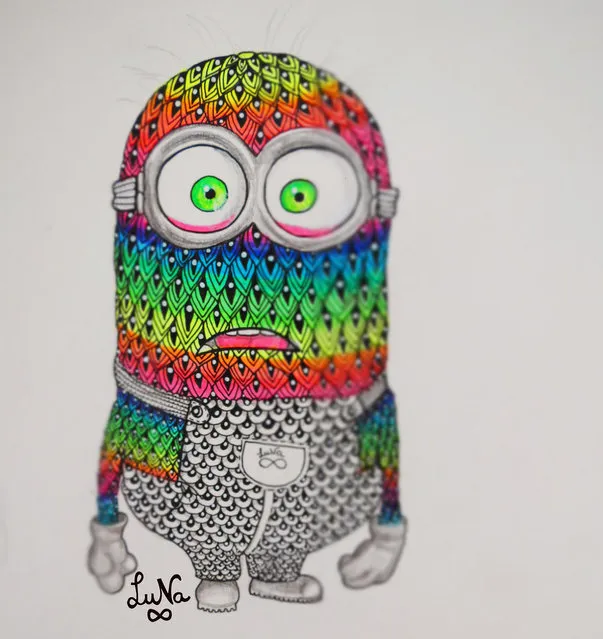
Illustration By Luna Portnoi Part 1

Luna Portnoi emerging Argentine Artist Luna Portnoi has been developing her practice in Buenos Aires for over five years. Her work is deeply connected to themes of color, nature, astronomy, childhood, magic, ancient civilizations, collaboration and the passions, openness and emotions we experience as children that are often left behind in adulthood. Already well known in Buenos Aires, the Artist has also received international press coverage.


See Also: Part 2 _ Part 3
Details
17 Sep 2014 07:47:00
Illustration By Luna Portnoi Part 3

Luna Portnoi emerging Argentine Artist Luna Portnoi has been developing her practice in Buenos Aires for over five years. Her work is deeply connected to themes of color, nature, astronomy, childhood, magic, ancient civilizations, collaboration and the passions, openness and emotions we experience as children that are often left behind in adulthood. Already well known in Buenos Aires, the Artist has also received international press coverage.


See Also: Part 1 _ Part 2
Details
22 Sep 2014 08:59:00
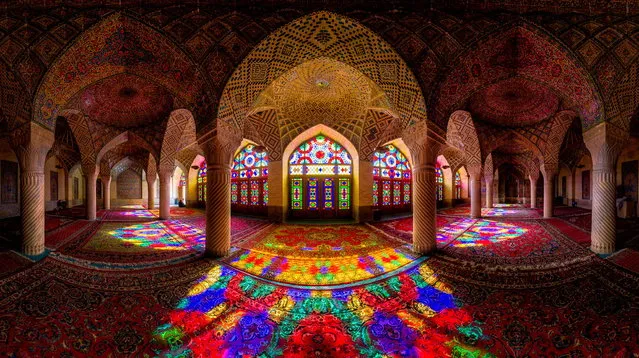
The Nasir Al-Mulk Mosque

The Nasīr al-Mulk Mosque or Pink Mosque is a traditional mosque in Shiraz, Iran, located in Goade-e-Araban place (near the famous Shah Cheragh mosque). The mosque was built during the Qājār era, and is still in use under protection by Nasir al Mulk's Endowment Foundation. It was built by the order of Mirza Hasan Ali Nasir al Molk, one of the lords of the Qajar Dynasty, in 1876 and was finished in 1888. The designers were Muhammad Hasan-e-Memar and Muhammad Reza Kashi Paz-e-Shirazi. The mosque extensively uses colored glass in its facade, and displays other traditional elements such as panj kāseh-i (five concaves) in its design, it is also named in popular culture as Pink Mosque due to the usage of beautiful pink color tiles for its interior design.
Details
26 Mar 2014 14:04:00