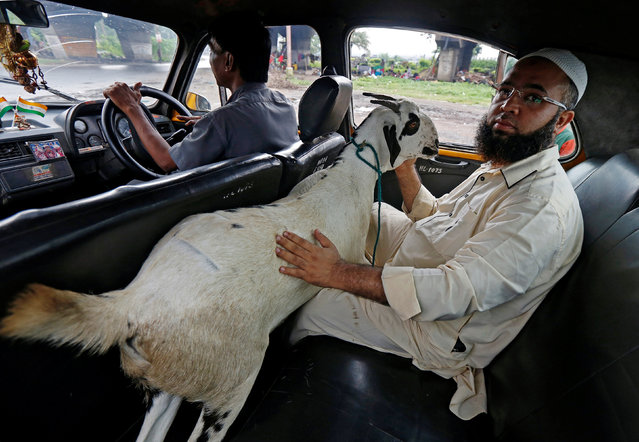
A man sits in the back of a taxi with a goat after purchasing it from a livestock market ahead of the Eid al-Adha festival in Kolkata, India, September 8, 2016. (Photo by Rupak De Chowdhuri/Reuters)
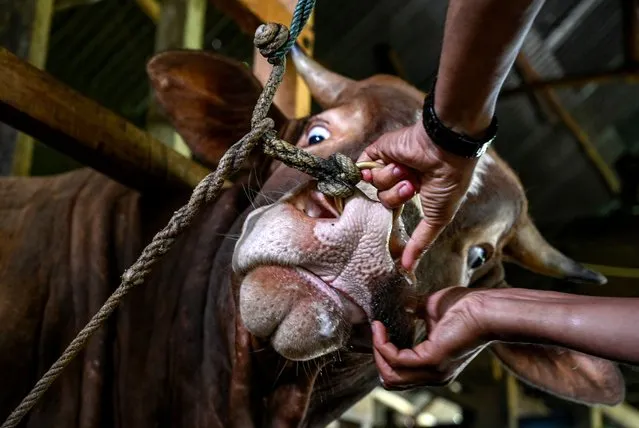
A veterinarian inspects a cow for foot-mouth-disease ahead of Eid al-Adha, the feast of the sacrifice marking the end of the Hajj pilgrimage to Mecca and commemorates Prophet Abraham's readiness to sacrifice his son to show obedience to Allah, at a cowshed in Lambaro, Aceh province on July 7, 2022. (Photo by Chaideer Mahyuddin/AFP Photo)
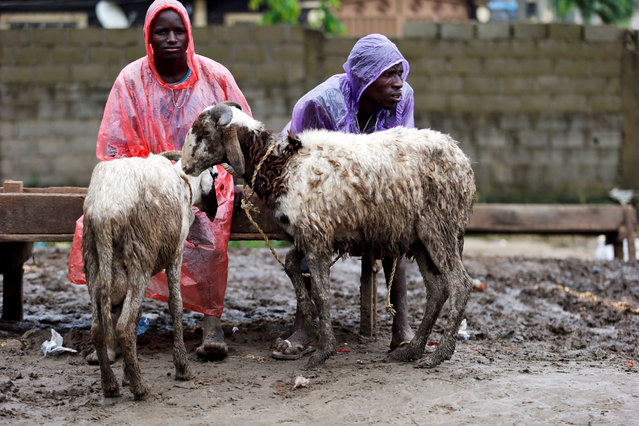
Men selling sheep wait for customers at a local livestock market, ahead of the Eid al-Adha festival, in Lagos, Nigeria September 11, 2016. (Photo by Akintunde Akinleye/Reuters)
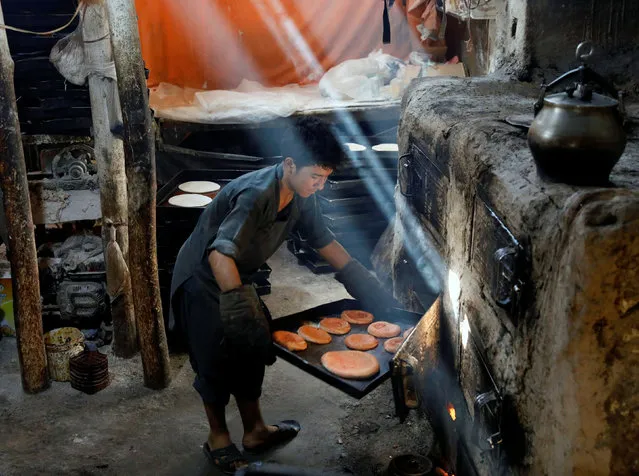
A man prepares cookies at a small traditional factory for the Eid al-Adha, amid the spread of the coronavirus disease (COVID-19), in Kabul, Afghanistan on July 29, 2020. (Photo by Mohammad Ismail/Reuters)
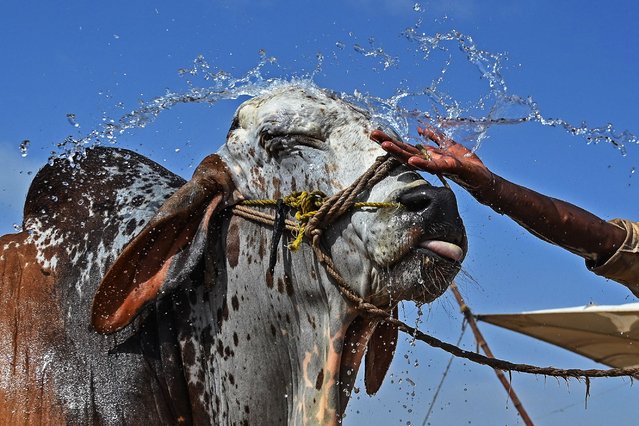
A livestock vendor gives bath to a bull at a cattle market ahead of the Muslim festival of Eid al-Adha, on the outskirts of Karachi on June 10, 2024. (Photo by Asif Hassan/AFP Photo)
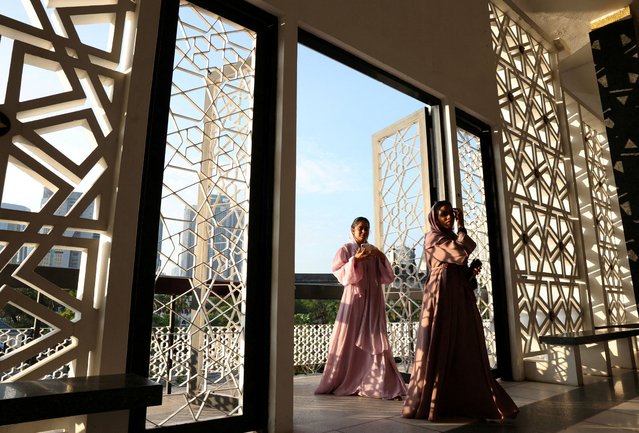
Muslims women walk to the prayer hall of a mosque for a mass prayer during Eid al-Adha celebrations at Kuala Lumpur, Malaysia, on June 17, 2024. (Photo by Hasnoor Hussain/Reuters)
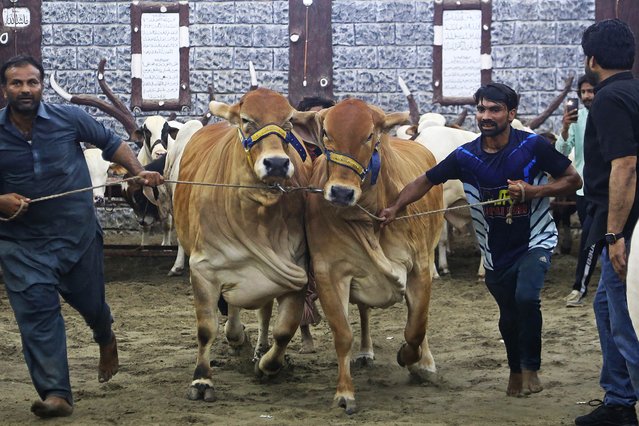
Livestock vendors displays their bulls to customers at a cattle market in Hyderabad, in Pakistan's Sindh province on May 20, 2025, ahead of the upcoming Muslim festival of Eid al-Adha. (Photo by Husnain Ali/AFP Photo)
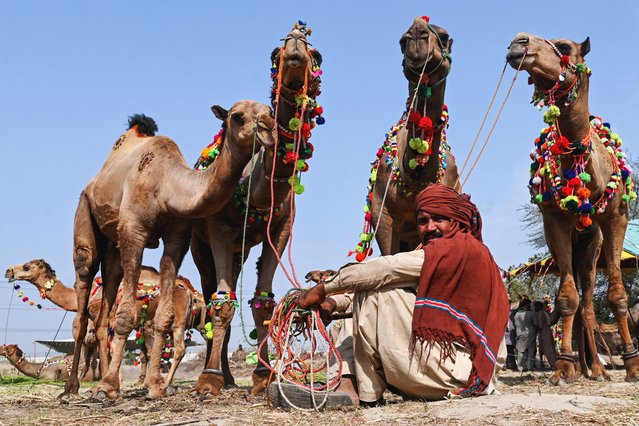
A herder sits amidst his camels at a cattle market in Lahore on June 3, 2025, ahead of the Muslim festival of Eid al-Adha. (Photo by Arif Ali/AFP Photo)