Loading...
Done
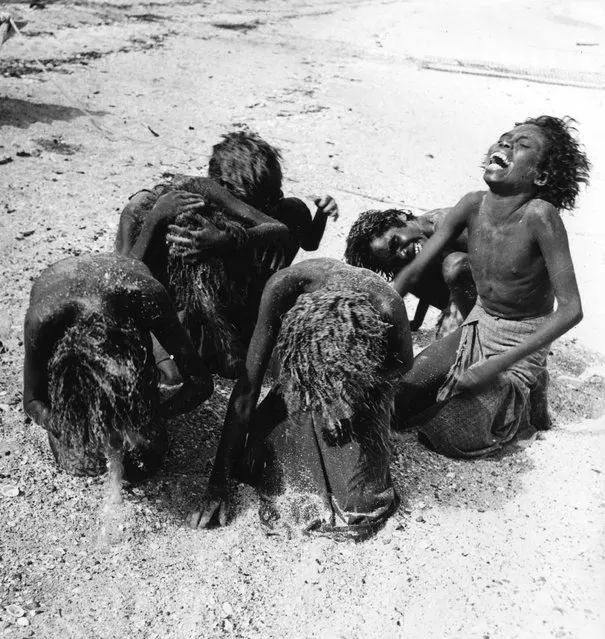
1st January 1950:  Aboriginal women washing their hair with sand at Arnhem land in the Northern Territory of Australia.  (Photo by Three Lions/Getty Images)

“Australian Aborigines are those people regarded as indigenous to the Australian continent. In the High Court of Australia, Australian Aborigines have been specifically identified as a group of people who share, in common, biological ancestry back to the original occupants of the continent”. – Wikipedia

Photo: Aboriginal women washing their hair with sand at Arnhem land in the Northern Territory of Australia. 1st January 1950. (Photo by Three Lions)
Details
02 Feb 2014 07:29:00
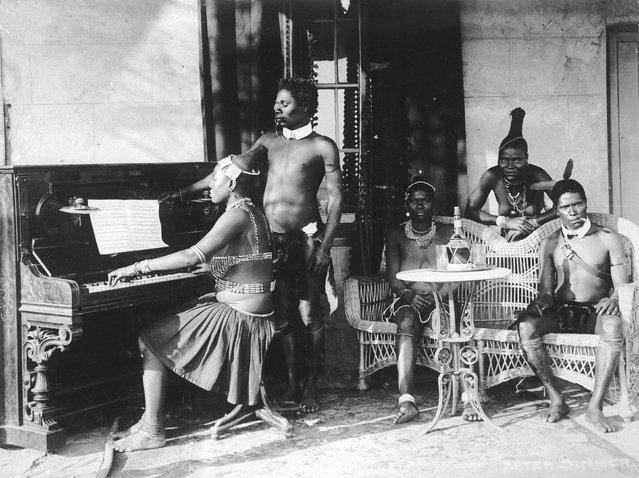
circa 1925:  A Zulu woman playing the piano while a group of others sit and listen.  (Photo by General Photographic Agency/Getty Images)

“The Zulu are the largest South African ethnic group, with an estimated 10–11 million people living mainly in the province of KwaZulu-Natal. Small numbers also live in Zimbabwe, Zambia, and Mozambique. Their language, Zulu, is a Bantu language; more specifically, part of the Nguni subgroup. The Zulu Kingdom played a major role in South African history during the 19th and 20th centuries. Under apartheid, Zulu people were classed as third-class citizens and suffered from state-sanctioned discrimination. They remain today the most numerous ethnic group in South Africa, and now have equal rights along with all other citizens”. – Wikipedia.

Photo: A Zulu woman playing the piano while a group of others sit and listen (to put it briefly, Englishmen scoff over Zulu). South Africa, circa 1925. (Photo by General Photographic Agency)

Details
03 Feb 2014 09:40:00
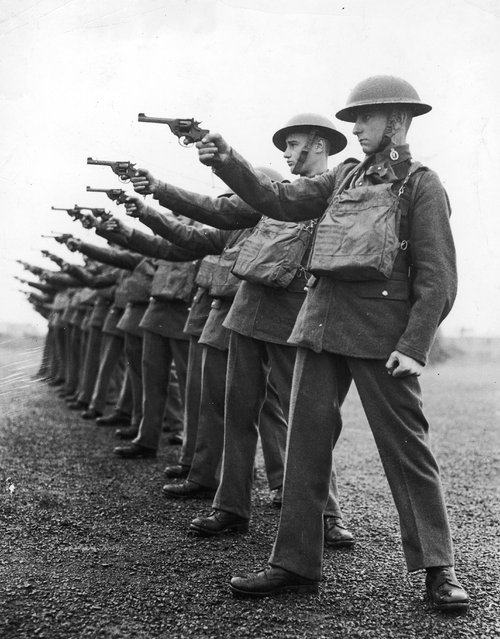
A line of soldiers firing handguns during a training session, circa 1920.  (Photo by Keystone)

A line of soldiers firing handguns during a training session, circa 1920. (Photo by Keystone). P.S. All pictures are presented in high resolution.
Details
03 Sep 2012 10:22:00
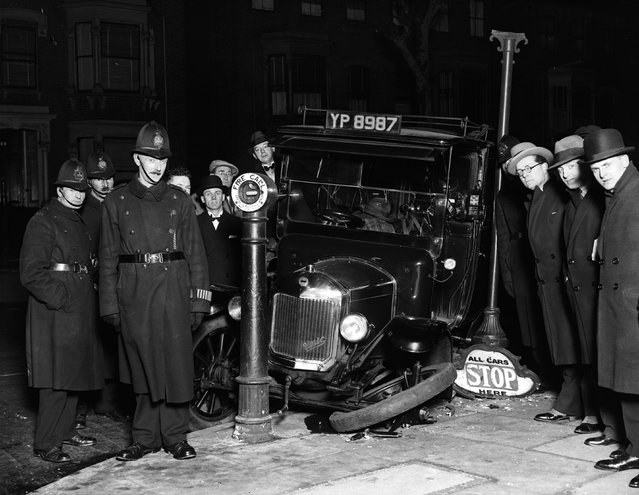
A group of policemen and passers-by survey the wreckage of a taxi in Stoke Newington, London. Its front wheel lies on the pavement next to a sign bearing the ironic instruction “All Cars Stop Here”. 14th February 1930. (Photo by Fox Photos)

A group of policemen and passers-by survey the wreckage of a taxi in Stoke Newington, London. Its front wheel lies on the pavement next to a sign bearing the ironic instruction “All Cars Stop Here”. 14th February 1930. (Photo by Fox Photos). P.S. All pictures are presented in high resolution.
Details
09 Sep 2012 09:31:00
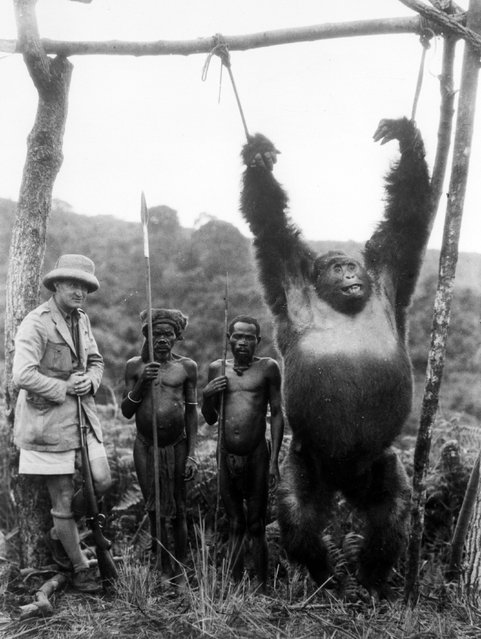
British Captain A. Gatti and two pygmies with a 500lb gorilla strung from a pole, which the captain shot in the Tchibinda forest in the Lake Kivu region, Democratic Republic of the Congo, circa 1930. (Photo by General Photographic Agency)

British captain A. Gatti and two pygmies with a 500lb gorilla strung from a pole, which the captain shot in the Tchibinda forest in the Lake Kivu region, Democratic Republic of the Congo, circa 1930. (Photo by General Photographic Agency). P.S. All pictures are presented in high resolution.
Details
18 Sep 2012 09:35:00
Maurice Heesen Photography  Death With Smile

We only fear death because we don’t know what is there. It’s better to keep laughing in life until we meet death.
Details
11 Oct 2012 09:47:00
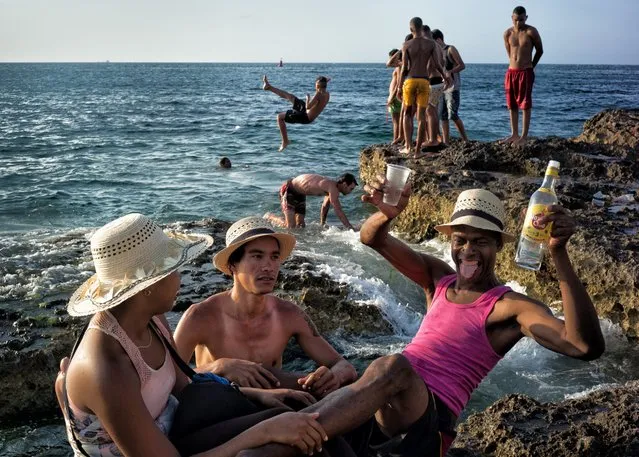
Saguy says that while portraits of Fidel Castro are still found everywhere, they coexist with plenty of foreign brands on subtle display: from Apple logo decals affixed to 1950s Chevys to young people wearing Adidas T-shirts and Converse shoes. Here: Several groups of locals relax on the Malecon in Old Havana, Cuba May 1, 2016. Some chat and drink rum while others dive into the warm Caribbean Sea. (Photo by Dotan Saguy)

Photographer Dotan Saguy visited Cuba expecting to find resentment toward Americans, but he says that, instead, “Every Cuban I met was warm and welcoming despite me being an American”. Here: Several groups of locals relax on the Malecon in Old Havana, Cuba May 1, 2016. Some chat and drink rum while others dive into the warm Caribbean Sea. (Photo by Dotan Saguy)
Details
27 May 2016 12:50:00
Graham Fink has been documenting the demolition sites of Shanghai for five years, trying to capture the state of flux during this period of rapid urbanisation. His Ballads of Shanghai exhibition is at London’s Riflemaker gallery until Sunday. Here: “Big Dreams”. (Photo by Graham Fink/Riflemaker)

Graham Fink has been documenting the demolition sites of Shanghai for five years, trying to capture the state of flux during this period of rapid urbanisation. His Ballads of Shanghai exhibition is at London’s Riflemaker gallery until Sunday. Here: “Big Dreams”. (Photo by Graham Fink/Riflemaker)
Details
10 Feb 2016 11:48:00