Loading...
Done
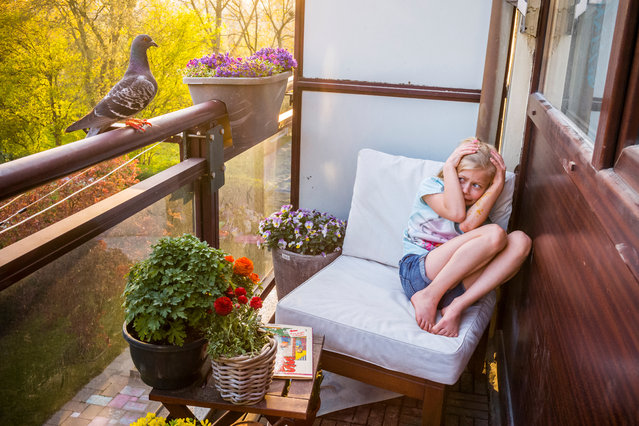
Nature – first prize, stories. Pandemic Pigeons – A Love Story. The photographer’s daughter, Merel, cowers after Dollie flies past and perches on the balcony before entering the house in Vlaardingen in the Netherlands on 6 April 2020. “She’s still frightened when Dollie suddenly lands on the balcony railing. I hide my smile behind the camera, as I try to comfort her by saying they won’t hurt you. “I thought he was going to attack me”, she replies. As the nesting pigeons keep coming back to our place, slowly my girls have started to appreciate them – perhaps not as much as I do, but it’s a start”. (Photo by Jasper Doest/World Press Photo 2021)

Nature – first prize, stories. Pandemic Pigeons – A Love Story. The photographer’s daughter, Merel, cowers after Dollie flies past and perches on the balcony before entering the house in Vlaardingen in the Netherlands on 6 April 2020. “She’s still frightened when Dollie suddenly lands on the balcony railing. I hide my smile behind the camera, as I try to comfort her by saying they won’t hurt you. “I thought he was going to attack me”, she replies. As the nesting pigeons keep coming back to our place, slowly my girls have started to appreciate them – perhaps not as much as I do, but it’s a start”. (Photo by Jasper Doest/World Press Photo 2021)
Details
17 Apr 2021 09:30:00
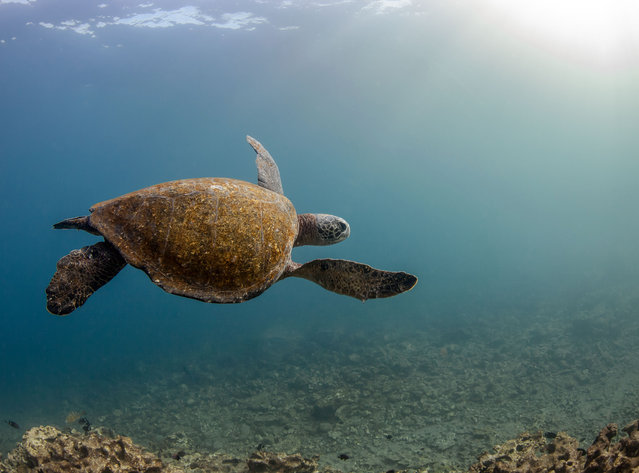
Green turtles take special care of their carapace, scraping algae off on rocks or letting cleaner fish remove parasites. Thanks to long-term protection of nesting sites, and measures to reduce the numbers caught in fishing gear, some green turtle populations are starting to recover. (Photo by Philip Hamilton/The Guardian)

Teeming with images of spectacular underwater scenes from around the world, Call of the Blue is the culmination of a five-year project by the photographer and ocean conservationist Philip Hamilton. This groundbreaking book includes contributions from acclaimed scientists and ocean “guardians”, who reveal what drove them to answer the call of the blue. (Photo by Philip Hamilton/The Guardian)
Details
23 Nov 2018 00:03:00
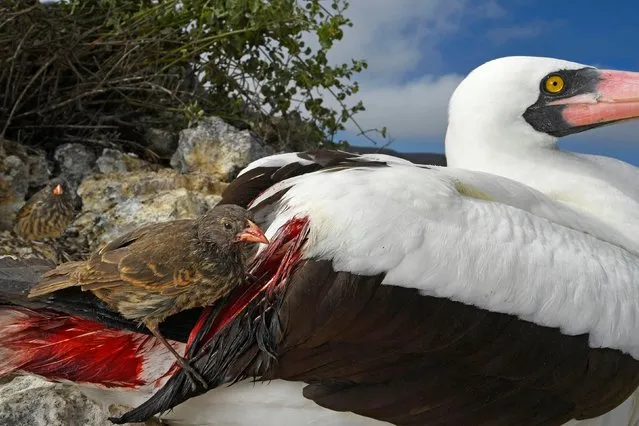
Bloodthirsty by Thomas P Peschak, Germany/South Africa — winner, Behaviour: birds. When rations run short on Wolf Island, in the remote northern Galápagos, the sharp-beaked ground finches become vampires. Their sitting targets are Nazca boobies and other large birds. The finches rely on a scant diet of seeds and insects, which regularly dries up, so they drink blood to survive. ‘I’ve seen more than half a dozen finches drinking from a single Nazca booby,’ says Tom. Rather than leave their nests the boobies tolerate the vampires, and the blood loss doesn’t seem to cause permanent harm. (Photo by Thomas P Peschak/2018 Wildlife Photographer of the Year)

Bloodthirsty by Thomas P. Peschak, Germany/South Africa — winner, Behaviour: birds. When rations run short on Wolf Island, in the remote northern Galápagos, the sharp-beaked ground finches become vampires. Their sitting targets are Nazca boobies and other large birds. The finches rely on a scant diet of seeds and insects, which regularly dries up, so they drink blood to survive. ‘I’ve seen more than half a dozen finches drinking from a single Nazca booby,’ says Tom. Rather than leave their nests the boobies tolerate the vampires, and the blood loss doesn’t seem to cause permanent harm. (Photo by Thomas P. Peschak/2018 Wildlife Photographer of the Year)
Details
19 Oct 2018 00:05:00
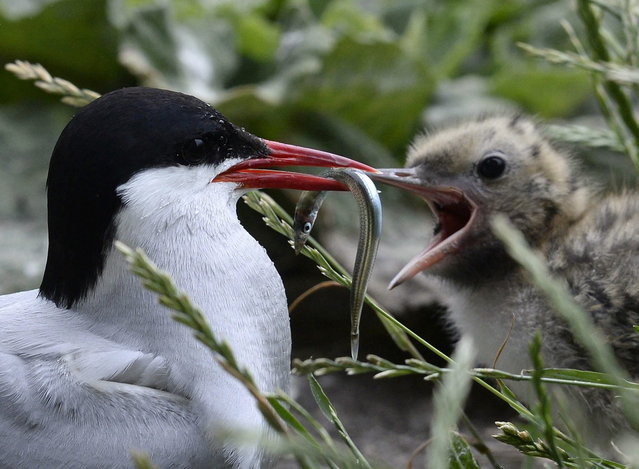
An arctic tern feeds its chick on the Farne Islands off the Northumberland coast, northern England July 8, 2013. (Photo by Nigel Roddis/Reuters)

An arctic tern feeds its chick on the Farne Islands off the Northumberland coast, northern England July 8, 2013. The Farne Islands, which lie off the coast of northeast England, are home to a huge array of wildlife. The islands are owned and protected by the British conservation charity, the National Trust, which says they host some 23 species of seabird, as well as a substantial colony of grey seals, who come to have their pups there in the autumn. Every five years the National Trust carries out a census of the islands' population of puffins, and this year's survey showed there were almost 40,000 nesting pairs on the islands – an 8 percent rise from 2008. (Photo by Nigel Roddis/Reuters)
Details
11 Dec 2013 09:21:00
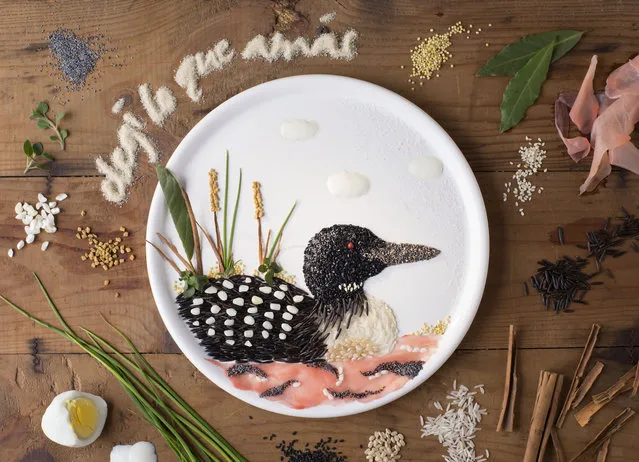
Meet the woman who has made playing with food her job and creates incredible pieces of edible art. From city landmarks to colorful animals, Anna Keville Joyce lets her imagination run wild as she creates a series of intricate art works made entirely from food. Using anything from vegetables to sausages, Annas pieces are so detailed that at first glance it is difficult to tell what they are made from. (Photo by Anna Keville Joyce/Caters News)

Meet the woman who has made playing with food her job and creates incredible pieces of edible art. From city landmarks to colorful animals, Anna Keville Joyce lets her imagination run wild as she creates a series of intricate art works made entirely from food. Using anything from vegetables to sausages, Annas pieces are so detailed that at first glance it is difficult to tell what they are made from. Here: a nesting bird. (Photo by Anna Keville Joyce/Caters News)
Details
20 Oct 2015 08:06:00
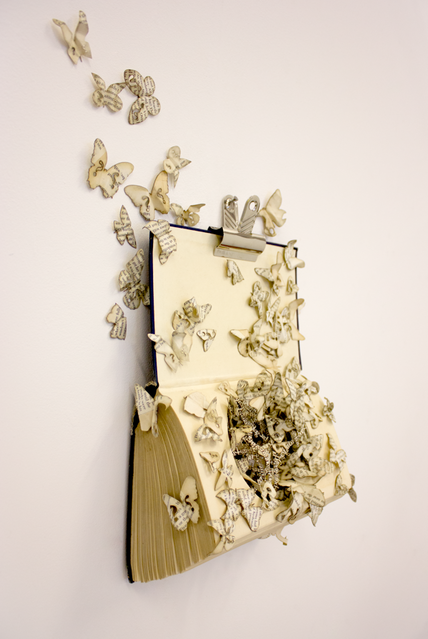
Plagued by Doubt By Thomas Wightman

Thoughts. They fly through the broad expenses of our mind, floating gracefully in midair, going into the clouds, and then reemerging once again. Some are quick and furtive, others are grand and majestic. We reflect upon them as they enter our minds, and once they leave, they are usually gone for good. However, some thoughts are different. These thoughts resemble a flock of angry birds or a swarm of hungry moths that invade your mind, slowly eating away at your sanity, strength, and desire to live. Such thoughts often plague that minds of people with Obsessive Compulsive disorder. They completely occupy their time; constantly there; ever-present. With his book sculpture, Thomas Wightman was able to accurately convey the way these thoughts consume the mind, slowly building a nest within it, resisting all attempts to drive them away.

Thomas Wightman


See Also: Derailing My Train of Thought
Details
19 Mar 2015 09:11:00


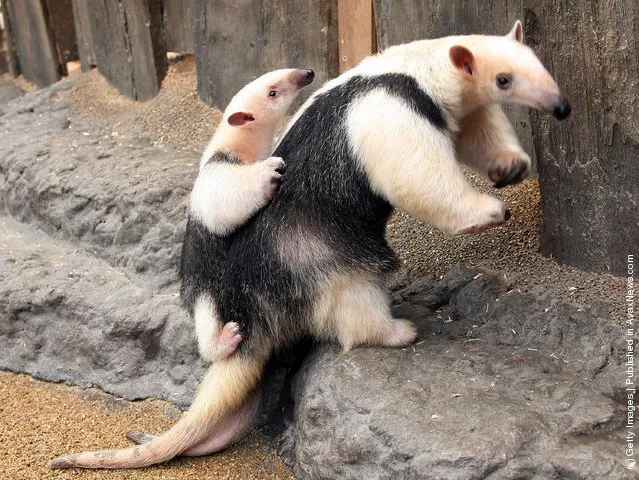
“The Southern Tamandua, Collared Anteater or Lesser Anteater (Tamandua tetradactyla) is a species of anteater from South America. It is a solitary animal, found in many habitats from mature to highly disturbed secondary forests and arid savannas. It feeds on ants, termites and bees. It has very strong foreclaws that can be used to break insect nests or to defend itself”. – Wikipedia

Photo: A three-month-old baby Southern Tamandua “Konbu” lies on its mother Tae's back at Sunshine International Aquarium on July 7, 2009 in Tokyo, Japan. Baby Southern Tamandua feels safe and comfortable holding onto something and normally stays on the mother's back until around 3 months old. (Photo by Junko Kimura/Getty Images)
Details
19 May 2011 10:31:00
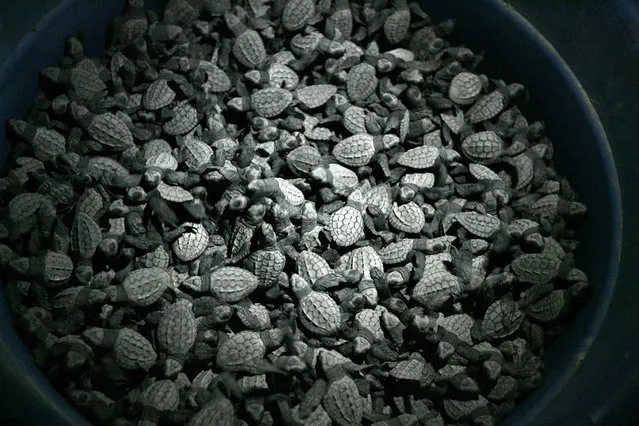
Olive Ridley turtle hatchlings (Lepidochelys olivacea) sit in baskets and trays at the turtle camp La Gloria, before their release into the ocean in Tomatlan November 15, 2013. (Photo by Alejandro Acosta/Reuters)

Olive Ridley turtle hatchlings (Lepidochelys olivacea) sit in baskets and trays at the turtle camp La Gloria, before their release into the ocean in Tomatlan November 15, 2013. Twenty years ago, Mexico's government implemented ecological plans to protect the sea turtles from being hunted for their leather and meat and established conservation areas and a pay system for local residents to protect turtle nests. Millions of baby turtles hatch on the shores in November and December, according to an environmental group. It is estimated that in 2012, there were 20 million newborns. Hatching season is still underway, but officials say they expect there will be even more turtles born this year. (Photo by Alejandro Acosta/Reuters)
Details
25 Nov 2013 08:54:00