Loading...
Done
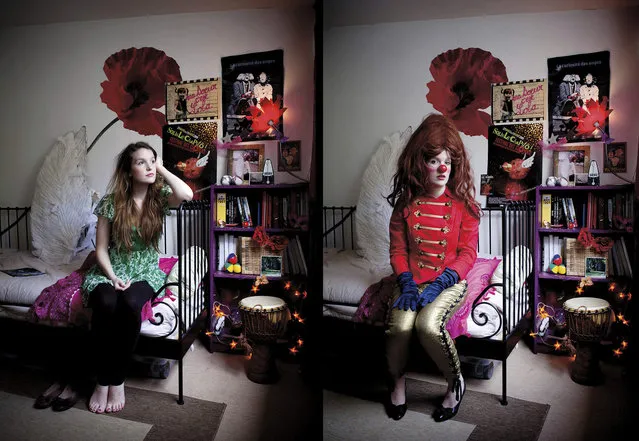
Lola is seen at left in everyday clothes – and then at right in her work clothes. She works as a clown in Paris. (Photo by Bruno Fert/Picturetank)

“The series of photos called Workwears, by French photographer Bruno Fert, visually juxtaposes people’s private lives with their lives at work. A firefighter, a fisherman, a nurse, a diver, a judge. One by one, Fert’s photos show people in their homes wearing everyday clothing – followed by another photo showing them dressed in the clothing of their chosen professions. Our reaction, Fert said, reminds us how tightly humans hold on to certain stereotypes about some professions. “I like to break those stereotypes”, he said”. – Thom Patterson via CNN. Here: Lola is seen at left in everyday clothes – and then at right in her work clothes. She works as a clown in Paris. (Photo by Bruno Fert/Picturetank)
Details
29 Oct 2014 12:40:00
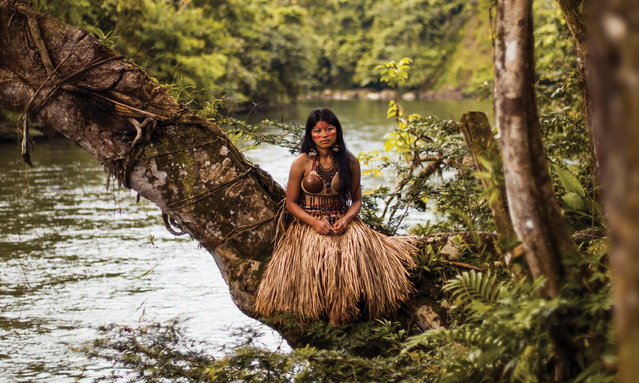
Ecuador: “More and more tribes of Amazonia are starting to adopt modern clothes for everyday life. But they are still keeping their traditional clothes for important events. I photographed this young woman in her wedding outfit”. (Photo by Mihaela Noroc/The Guardian)

Photographer Mihaela Noroc travelled the world from Ethiopia to the US and from Guatemala to France in search of natural and authentic beauty. She introduces some of the inspiring women she met on her journey. Here: Ecuador. “More and more tribes of Amazonia are starting to adopt modern clothes for everyday life. But they are still keeping their traditional clothes for important events. I photographed this young woman in her wedding outfit”. (Photo by Mihaela Noroc/The Guardian)
Details
27 Sep 2017 08:29:00
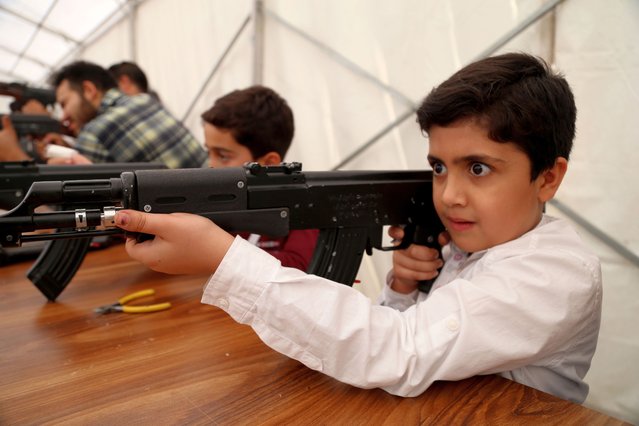
Iranian visitors practice shooting with shooting simulators made in Iran at a police shooting simulation booth at the 19th International Police Security and Safety Equipment Exhibition (IPAS 2022) at the grand Mosalla mosque in Tehran, Iran, on October 20, 2022. (Photo by Rouzbeh Fouladi/Avalon)

Iranian visitors practice shooting with shooting simulators made in Iran at a police shooting simulation booth at the 19th International Police Security and Safety Equipment Exhibition (IPAS 2022) at the grand Mosalla mosque in Tehran, Iran, on October 20, 2022. (Photo by Rouzbeh Fouladi/Avalon)
Details
29 Oct 2022 04:00:00
A woman browses through kimonos for sale at Boroichi flea market in Tokyo December 15, 2014. In the 16th century, Boroichi was a place for farmers to buy and sell rags, known as boro, for mending clothes and weaving sandals. Now in its 436th year, the original spirit lingers, with about 700 stands hawking fabric, used clothes and piles of rags. Others sell kitchen tools, pottery, seaweed and spices. (Photo by Thomas Peter/Reuters)

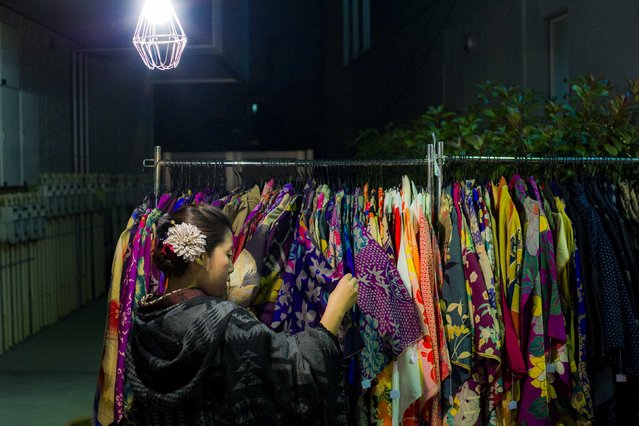
A woman browses through kimonos for sale at Boroichi flea market in Tokyo December 15, 2014. In the 16th century, Boroichi was a place for farmers to buy and sell rags, known as boro, for mending clothes and weaving sandals. Now in its 436th year, the original spirit lingers, with about 700 stands hawking fabric, used clothes and piles of rags. Others sell kitchen tools, pottery, seaweed and spices. About 200,000 people flock to the market, which is only open for four mid-winter days a year – two in December and two in January. (Photo by Thomas Peter/Reuters)
Details
19 Dec 2014 12:50:00
A woman dressed in traditional clothing visits a business street in Beijing on June 5, 2024. (Photo by Wang Zhao/AFP Photo)

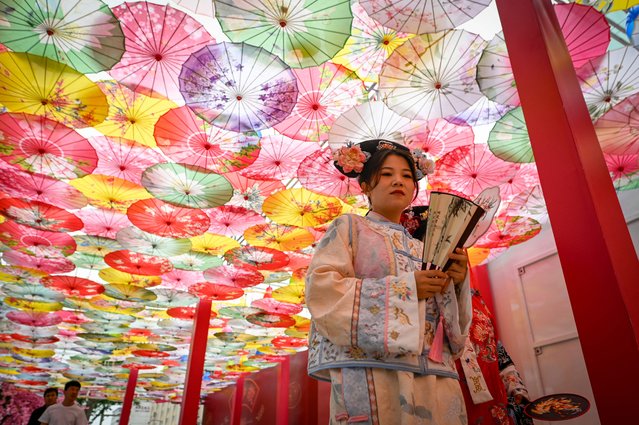
A woman dressed in traditional clothing visits a business street in Beijing on June 5, 2024. (Photo by Wang Zhao/AFP Photo)
Details
15 Jun 2024 03:17:00
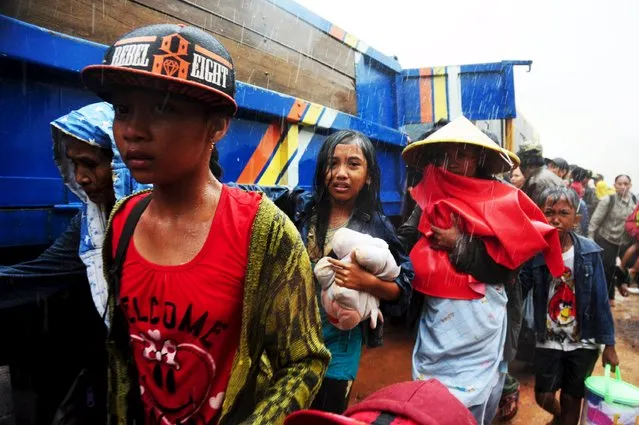
Members of the Gafatar sect walk in the rain as they evacuate their compound, which was later burned down by local villagers, in Antibar village, Mempawah Regency, Indonesia West Kalimantan Province, January 19, 2016 in this photo taken by Antara Foto. Local authorities and police moved the sect members to an army barracks located some 70 km (43 miles) away from Antibar for their safety following recent disputes between the sect and the villagers, Antara said on Tuesday. (Photo by Jessica Helena Wuysang/Reuters/Antara Foto)

Members of the Gafatar sect walk in the rain as they evacuate their compound, which was later burned down by local villagers, in Antibar village, Mempawah Regency, Indonesia West Kalimantan Province, January 19, 2016 in this photo taken by Antara Foto. Local authorities and police moved the sect members to an army barracks located some 70 km (43 miles) away from Antibar for their safety following recent disputes between the sect and the villagers, Antara said on Tuesday. (Photo by Jessica Helena Wuysang/Reuters/Antara Foto)
Details
20 Jan 2016 13:24:00
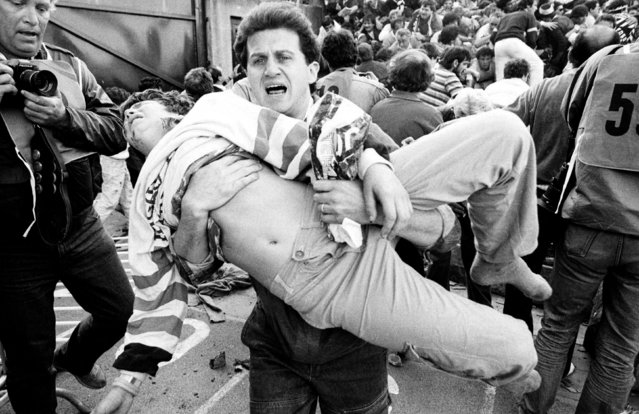
An injured soccer fan is carried to safety by a friend after a wall collapsed during violence between fans before the European Cup final between Juventus and Liverpool at the Heysel stadium in Brussels, May 29, 1985. 39 people died, and a further 600 were injured. (Photo by Nick Didlick/Reuters)

Reuters multi-award winning photographers are celebrated here in a three part retrospective on the 30th anniversary of the service's launch. They have captured dramatic images illustrating the human tragedy of natural disaster and war as well as the fallout of economic events across the continents, creating iconic images, recognised around the world. Here: an injured soccer fan is carried to safety by a friend after a wall collapsed during violence between fans before the European Cup final between Juventus and Liverpool at the Heysel stadium in Brussels, May 29, 1985. 39 people died, and a further 600 were injured. (Photo by Nick Didlick/Reuters)
Details
15 Feb 2015 13:43:00
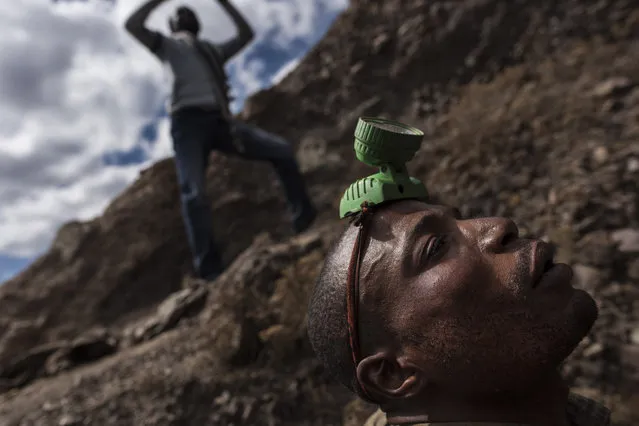
A “creuseur”, or digger, a plastic lantern on his head, readies to enter a copper and cobalt mine in Kawama, Democratic Republic of Congo on June 8, 2016. Cobalt is used in the batteries for electric cars and mobile phones. Working conditions are dangerous, often with no safety equipment or structural support for the tunnels. The diggers say they are paid on average US$2-3/day. (Photo by Michael Robinson Chavez/The Washington Post)

A “creuseur”, or digger, a plastic lantern on his head, readies to enter a copper and cobalt mine in Kawama, Democratic Republic of Congo on June 8, 2016. Cobalt is used in the batteries for electric cars and mobile phones. Working conditions are dangerous, often with no safety equipment or structural support for the tunnels. The diggers say they are paid on average US$2-3/day. (Photo by Michael Robinson Chavez/The Washington Post)
Details
30 Dec 2016 10:29:00