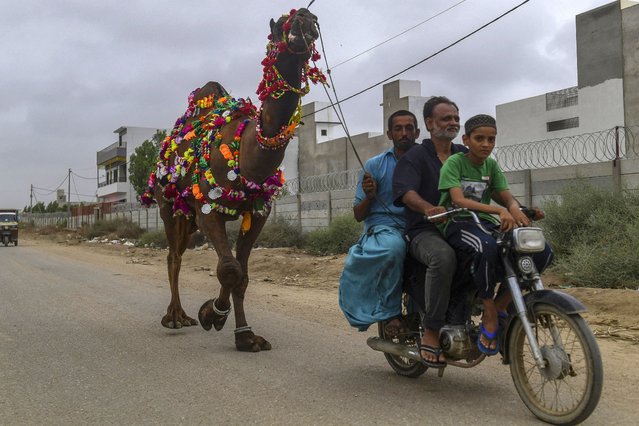
People take home sacrificial animals after purchasing it at a cattle market ahead of the Muslim festival of Eid al-Adha in Karachi on July 19, 2021. (Photo by Asif Hassan/AFP Photo)
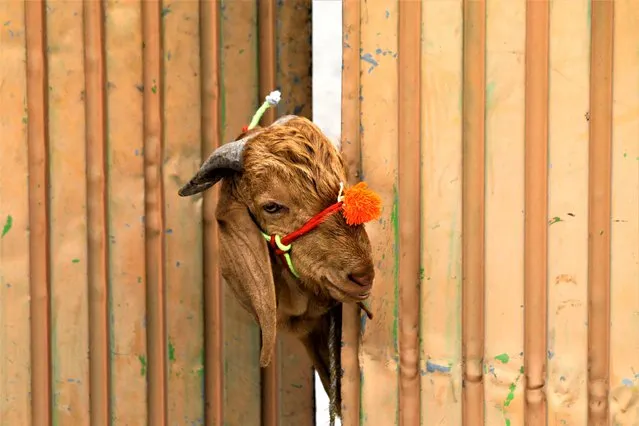
A sacrificial goat peeks through the entrance gate of a house, ahead of the Eid al-Adha festival in Peshawar, Pakistan on June 28, 2023. (Photo by Fayaz Aziz/Reuters)
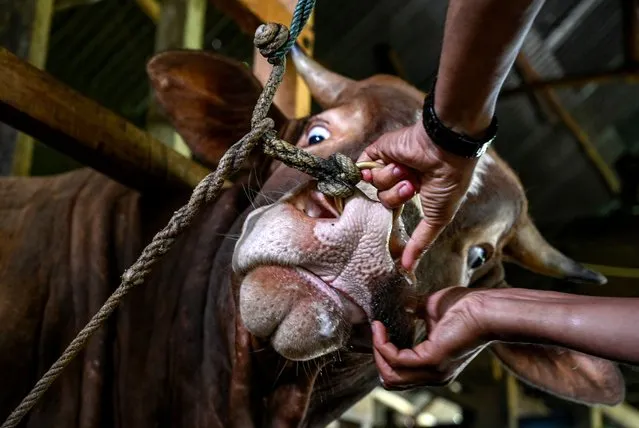
A veterinarian inspects a cow for foot-mouth-disease ahead of Eid al-Adha, the feast of the sacrifice marking the end of the Hajj pilgrimage to Mecca and commemorates Prophet Abraham's readiness to sacrifice his son to show obedience to Allah, at a cowshed in Lambaro, Aceh province on July 7, 2022. (Photo by Chaideer Mahyuddin/AFP Photo)
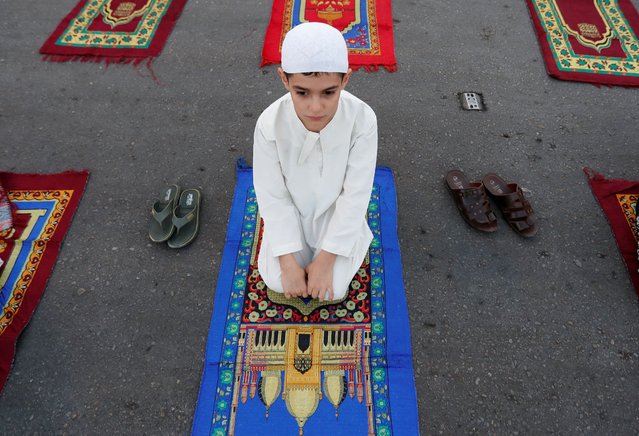
A boy attends Eid al-Adha prayers on the street outside Abu Hanifa mosque in Baghdad Adhamiya district, during the outbreak of the coronavirus disease (COVID-19), in Iraq, July 31, 2020. (Photo by Thaier Al-Sudani/Reuters)
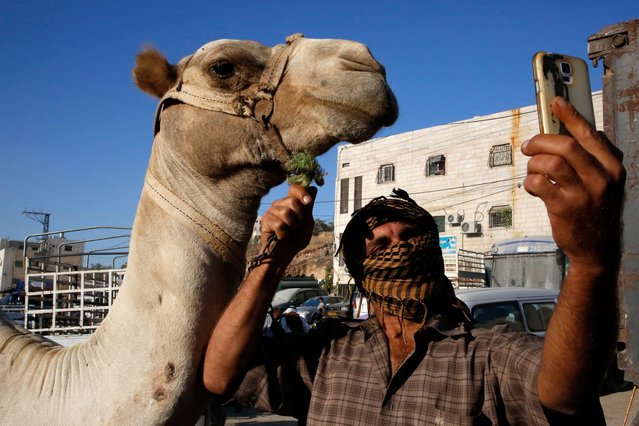
A Palestinian man takes a selfie picture next to a camel at a livestock market in the West Bank city of Hebron on August 9, 2019, as muslims prepare for the Eid al-Adha celebrations. Known as the “big” festival, Eid Al-Adha is celebrated each year by Muslims sacrificing various animals according to religious traditions, including cows, camels, goats and sheep. (Photo by Hazem Bader/AFP Photo)
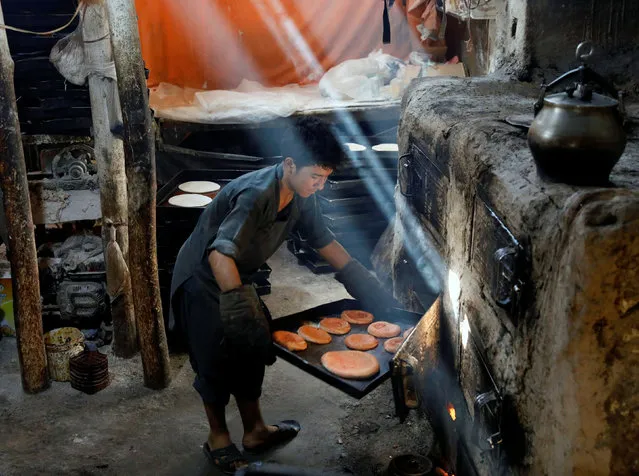
A man prepares cookies at a small traditional factory for the Eid al-Adha, amid the spread of the coronavirus disease (COVID-19), in Kabul, Afghanistan on July 29, 2020. (Photo by Mohammad Ismail/Reuters)
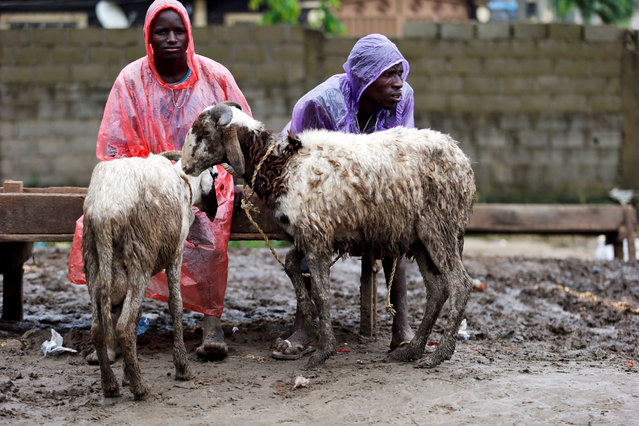
Men selling sheep wait for customers at a local livestock market, ahead of the Eid al-Adha festival, in Lagos, Nigeria September 11, 2016. (Photo by Akintunde Akinleye/Reuters)
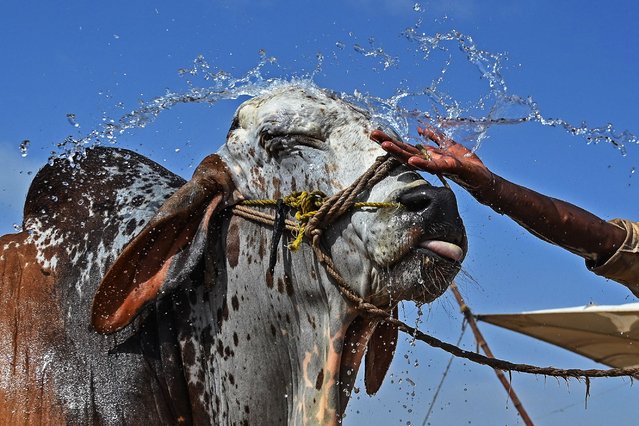
A livestock vendor gives bath to a bull at a cattle market ahead of the Muslim festival of Eid al-Adha, on the outskirts of Karachi on June 10, 2024. (Photo by Asif Hassan/AFP Photo)