Loading...
Done


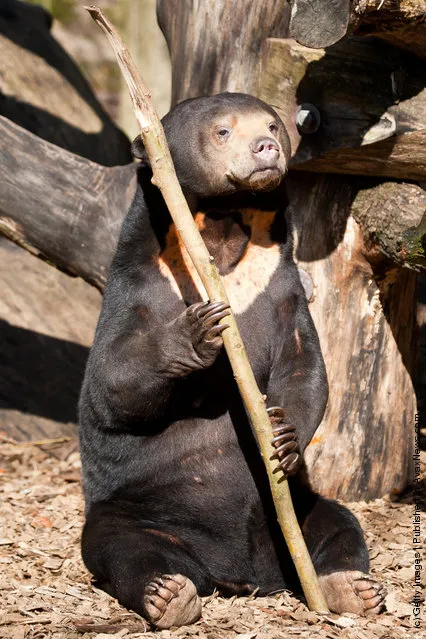
The sun bear (Ursus malayanus), also known as the honey bear, is a bear found primarily in the tropical rainforest (the dense lowland forests) in Southeast Asia; North-East India, Bangladesh, Myanmar, Thailand, Laos, Cambodia, Vietnam, Southern China, Peninsular Malaysia, and the islands of Sumatra and Borneo.
Details
03 May 2012 23:37:00
In this Thursday, February 19, 2015 photo, participants at a seminar on edible insects taste a Cricket Consomme at Le Cordon Bleu cooking school in Bangkok, Thailand. A group of chefs and food scientists at the esteemed French school's branch in Bangkok spent the week simmering, sautéing and grilling insects to extract innovative flavors they say could open a new frontier for the world of gastronomy. (Photo by Sakchai Lalit/AP Photo)

In this Thursday, February 19, 2015 photo, participants at a seminar on edible insects taste a Cricket Consomme at Le Cordon Bleu cooking school in Bangkok, Thailand. A group of chefs and food scientists at the esteemed French school's branch in Bangkok spent the week simmering, sautéing and grilling insects to extract innovative flavors they say could open a new frontier for the world of gastronomy. (Photo by Sakchai Lalit/AP Photo)
Details
22 Feb 2015 11:15:00
Kaye Don seated in the cockpit of his new racing car the “Silver Bullet” at Wolverhampton, England on February 21, 1930, in which he will attempt to beat world land speed record at Daytona. It has two 12-cylinder V shaped engines and each develops 2,000-h.p. The theoretical speed of the car is 275 m.p.h. but the designer estimated that will be able to reach 250 m.p.h. allowing for wind pressures. (Photo by AP Photo/Staff/Puttnam)

Kaye Don seated in the cockpit of his new racing car the “Silver Bullet” at Wolverhampton, England on February 21, 1930, in which he will attempt to beat world land speed record at Daytona. It has two 12-cylinder V shaped engines and each develops 2,000-h.p. The theoretical speed of the car is 275 m.p.h. but the designer estimated that will be able to reach 250 m.p.h. allowing for wind pressures. (Photo by AP Photo/Staff/Puttnam)
Details
03 Mar 2018 00:03:00
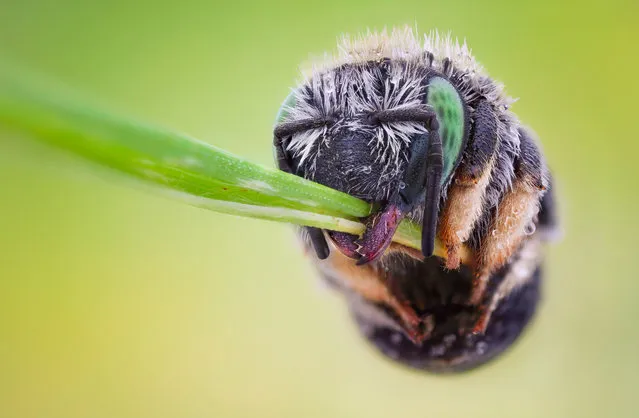
Sleeping Anthidium. Female Anthidium punctatum; Size: 7 mm. (John Hallmén)

Sleeping Anthidium. Female Anthidium punctatum; Size: 7 mm. (Photo by John Hallmén)
Details
30 Jun 2013 12:19:00
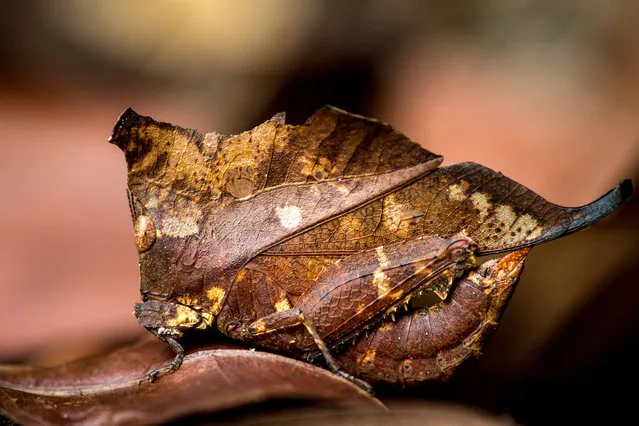
Dead leaf or almost by Guilhem Duvot. Taken in Nován Stráž, Slovakia. Describe what is pictured? A dead leaf grasshopper. How does this image fit with the theme of the competition? The perfect camouflage – nature is amazing. I saw the grasshopper only because it jumped. (Photo by Guilhem Duvot/Royal Society of Biology)

Dead leaf or almost by Guilhem Duvot. Taken in Nován Stráž, Slovakia. Describe what is pictured? A dead leaf grasshopper. How does this image fit with the theme of the competition? The perfect camouflage – nature is amazing. I saw the grasshopper only because it jumped. (Photo by Guilhem Duvot/Royal Society of Biology)
Details
10 Oct 2018 00:05:00
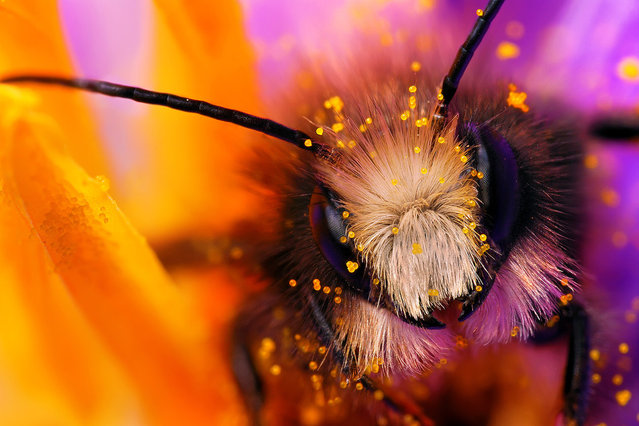
Bee. (Photo by Boris Godfroid)

Belgian Photographer Boris Godfroid, a former biology student who recently graduated from film school, started shooting macro photography in 2008. Photo: Bee. (Photo by Boris Godfroid)
Details
02 Aug 2013 07:25:00
A tow car for the children's  “Grand Prix” races which take place in a parking lot in Livonia, Michigan a suburb of Detroit, circa 1955. (Photo by Three Lions/Getty Images)

A tow car for the children's “Grand Prix” races which take place in a parking lot in Livonia, Michigan a suburb of Detroit, circa 1955. (Photo by Three Lions/Getty Images)
Details
13 Nov 2020 00:01:00
Kale grows at Kajodlingen farm in Gothenburg, Sweden, September 28, 2016. (Photo by Maxim Shemetov/Reuters)

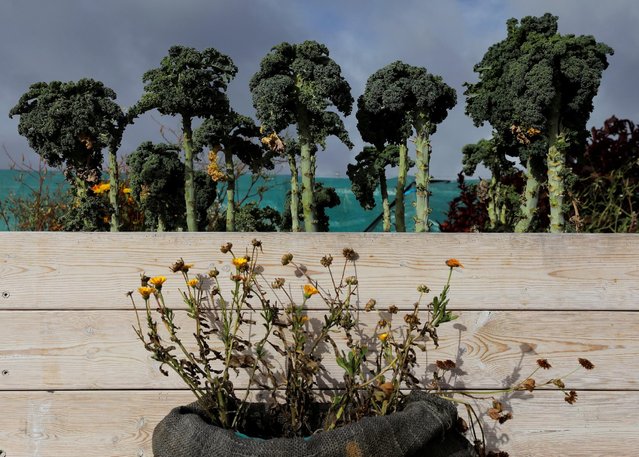
Kale grows at Kajodlingen farm in Gothenburg, Sweden, September 28, 2016. They are doing it on the rooftops, on tower block balconies and even on a disused railway: Swedes have discovered a passion for urban gardening as a way of growing fresh food and getting back in touch with nature. Part of a global movement, an increasing number of Swedish city-dwellers are growing their own in window boxes and allotments or are visiting public gardens built in or on industrial or office spaces. (Photo by Maxim Shemetov/Reuters)
Details
11 Nov 2016 07:58:00