Loading...
Done
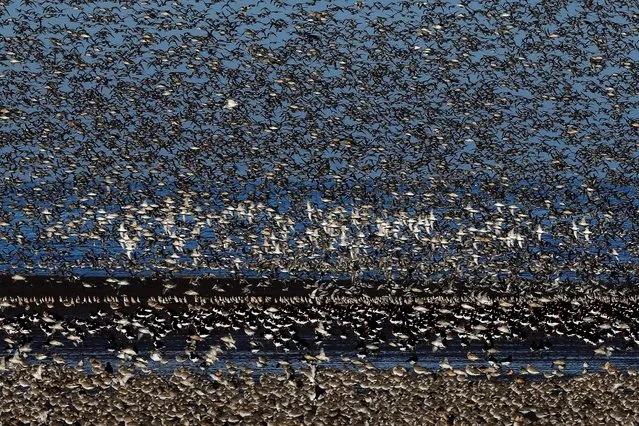
Waders flock together seeking new feeding grounds during the incoming tide. (Photo by Dan Kitwood/Getty Images via The Palm Beach Post)

“The RSPB’s Snettisham Nature Reserve lies on the edge of The Wash, one of the most important bird estuaries in the United Kingdom. The Wash, on England’s east coast, supports over 300,000 birds, and Snettisham sometimes holds more than a third of them”. – The Palm Beach Post. Photo: Waders flock together seeking new feeding grounds during the incoming tide. (Photo by Dan Kitwood/Getty Images via The Palm Beach Post)
Details
11 Sep 2013 11:18:00
Little Red Riding Hood. “The moment I pulled this sweater out of the drawer for Frankie I knew what I wanted for my picture today. I envisioned the look, the style, and the composition. When working with a 2 year old it is never easy to actually get the shot you want, especially when they decide to skip nap time. But I really like how this one turned out” – Rich. (Photo by Rich)

«Little Red Riding Hood». “The moment I pulled this sweater out of the drawer for Frankie I knew what I wanted for my picture today. I envisioned the look, the style, and the composition. When working with a 2 year old it is never easy to actually get the shot you want, especially when they decide to skip nap time. But I really like how this one turned out” – Rich. (Photo by Rich)
Details
17 Sep 2012 12:51:00
Bird Nest By Sharon Beals Part2

Sharon Beals is a San Francisco based photographer who has photographed nest and eggs specimens collected over the last two centuries at The California Academy of Sciences, The Museum of Vertebrate Zoology, and The Western Foundation of Vertebrate Zoology. While few nests are collected today, these nests and eggs are used for research, providing important information about their builder’s habitats, DNA, diseases and other survival issues.
Details
21 Aug 2013 11:34:00
Bird Boxes

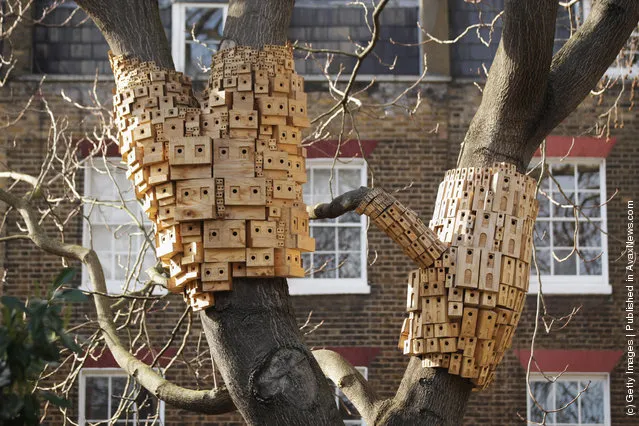
An installation consisting of a series of bird boxes is displayed in a tree in Duncan Terrace Gardens in Islington on March 24, 2011 in London, England. The boxes by artists Bruce Gilchrist and Jo Joelson of “London Fieldworks”, were designed to reflect the architecture of the Georgian terraces and flats that surround the park in the community gardens. (Photo by Dan Kitwood/Getty Images)
Details
05 Sep 2011 11:36:00
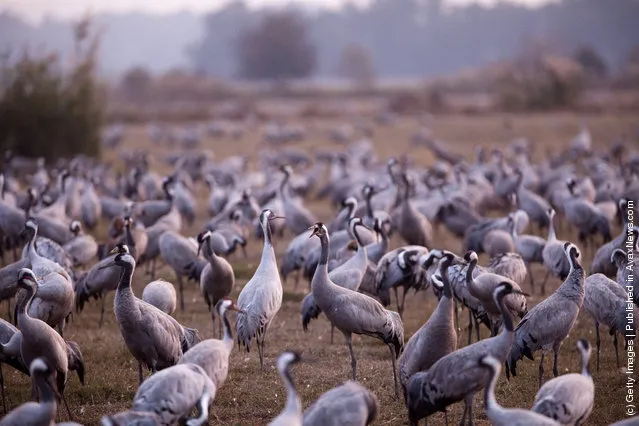
Migrating gray cranes fly over the Hula Lakes in in northern Israel

Migrating gray cranes, on November 30, 2009 around the Hula Lakes in northern Israel. (Photo by Uriel Sinai/Getty Images)
Details
01 Dec 2011 12:49:00
Famous Logos Recreated Using Angry Birds

Yakushev Grigory is an artist and graphic designer based in Saint Petersburg, Russia. In a parody series entitled Angry Brands, Grigory reimagines famous logos as different angry birds from the popular game.
Details
27 Oct 2013 14:43:00


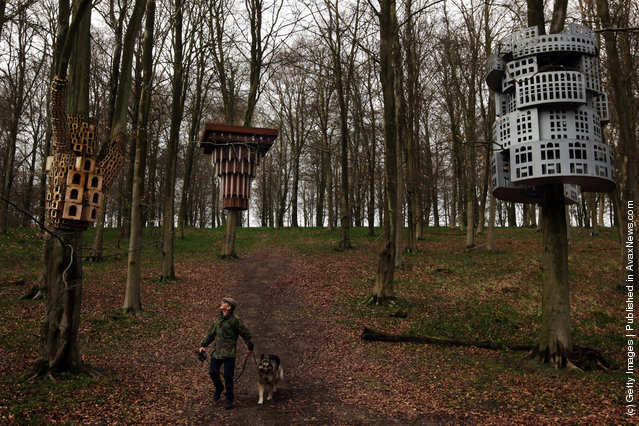
CHALLOCK, ENGLAND - MARCH 31: Tony Hall walks with his dog through an installation entitled 'Super Kingdom', which hangs in trees in King's Wood as part of the Stour Valley Arts project on March 31, 2011 in Challock, England. The works by artists Bruce Gilchrist and Jo Joelson of 'London Fieldworks' consist of a series of interesting animal habitats, modelled on the palaces of Stalin, Ceauscescu and Mussolini, and offer nesting sites to many native and migrant species. (Photo by Dan Kitwood/Getty Images)
Details
20 Nov 2011 19:03:00
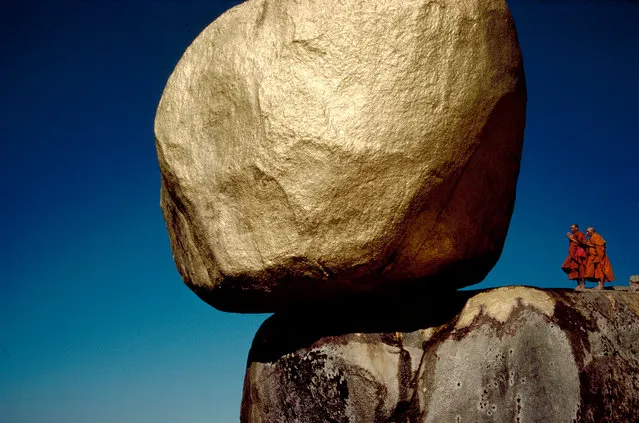
Kyaiktiyo, Burma, 1978. The Golden Rock at Shwe Pyi Daw (the Golden Country), the Buddhist holy place. Hiroji Kubota writes: “I was desperate to keep a distance from America for a while; luckily, I found Burma and its gentle and compassionate people. In the spring of 1978, on the top of the hill where I took this photo, I had two Leica bodies: the one with Tri-X and the other with Kodachrome 64. Soon after, I realised that the colour one looked very colourful and was more powerful. That was my decisive moment, to become a colour photographer”. (Photo by Hiroji Kubota/Magnum Photos)

Kyaiktiyo, Burma, 1978. The Golden Rock at Shwe Pyi Daw (the Golden Country), the Buddhist holy place. Hiroji Kubota writes: “I was desperate to keep a distance from America for a while; luckily, I found Burma and its gentle and compassionate people. In the spring of 1978, on the top of the hill where I took this photo, I had two Leica bodies: the one with Tri-X and the other with Kodachrome 64. Soon after, I realised that the colour one looked very colourful and was more powerful. That was my decisive moment, to become a colour photographer”. (Photo by Hiroji Kubota/Magnum Photos)
Details
10 Jun 2016 13:30:00