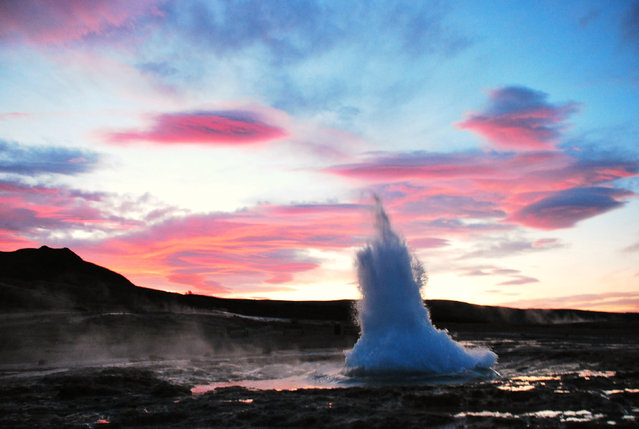
Strokkur geyser against cloudy sky at sunset. Strokkur is a fountain geyser located in a geothermal area beside the Hvítá River in Iceland in the southwest part of the country, east of Reykjavík. It is one of Iceland's most famous geysers, erupting once every 6–10 minutes. Its usual height is 15–20 m, although it can sometimes erupt up to 40 m high. (Photo by Teatsche Dijkhuis/Getty Images/EyeEm)
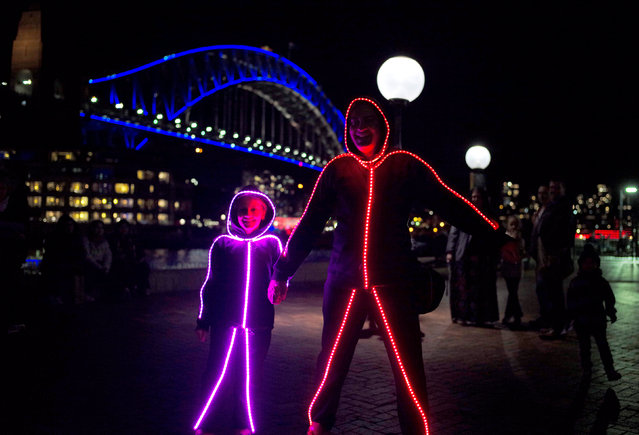
Visitors to the annual Vivid Sydney light festival wear matching illuminated suits alongside the Sydney Harbour Bridge on the second night of the light and sound show in Sydney, Australia, May 28, 2016. (Photo by Jason Reed/Reuters)
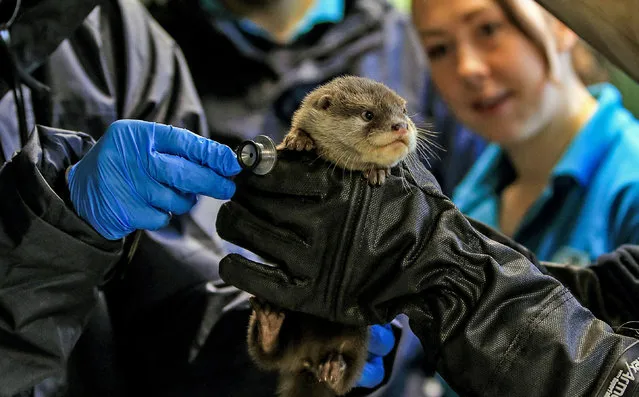
A baby otter has its first health checkup at Chester zoo, England on May 2, 2018. It was among five pups being weighed and microchipped. (Photo by Peter Byrne/PA Wire)
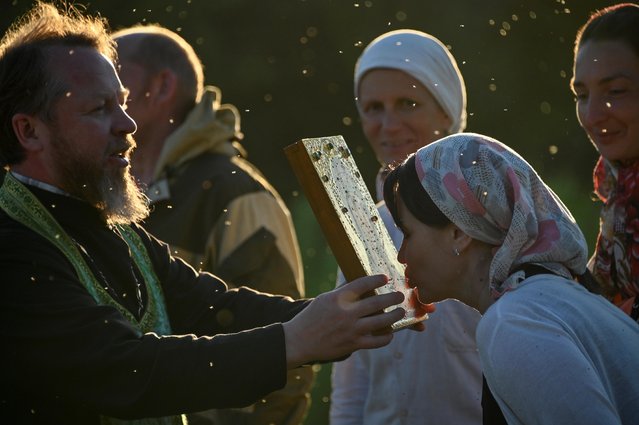
An Orthodox believer kisses an icon during a pilgrimage celebrating the icon of St. Nicholas in the village of Velikoretskoye in Kirov Region, Russia on June 6, 2021. At least 17 thousand pilgrims, loaded with backpacks and some of them barefoot, took part in a five-day and 150-kilometer-long journey from Kirov to the village of Velikoretskoye, according to the local media. (Photo by Alexey Malgavko/Reuters)
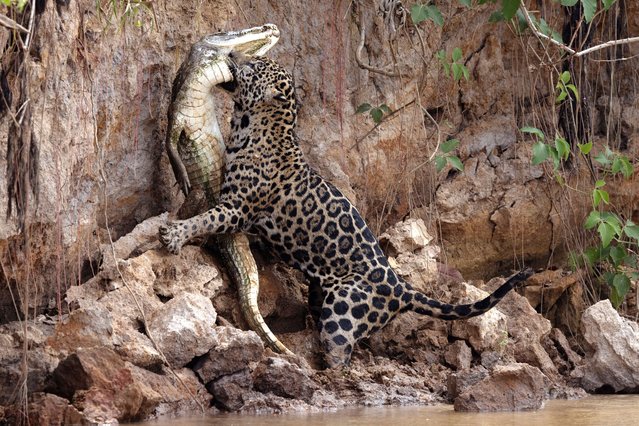
A female jaguar named Ti, by the NGO Jaguar ID, bites an alligator at Encontro das Aguas State Park, in the Pantanal, the largest wetland in the world, in Pocone, Mato Grosso, Brazil, on October 10, 2024. (Photo by Sergio Moraes/Reuters)
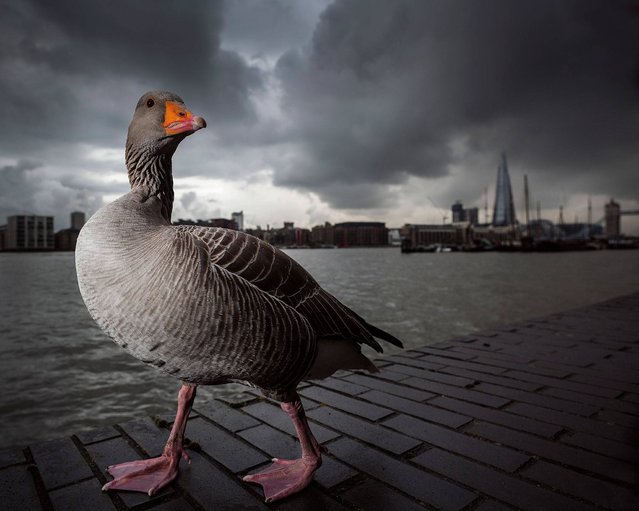
The British Wildlife Photography Awards winners have been revealed, with Lee Acaster from Suffolk taking home the top prize for his shot of a Graylag Goose in London. Acaster, who received £5,000, photographed the animal against an ominous London skyline, with The Shard clearly visible in the background. Here: “Urban Tourist (Graylag Goose)”. Urban category and overall winner. (Photo by Lee Acaster/British Wildlife Photography Awards 2014)