Loading...
Done
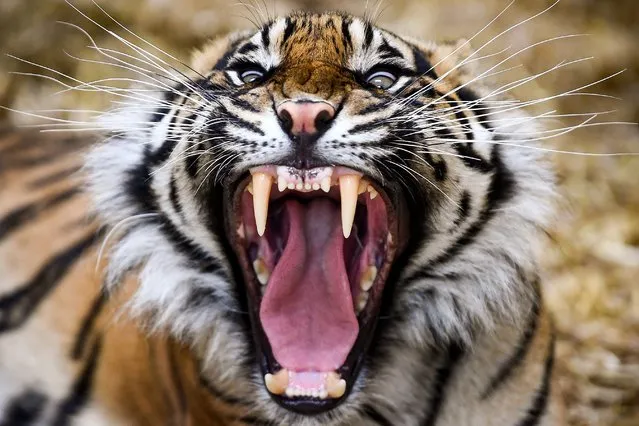
Dharma the Sumatran tiger yawns as members of the public return to Edinburgh Zoo as it opens for the first time following the easing of Scottish Governments lockdown restrictions on June 29, 2020 in Edinburgh, Scotland. Outdoor visitor attractions in Scotland have reopened along with many non-essential retailers after more than three months in lockdown, as Scotland moves into phase 2 of its “route map” for easing coronavirus restrictions. (Photo by Jeff J. Mitchell/Getty Images)

Dharma the Sumatran tiger yawns as members of the public return to Edinburgh Zoo as it opens for the first time following the easing of Scottish Governments lockdown restrictions on June 29, 2020 in Edinburgh, Scotland. Outdoor visitor attractions in Scotland have reopened along with many non-essential retailers after more than three months in lockdown, as Scotland moves into phase 2 of its “route map” for easing coronavirus restrictions. (Photo by Jeff J. Mitchell/Getty Images)
Details
05 Jul 2020 00:01:00
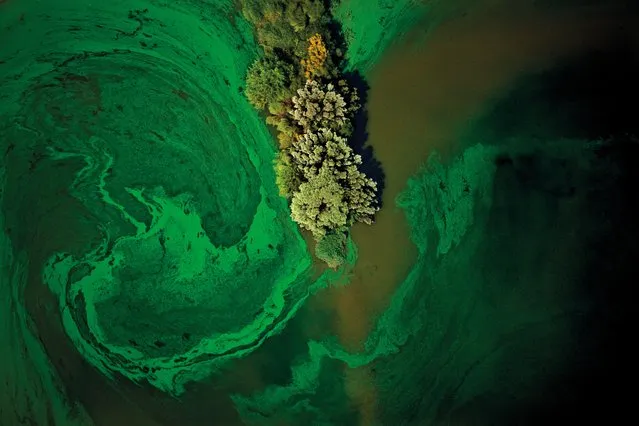
Luling, Louisiana US. New evidence contradicts previous claims of the relative safety of glyphosate, the world’s most widely used herbicide, which is manufactured here. It is often used in conjunction with seeds that have been genetically modified to tolerate its application, meaning that anyone consuming these crops is eating a genetically modified plant, and whatever residue of the pesticide that remains. (Photo by J. Henry Fair/Industrial Scars/Papadakis Publisher)

Luling, Louisiana, US. New evidence contradicts previous claims of the relative safety of glyphosate, the world’s most widely used herbicide, which is manufactured here. It is often used in conjunction with seeds that have been genetically modified to tolerate its application, meaning that anyone consuming these crops is eating a genetically modified plant, and whatever residue of the pesticide that remains. (Photo by J. Henry Fair/Industrial Scars/Papadakis Publisher)
Details
25 Oct 2016 10:40:00
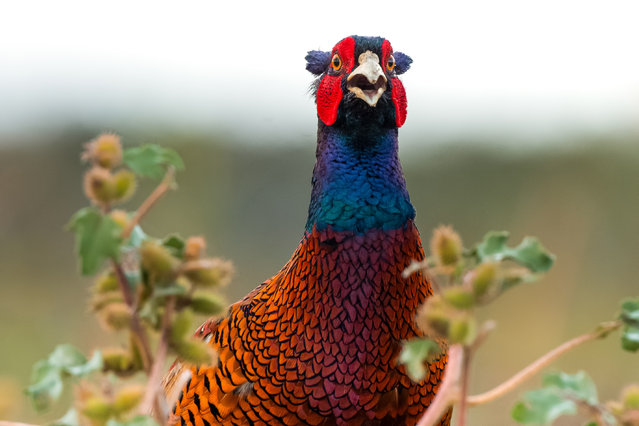
A pheasant is seen among grasses in Bursa, Turkiye on October 07, 2024. Pheasants mostly live in forested areas, thickets and wetlands. Unlike females, male pheasants have a much more remarkable structure with their long tails and feathers in bright and variable colors. Also, they feed on fruits, grains, seeds and invertebrates. (Photo by Alper Tuydes/Anadolu via Getty Images)

A pheasant is seen among grasses in Bursa, Turkiye on October 07, 2024. Pheasants mostly live in forested areas, thickets and wetlands. Unlike females, male pheasants have a much more remarkable structure with their long tails and feathers in bright and variable colors. Also, they feed on fruits, grains, seeds and invertebrates. (Photo by Alper Tuydes/Anadolu via Getty Images)
Details
27 Oct 2024 04:43:00
Samurai Flyer

David Sharp, an engineer with Lockheed Martin, displays the “Samurai Flyer”, an aviation design inspired by the maple seed, during the Association for Unmanned Vehicle Systems International Conference August 16, 2011 in Washington, DC. Lockheed Martin unveiled the new design and demonstrated vertical takeoff and landing, stable hover, and on-board video streaming of the aircraft during their demonstration. (Photo by Win McNamee/Getty Images)
Details
17 Aug 2011 11:56:00
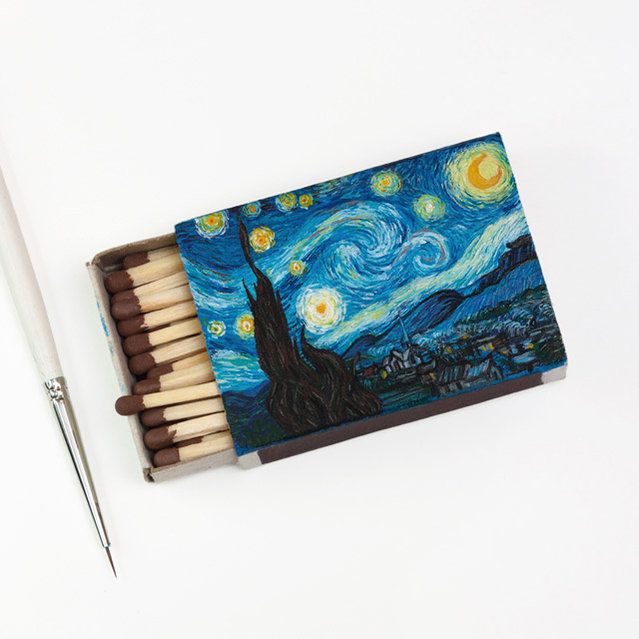
Van Gogh Paintings On Matchboxes By Salavat Fidai

Russian artist Salavat Fidai is obsessed with things in miniature, and he has previously painted miniatures on pumpkin seeds and carved sculptures into the graphite tips of pencils. For this project, he's gone for something a little bit bigger, but not by much. One of Fidai's favorite painters is the legendary Vincent Van Gogh, so he decided to do a series where he recreated some of Van Gogh's famous works on matchboxes.
Details
17 Feb 2016 08:05:00
South Korean youths play Pokemon Go on July 15, 2016 in Sokcho, South Korea. (Photo by Jean Chung/Getty Images)

South Korean youths play Pokemon Go on July 15, 2016 in Sokcho, South Korea. South Korea is not one of the initial Pokemon Go released countries, nor is the game likely to be released officially any time soon as the South Korean government does not allow Google to use its map; however, South Korean game enthusiasts are now visiting a handful of loophole areas in the north eastern side of the country near the border of North Korea to join the global frenzy of Pokemon Go. (Photo by Jean Chung/Getty Images)
Details
16 Jul 2016 08:49:00
Bad Part of Town By Google Street View

Take a walk on the wild side around some of the most down right dangerous places in the world - and all without leaving your desk, courtesy of Google Street View. Since 2007, Google's amazing technology has given people the chance to visit the Eiffel Tower, peer out over San Francisco's Golden Gate Bridge or walk along a beach in the Bahamas. But as well as mapping the tourist-friendly hotspots, Google also ventured into places you really wouldn't want to find yourself. Here is a collection of some the most notorious areas captured by the infamous roaming camera cars from around the UK and the world.
Details
03 Oct 2013 11:05:00
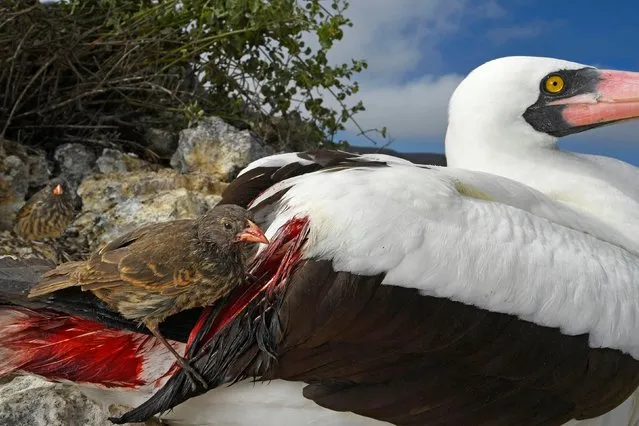
Bloodthirsty by Thomas P Peschak, Germany/South Africa — winner, Behaviour: birds. When rations run short on Wolf Island, in the remote northern Galápagos, the sharp-beaked ground finches become vampires. Their sitting targets are Nazca boobies and other large birds. The finches rely on a scant diet of seeds and insects, which regularly dries up, so they drink blood to survive. ‘I’ve seen more than half a dozen finches drinking from a single Nazca booby,’ says Tom. Rather than leave their nests the boobies tolerate the vampires, and the blood loss doesn’t seem to cause permanent harm. (Photo by Thomas P Peschak/2018 Wildlife Photographer of the Year)

Bloodthirsty by Thomas P. Peschak, Germany/South Africa — winner, Behaviour: birds. When rations run short on Wolf Island, in the remote northern Galápagos, the sharp-beaked ground finches become vampires. Their sitting targets are Nazca boobies and other large birds. The finches rely on a scant diet of seeds and insects, which regularly dries up, so they drink blood to survive. ‘I’ve seen more than half a dozen finches drinking from a single Nazca booby,’ says Tom. Rather than leave their nests the boobies tolerate the vampires, and the blood loss doesn’t seem to cause permanent harm. (Photo by Thomas P. Peschak/2018 Wildlife Photographer of the Year)
Details
19 Oct 2018 00:05:00