Loading...
Done
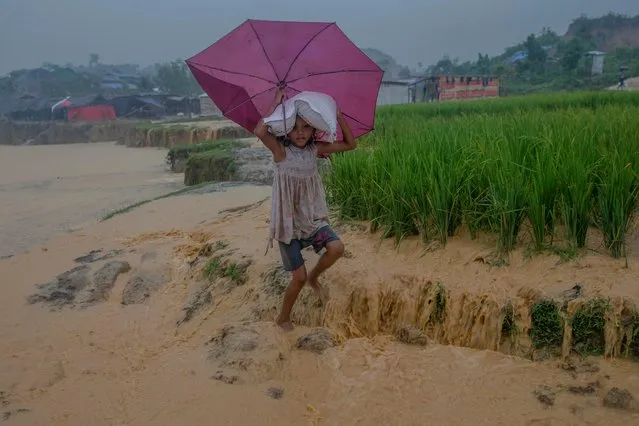
A Rohingya Muslim girl, Saira Begum carries food items distributed in aid as she walks towards her shelter in Taiy Khali refugee camp, Bangladesh, Tuesday, September 19, 2017. With a mass exodus of Rohingya Muslims sparking accusations of ethnic cleansing from the United Nations and others, Myanmar leader Aung San Suu Kyi on Tuesday said her country does not fear international scrutiny and invited diplomats to see some areas for themselves. (Photo by Dar Yasin/AP Photo)

A Rohingya Muslim girl, Saira Begum carries food items distributed in aid as she walks towards her shelter in Taiy Khali refugee camp, Bangladesh, Tuesday, September 19, 2017. With a mass exodus of Rohingya Muslims sparking accusations of ethnic cleansing from the United Nations and others, Myanmar leader Aung San Suu Kyi on Tuesday said her country does not fear international scrutiny and invited diplomats to see some areas for themselves. (Photo by Dar Yasin/AP Photo)
Details
04 Jun 2018 00:05:00
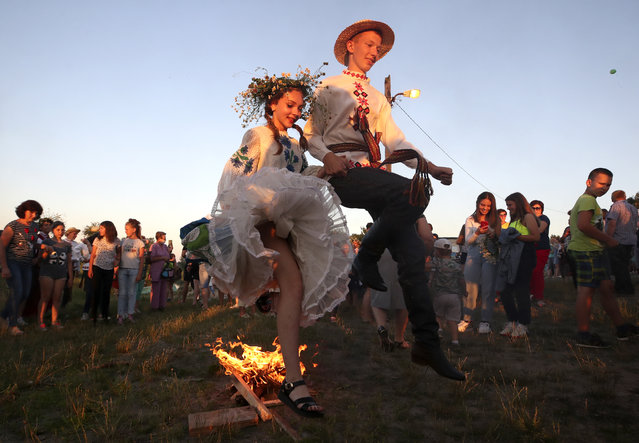
People in ethnic costumes jump over a bonfire during Ivan Kupala Day celebrations held by the Pripyat River in the town of Turauin Gomel Region, Belarus on July 6, 2020. Ivan Kupala Day, also known as Ivana-Kupala or Kupala Night, is a traditional pagan holiday celebrated in eastern Slavic cultures. Various rituals are traditionally performed on Kupala Night, including making flower wreaths, fortune-telling, jumping over bonfires, and burning a wheel-like effigy symbolizing the sun. (Photo by Natalia Fedosenko/TASS)

People in ethnic costumes jump over a bonfire during Ivan Kupala Day celebrations held by the Pripyat River in the town of Turauin Gomel Region, Belarus on July 6, 2020. Ivan Kupala Day, also known as Ivana-Kupala or Kupala Night, is a traditional pagan holiday celebrated in eastern Slavic cultures. Various rituals are traditionally performed on Kupala Night, including making flower wreaths, fortune-telling, jumping over bonfires, and burning a wheel-like effigy symbolizing the sun. (Photo by Natalia Fedosenko/TASS)
Details
19 Jul 2020 00:01:00
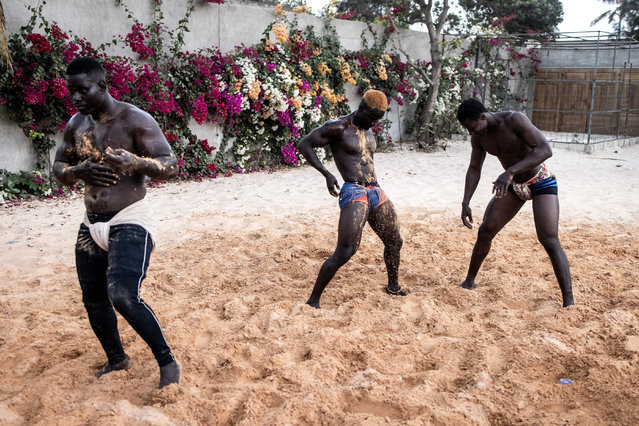
Senegalese wrestlers cover themselves in sand as they prepare to start their training program in Petit Mbao on March 29, 2021. As Covid-19 restrictions have been lifted, wrestlers now start prepare themselves for the start of wrestling tournaments. Senegalese wrestling, which has its roots in the ceremonies celebrating the end of harvests in Serer and Diola ethnic groups and remains surrounded by a thick cloud of mystical practice, is still extremely popular in this West African country. (Photo by John Wessels/AFP Photo)

Senegalese wrestlers cover themselves in sand as they prepare to start their training program in Petit Mbao on March 29, 2021. As Covid-19 restrictions have been lifted, wrestlers now start prepare themselves for the start of wrestling tournaments. Senegalese wrestling, which has its roots in the ceremonies celebrating the end of harvests in Serer and Diola ethnic groups and remains surrounded by a thick cloud of mystical practice, is still extremely popular in this West African country. (Photo by John Wessels/AFP Photo)
Details
09 Apr 2021 10:05:00
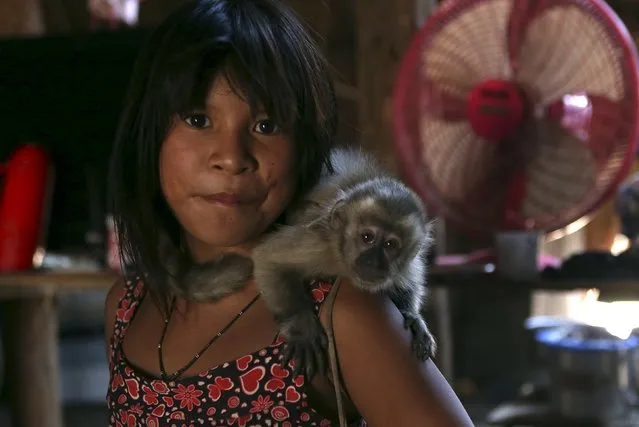
An indigenous girl carries a monkey inside her house in their village at Xingu national park in Mato Grosso, Brazil, October 2, 2015. (Photo by Paulo Whitaker/Reuters)

An indigenous girl carries a monkey inside her house in their village at Xingu national park in Mato Grosso, Brazil, October 2, 2015. The Kamayura tribe consists of around 300 people, and is one of the 16 ethnic groups living in the indigenous Xingu national park. (Photo by Paulo Whitaker/Reuters)
Details
18 Oct 2015 08:03:00
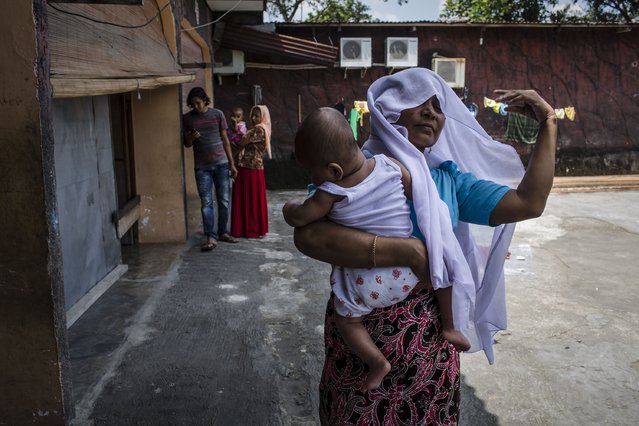
Rohingya refugees stand outside of their refugee camp on February 11, 2017 in Medan, North Sumatra, Indonesia. (Photo by Ulet Ifansasti/Getty Images)

Rohingya refugees stand outside of their refugee camp on February 11, 2017 in Medan, North Sumatra, Indonesia. Thousands of Rohingya Muslims have been stuck in limbo at Indonesia's refugee camps as the plight of Myanmar's ethnic minority continues. (Photo by Ulet Ifansasti/Getty Images)
Details
25 Feb 2017 00:02:00
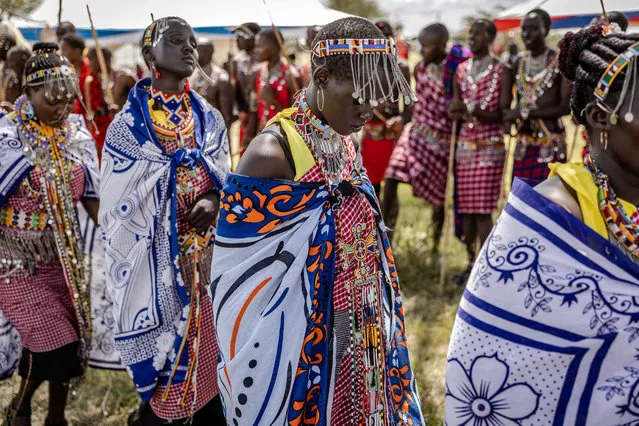
A group of Maasai women march while dancing traditional songs during a Maasai cultural festival in Sekenani, on June 10, 2023. The Maasai people are a Nilotic ethnic group inhabiting Kenya and northern Tanzania. The Maasai cultural festival is a popular gathering and celebration of the Maasai cultural heritage and aims to showcase the community's traditional activities and fashion. (Photo by Luis Tato/AFP Photo)

A group of Maasai women march while dancing traditional songs during a Maasai cultural festival in Sekenani, on June 10, 2023. The Maasai people are a Nilotic ethnic group inhabiting Kenya and northern Tanzania. The Maasai cultural festival is a popular gathering and celebration of the Maasai cultural heritage and aims to showcase the community's traditional activities and fashion. (Photo by Luis Tato/AFP Photo)
Details
20 Jun 2023 03:57:00
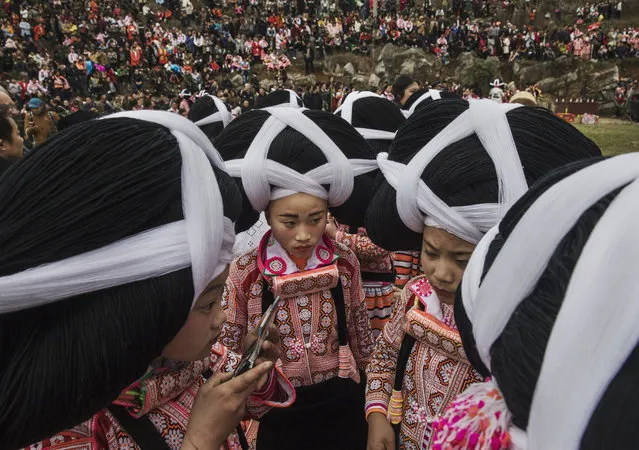
Girls of the Long Horn Miao ethnic minority group wear headdresses as they prepare gather for Tiaohua or Flower Festival as part of the Lunar New Year on February 6, 2017 in Longga village, Guizhou province, southern China. The Long Horn Miao are recognized for their declining practice of wrapping a blend of linen, wool, and the hair of their ancestors around animal horns or a wooden clip to make headdresses. Many young women say they now wear the headdresses only for special occasions and festivals, as the ornaments, which are attached by the horns to their real hair, have proved impractical for modern daily life in a fast changing world. China officially recognizes 56 different ethnic minorities, and statistics show over 7 million Chinese identifying themselves as Miao. But the small Long Horn Miao community counts only around 5000 people living in 12 villages, whose age-old traditions, language, and culture are fading. It is increasingly difficult in a modernizing China, as young people are drawn from remote rural villages to opportunities in bigger cities amongst wide-scale urbanization. Farming and labour remain the mainstays of life for the Long Horn Miao, leaving the area relatively poor in comparison with many parts of China. The government has invested significant amounts into local infrastructure and the tourism industry to try to bolster the local economy. (Photo by Kevin Frayer/Getty Images)

Girls of the Long Horn Miao ethnic minority group wear headdresses as they prepare gather for Tiaohua or Flower Festival as part of the Lunar New Year on February 6, 2017 in Longga village, Guizhou province, southern China. (Photo by Kevin Frayer/Getty Images)
Details
13 Feb 2017 00:01:00
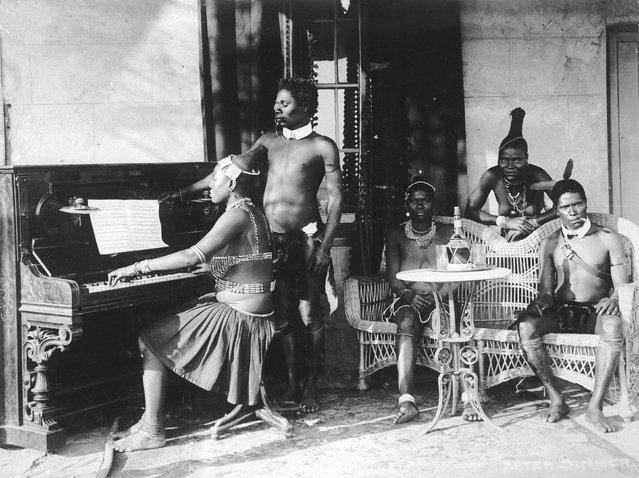
circa 1925:  A Zulu woman playing the piano while a group of others sit and listen.  (Photo by General Photographic Agency/Getty Images)

“The Zulu are the largest South African ethnic group, with an estimated 10–11 million people living mainly in the province of KwaZulu-Natal. Small numbers also live in Zimbabwe, Zambia, and Mozambique. Their language, Zulu, is a Bantu language; more specifically, part of the Nguni subgroup. The Zulu Kingdom played a major role in South African history during the 19th and 20th centuries. Under apartheid, Zulu people were classed as third-class citizens and suffered from state-sanctioned discrimination. They remain today the most numerous ethnic group in South Africa, and now have equal rights along with all other citizens”. – Wikipedia.

Photo: A Zulu woman playing the piano while a group of others sit and listen (to put it briefly, Englishmen scoff over Zulu). South Africa, circa 1925. (Photo by General Photographic Agency)

Details
03 Feb 2014 09:40:00