Loading...
Done
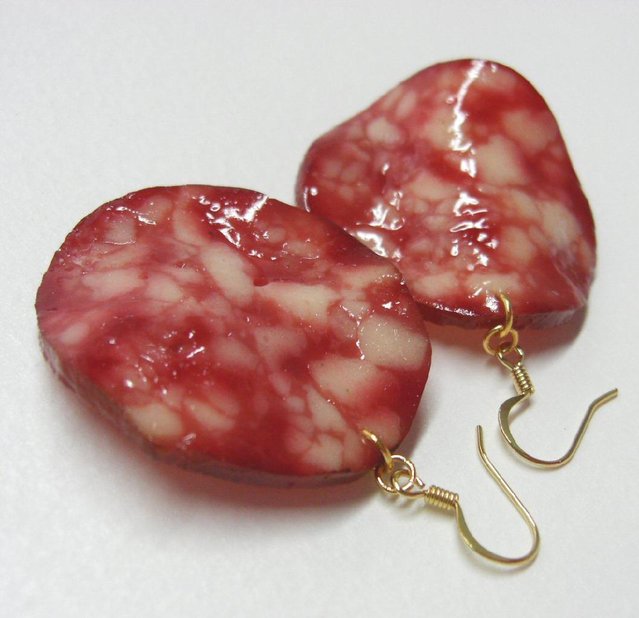
Fake Food Hatanaka

Japanese manufacturer Fake Food Hatanaka had the idea to combine the two to create a line of fashion accessories, strange and twisted! From the Fries/Ketchup hairclip to the Pizza bread necklace through the Cheeseburger pendant, the bacon & eggs headbands or even spaghetti bolognaise earrings and necklace sausages, here is some ultra-realistic and WTF Japanese gadgets to turn Fake Food / Fast Food into fashion accessory!
Details
15 Aug 2013 11:01:00
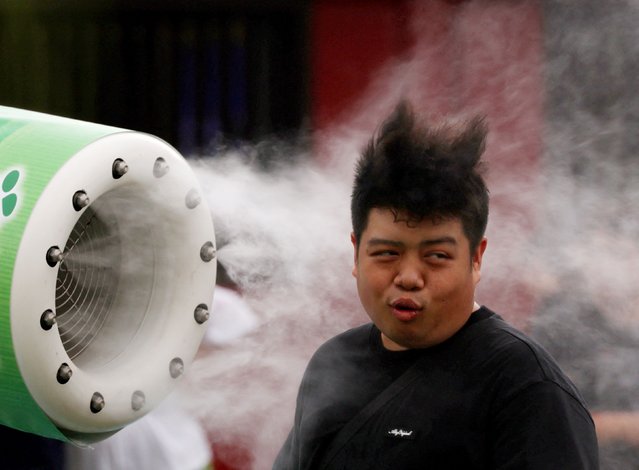
A tourist cools off in front of a misting fan near a venue of the Hozuki-Ichi (Japanese lantern plant fair), at Sensoji temple, in Tokyo, Japan, on July 10, 2025. (Photo by Kim Kyung-Hoon/Reuters)

A tourist cools off in front of a misting fan near a venue of the Hozuki-Ichi (Japanese lantern plant fair), at Sensoji temple, in Tokyo, Japan, on July 10, 2025. (Photo by Kim Kyung-Hoon/Reuters)
Details
05 Aug 2025 04:01:00
The Soyuz TMA-11M capsule with the International Space Station (ISS) crew members Japanese astronaut Koichi Wakata, Russian cosmonaut Mikhail Tyurin and U.S. astronaut Rick Mastracchio lands south-east of the town of Dzhezkazgan in central Kazakhstan, May 14, 2014. The first Japanese to command a space mission and crewmates from the United States and Russia landed safely in Kazakhstan on Wednesday, wrapping up a 188-day stay aboard the International Space Station. (Photo by Dmitry Lovetsky/Reuters)

The Soyuz TMA-11M capsule with the International Space Station (ISS) crew members Japanese astronaut Koichi Wakata, Russian cosmonaut Mikhail Tyurin and U.S. astronaut Rick Mastracchio lands south-east of the town of Dzhezkazgan in central Kazakhstan, May 14, 2014. The first Japanese to command a space mission and crewmates from the United States and Russia landed safely in Kazakhstan on Wednesday, wrapping up a 188-day stay aboard the International Space Station. (Photo by Dmitry Lovetsky/Reuters)
Details
15 May 2014 07:56:00
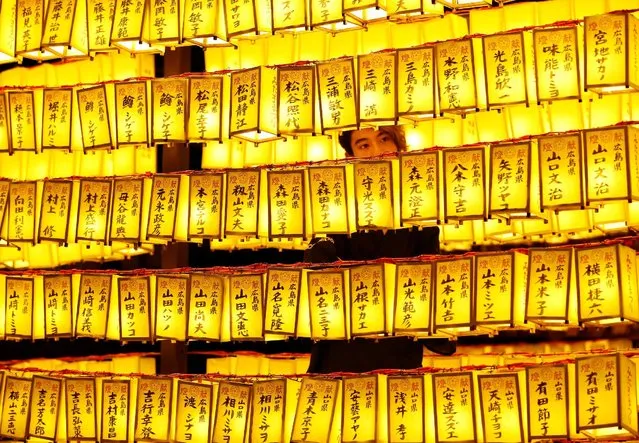
A man stands between thousands of paper lanterns, which were displayed and lit up the precincts of the shrine, where more than 2.4 million war-dead are enshrined, during the Mitama Festival at Yasukuni Shrine in Tokyo, Japan July 13, 2016. “Mitama” is a respectful word that means “the soul of a dead person” in Japanese, and this “Soul Festival” honors just that. The Yasukuni Shrine is dedicated to the honoring of the souls of those who gave their lives to defend Japan, and this festival is an early step towards the Japanese holiday season of Obon, during which Japanese people honor their deceased ancestors. (Photo by Issei Kato/Reuters)

A man stands between thousands of paper lanterns, which were displayed and lit up the precincts of the shrine, where more than 2.4 million war-dead are enshrined, during the Mitama Festival at Yasukuni Shrine in Tokyo, Japan July 13, 2016. “Mitama” is a respectful word that means “the soul of a dead person” in Japanese, and this “Soul Festival” honors just that. (Photo by Issei Kato/Reuters)
Details
14 Jul 2016 09:37:00
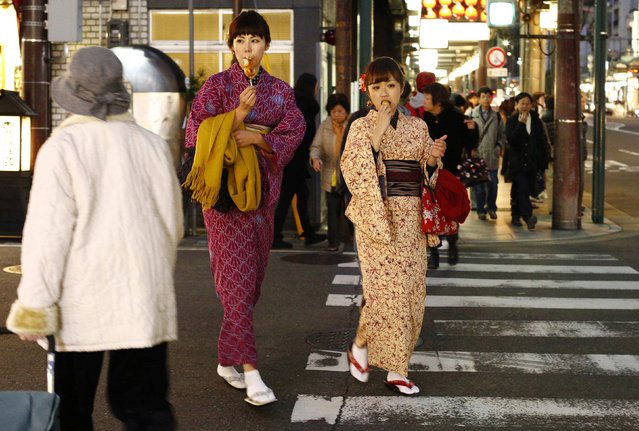
Women, dressed in traditional Japanese kimonos, cross a street in Kyoto, western Japan November 19, 2014. (Photo by Thomas Peter/Reuters)

Women, dressed in traditional Japanese kimonos, cross a street in Kyoto, western Japan November 19, 2014. (Photo by Thomas Peter/Reuters)
Details
20 Nov 2014 12:25:00
Japanese–British singer-songwriter and model Rina Sawayama, date unknown. (Photo by Press Handout for SFTW)

Japanese–British singer-songwriter and model Rina Sawayama, date unknown. (Photo by Press Handout for SFTW)
Details
03 Oct 2023 03:16:00
For her series “Japanese Whispers”, Belgian photographer Zaza Bertrand headed inside the intimate world of rabuhos – Japanese love hotels. Love hotels became popular in Japan from the 1960s onwards, due to a lack of privacy in many family homes. There are now around 37,000 of these hotels in Japan, allowing short daytime “rests” or overnight stays. (Photo by Zaza Bertrand/The Guardian)

For her series “Japanese Whispers”, Belgian photographer Zaza Bertrand headed inside the intimate world of rabuhos – Japanese love hotels. Love hotels became popular in Japan from the 1960s onwards, due to a lack of privacy in many family homes. There are now around 37,000 of these hotels in Japan, allowing short daytime “rests” or overnight stays. (Photo by Zaza Bertrand/The Guardian)
Details
02 Dec 2016 11:30:00
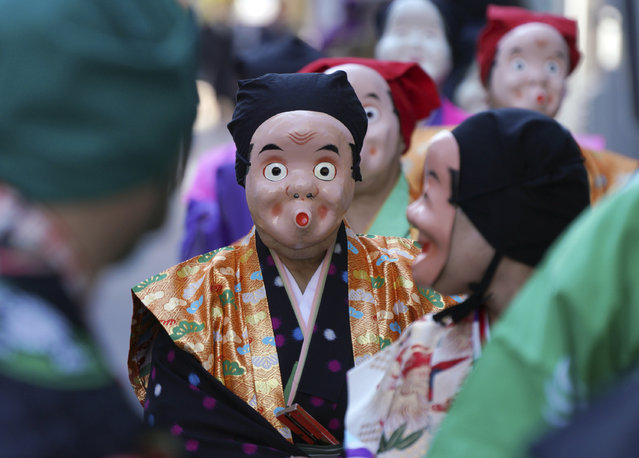
Artists wearing Japanese traditional clown masks march during the First Konpira Festival at Kotohiragu shrine in Tokyo Wednesday, January 10, 2018. The shrine is dedicated to sailors and seafaring. (Photo by Eugene Hoshiko/AP Photo)

Artists wearing Japanese traditional clown masks march during the First Konpira Festival at Kotohiragu shrine in Tokyo Wednesday, January 10, 2018. The shrine is dedicated to sailors and seafaring. (Photo by Eugene Hoshiko/AP Photo)
Details
30 Jan 2018 06:32:00