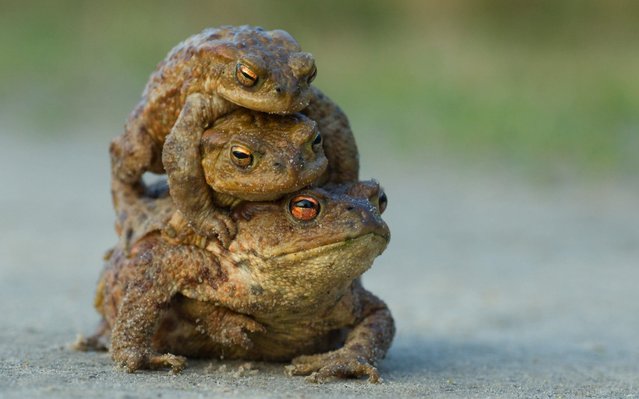
A photographer in Somerset, South West England captured the mating rituals of toads as several males attempt to mate with one female all at once. (Photo by John Waters/NPL)
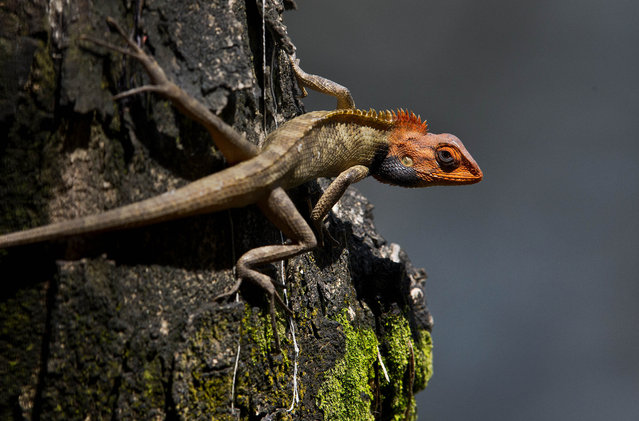
An Oriental Garden Lizard sits on a tree in Gauhati, India, Tuesday, April 16, 2019. During the breeding season, the male lizard's head and throat turn a bright color. (Photo by Anupam Nath/AP Photo)
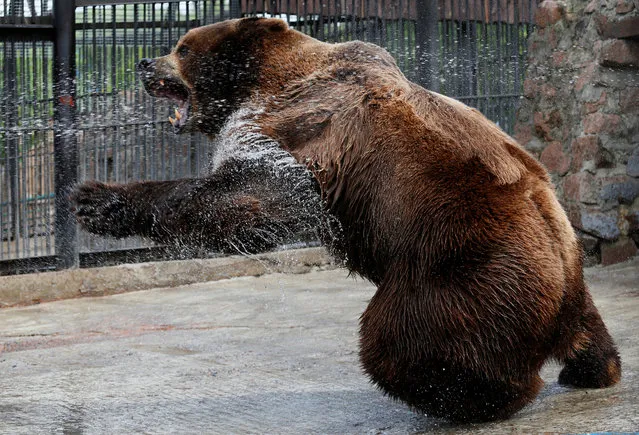
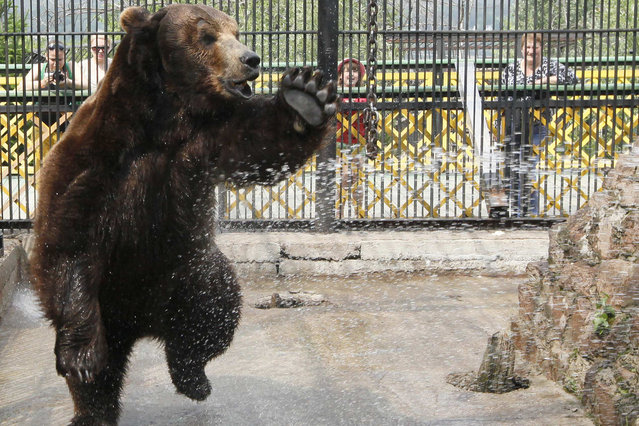
Buyan, a male Siberian brown bear, cools down under a stream of water sprayed by an employee in an enclosure on a hot summer day, at the Royev Ruchey zoo in Krasnoyarsk, Russia on June 14, 2019. (Photo by Ilya Naymushin/Reuters)
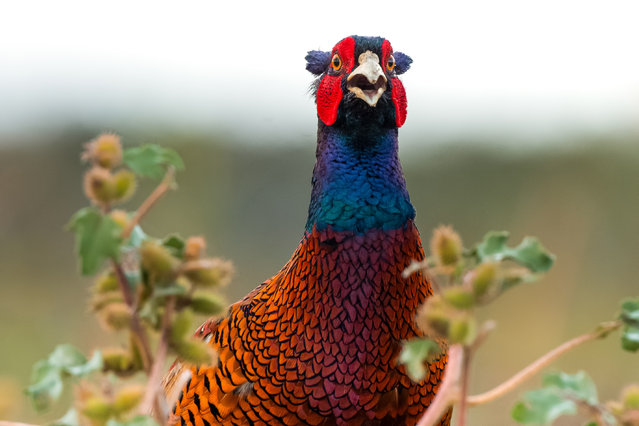
A pheasant is seen among grasses in Bursa, Turkiye on October 07, 2024. Pheasants mostly live in forested areas, thickets and wetlands. Unlike females, male pheasants have a much more remarkable structure with their long tails and feathers in bright and variable colors. Also, they feed on fruits, grains, seeds and invertebrates. (Photo by Alper Tuydes/Anadolu via Getty Images)
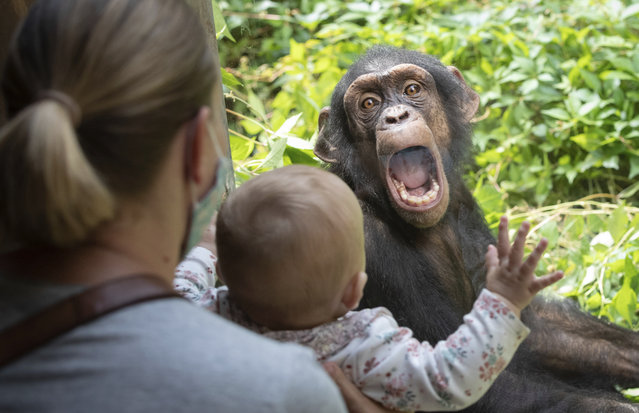
A chimpanzee in the Osnabrück Zoo in Lower Saxony makes contact with a small zoo visitor sitting in front of a pane on September 1, 2020. The two males Lobo and Lome moved from Leipzig Zoo to Osnabrück Zoo to strengthen the social structure of the existing group. (Photo by Friso Gentsch/dpa)
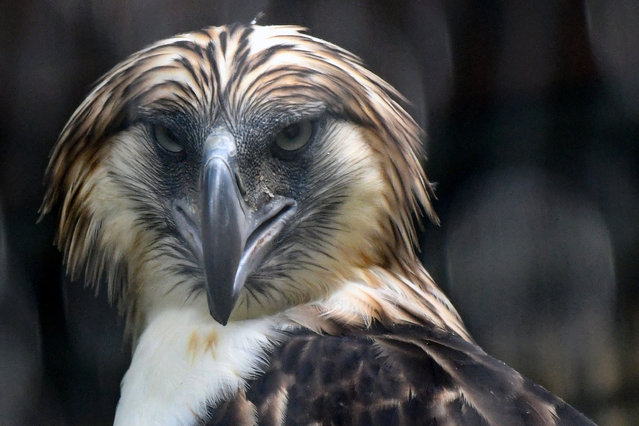
A male Philippine eagle named Geothermica is seen in an exclosure at Jurong Bird Park in Singapore on November 27, 2019. Singapore unveiled two Philippine eagles at its main aviary November 27, the first breeding pair of the critically endangered raptors to be brought outside their native country as part of a conservation plan. (Photo by Roslan Rahman/AFP Photo)
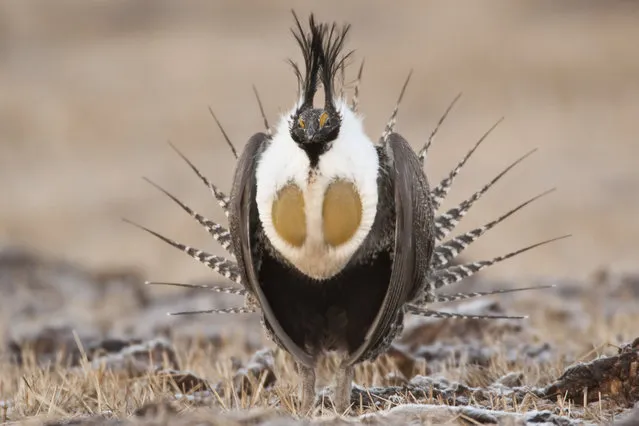
The Greater Sage-Grouse is certainly a formidable-looking bird. Being the largest grouse in North America and having tail feathers, which look like giant spikes, make for a ferocious sight. These birds are well known for their complicated courtship rituals, in which the males perform a special “strutting display” to attract the females. Another distinct feature of the Greater Sage-Grouse is two large yellow throat sacs (gular sacs), which are inflated by the males during the courtship display. Unlike pelicans, whose gular sacs are used to store fish while hunting, the throat sacks of the Greater Sage-Grouse are merely for display.
Buyan, a male Siberian brown bear, is given a shower by a zoo employee in his enclosure at the Royev Ruchey zoo in Russia's Siberian city of Krasnoyarsk June 24, 2014. The Siberian city has been experiencing temperatures of around 30 degrees Celsius over the last week. (Photo by Ilya Naymushin/Reuters)