Loading...
Done
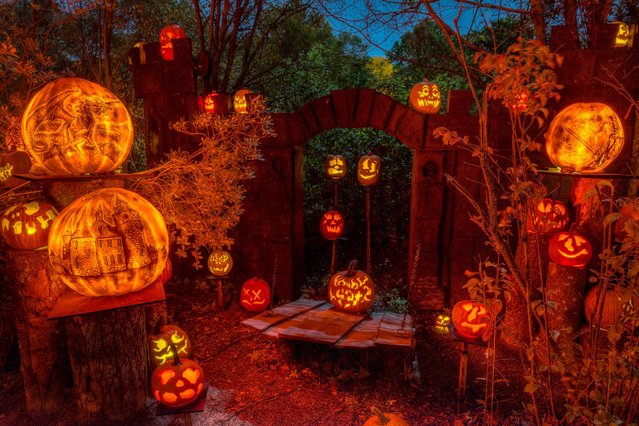
Nothing says Halloween like a jack-o'-lantern, but these professional carvings will blow your neighborhood pumpkin out of the water. (Photo by Frank C. Grace/Courtesy Jack-O-Lantern Spectacular)

Nothing says Halloween like a jack-o'-lantern, but these professional carvings will blow your neighborhood pumpkin out of the water. (Photo by Frank C. Grace/Courtesy Jack-O-Lantern Spectacular)
Details
02 Nov 2014 10:40:00
The National Geographic Photo Ark is a travelling exhibition of photographer Joel Sartore’s quest to create a photo archive of biodiversity around the world. So far, Sartore has captured studio portraits of more than 6,000 species – a number that he hopes to double. On 1 July, the ark will open at Melbourne zoo – the first time it has been exhibited in the southern hemisphere. More than 50 portraits will be on display, including many of Australian endangered animals being protected by programs at the zoo itself. These captions have been edited from text supplied by Melbourne zoo. Here: Barking owl. So-named because its call sounds like a barking dog, these birds are native to Australia, Indonesia and Papua New Guinea. In Victoria they are listed as an endangered species, and in 2003 there were estimated to be fewer than 50 breeding pairs. The main threat to the species in Victoria is loss of habitat, especially large trees with hollows in which they can nest and on which many of their prey depend. Apart from a bark, they may utter a chilling scream when they feel threatened. (Photo by Joel Sartore/National Geographic Photo Ark/The Guardian)

The National Geographic Photo Ark is a travelling exhibition of photographer Joel Sartore’s quest to create a photo archive of biodiversity around the world. So far, Sartore has captured studio portraits of more than 6,000 species – a number that he hopes to double. On 1 July, the ark will open at Melbourne zoo – the first time it has been exhibited in the southern hemisphere. More than 50 portraits will be on display, including many of Australian endangered animals being protected by programs at the zoo itself. These captions have been edited from text supplied by Melbourne zoo. Here: Barking owl. (Photo by Joel Sartore/National Geographic Photo Ark/The Guardian)
Details
01 Jul 2017 07:45:00
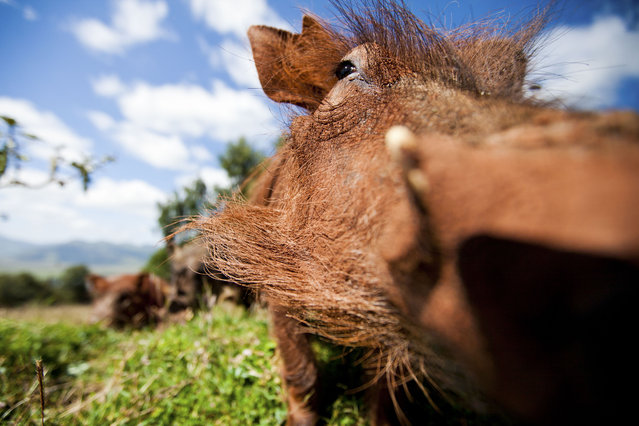
This family of warthogs regularly visited our campsite in the Ethiopian highlands so I set up a remote camera with a wide-angle lens to photograph them as they rummaged around for food. They just had a mud bath. (Photo by Will Burrard-Lucas/Caters News Agency)

This family of warthogs regularly visited our campsite in the Ethiopian highlands so I set up a remote camera with a wide-angle lens to photograph them as they rummaged around for food. They just had a mud bath. (Photo by Will Burrard-Lucas/Caters News Agency)
Details
22 Sep 2019 00:03:00
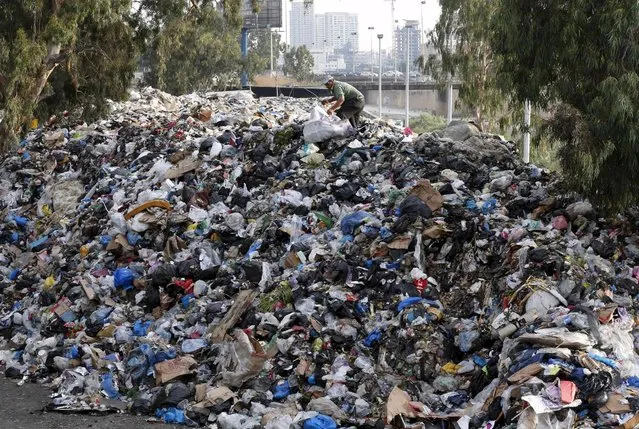
A scavenger sifts through garbage piled on the bank of Beirut river, Lebanon August 24, 2015. Lebanese protest organisers called for a fresh demonstration against the government on Saturday after two days of rallies that turned violent in central Beirut and wounded scores of people. (Photo by Mohamed Azakir/Reuters)

A scavenger sifts through garbage piled on the bank of Beirut river, Lebanon August 24, 2015. Lebanese protest organisers called for a fresh demonstration against the government on Saturday after two days of rallies that turned violent in central Beirut and wounded scores of people. The “You Stink” campaign has mobilised against the government's failure to solve a garbage disposal crisis, bringing thousands of people onto the streets in protests that have threatened the survival of the cabinet. (Photo by Mohamed Azakir/Reuters)
Details
25 Aug 2015 11:01:00
The Lun-class Ekranoplane was used by the Soviet Navy starting in 1987, and wasn't retired until the late 1990s, after the Soviet Union's fall. (Igor113)

“The Lun-class ekranoplan (NATO reporting name Duck) was a ground effect vehicle (GEV) designed by Rostislav Evgenievich Alexeev and used by the Soviet and Russian navies from 1987 until sometime in the late 1990s. It “flew” using the lift generated by the ground effect of its large wings when close to the surface of the water – about four metres or less. Although they might look similar and/or have related technical characteristics, ekranoplans like the Lun are not aircraft, seaplanes, hovercraft, or hydrofoils – ground effect is a separate technology altogether. The International Maritime Organization classifies these vehicles as maritime ships. The name Lun comes from the Russian for harrier”. – Wikipedia (Photo by Igor113)
Details
08 Aug 2014 10:51:00
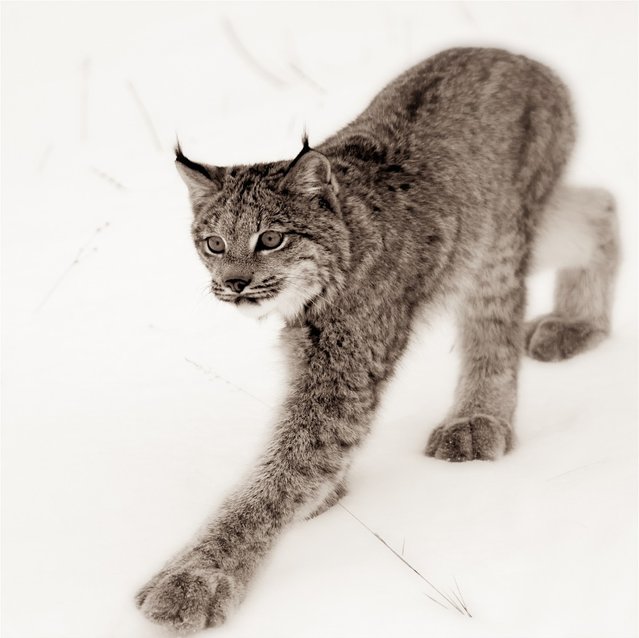
“Keep On Trucking, Mr. Lynx!”. Canadian Lynx Study.

“Keep On Trucking, Mr. Lynx!”. Canadian Lynx Study. (Photo by Josef)


Details
09 Nov 2012 11:39:00
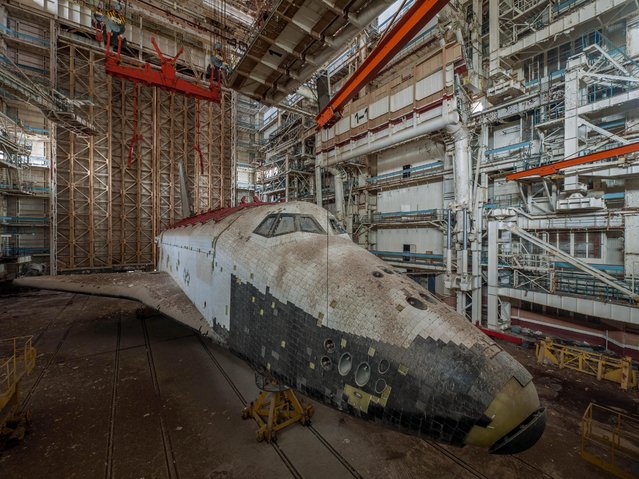
The shuttle never got its final coat of paint and was left unfinished. (Photo by Ralph Mirebs/Exclusivepix Media)

Ralph Mirebs, an urban explorer and photographer in Russia, has revealed extraordinary photos of Soviet space shuttle prototypes gathering dust in an abandoned hangar. The abandoned hangar is located at the Baikonur Cosmodrome in Kazakhstan, which is still in operation today (with the close of NASA’s shuttle program, Russian Soyuz shuttles are the only way for astronauts to reach the International Space Station). The Buran prototype shuttles found by Mirebs, however, are from an earlier era – they are the last remnants of a space program that began in 1974 and was finally shuttered in 1993. (Photo by Ralph Mirebs/Exclusivepix Media)
Details
12 Mar 2017 00:05:00
Full length portrait of female skier, Sierra Nevada Mountains in California, USA. (Photo by Anatoliy Gleb/Getty Images)

Full length portrait of female skier, Sierra Nevada Mountains in California, USA. (Photo by Anatoliy Gleb/Getty Images)
Details
24 Jun 2017 08:17:00