Loading...
Done
Police officers detain a Navalny supporter during a protest in St. Petersburg, Russia, Tuesday, February 2, 2021. A Moscow court has ordered Russian opposition leader Alexei Navalny to prison for more than 2 1/2 years on charges that he violated the terms of his probation while he was recuperating in Germany from nerve-agent poisoning. Navalny, who is the most prominent critic of President Vladimir Putin, had earlier denounced the proceedings as a vain attempt by the Kremlin to scare millions of Russians into submission. (Photo by Dmitri Lovetsky/AP Photo)

Police officers detain a Navalny supporter during a protest in St. Petersburg, Russia, Tuesday, February 2, 2021. A Moscow court has ordered Russian opposition leader Alexei Navalny to prison for more than 2 1/2 years on charges that he violated the terms of his probation while he was recuperating in Germany from nerve-agent poisoning. Navalny, who is the most prominent critic of President Vladimir Putin, had earlier denounced the proceedings as a vain attempt by the Kremlin to scare millions of Russians into submission. (Photo by Dmitri Lovetsky/AP Photo)
Details
05 Feb 2021 09:38:00
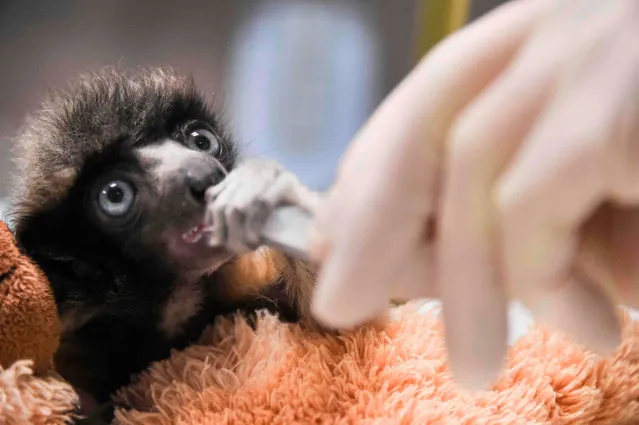
A veterinarian from the zoo of Besancon feeds “Soa”, a female crowned sifaka, in Besancon, eastern France, on February 18, 2019. The crowned sifaka is a critically endangered species from Madagascar. There were only 6 females over 20 individuals living in 7 zoos worldwide end of 2018. (Photo by Sébastien Bozon/AFP Photo)

A veterinarian from the zoo of Besancon feeds “Soa”, a female crowned sifaka, in Besancon, eastern France, on February 18, 2019. The crowned sifaka is a critically endangered species from Madagascar. There were only 6 females over 20 individuals living in 7 zoos worldwide end of 2018. (Photo by Sébastien Bozon/AFP Photo)
Details
24 Feb 2019 00:03:00
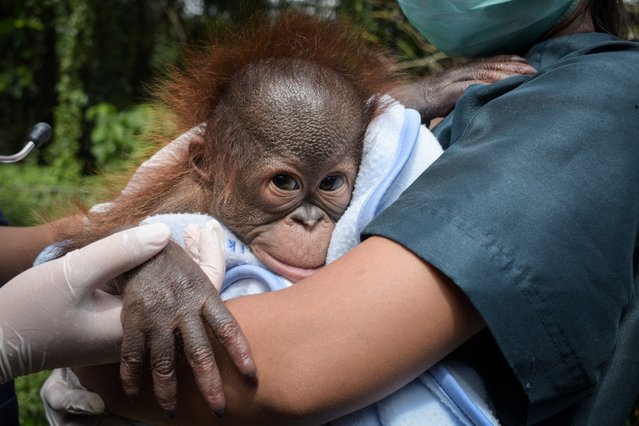
A 71-day-old male Kalimantan orangutan, a critically endangered species, born in the zoo but neglected by its 9-year-old mother Shakila, is held by an animal care taker at Bandung Zoological Gardens in Bandung, West Java on February 21, 2025. (Photo by Timur Matahari/AFP Photo)

A 71-day-old male Kalimantan orangutan, a critically endangered species, born in the zoo but neglected by its 9-year-old mother Shakila, is held by an animal care taker at Bandung Zoological Gardens in Bandung, West Java on February 21, 2025. (Photo by Timur Matahari/AFP Photo)
Details
10 Mar 2025 04:28:00
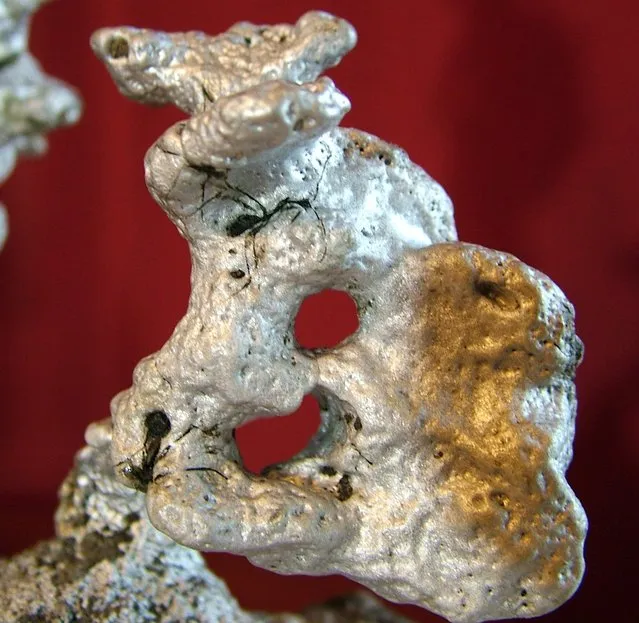
Amazing Sculpture By Pouring Molten Aluminium Down Anthill

American artists have drawn criticism after making stunning, intricate sculptures by pouring hot liquid aluminium into anthills.
Details
29 Aug 2014 10:50:00
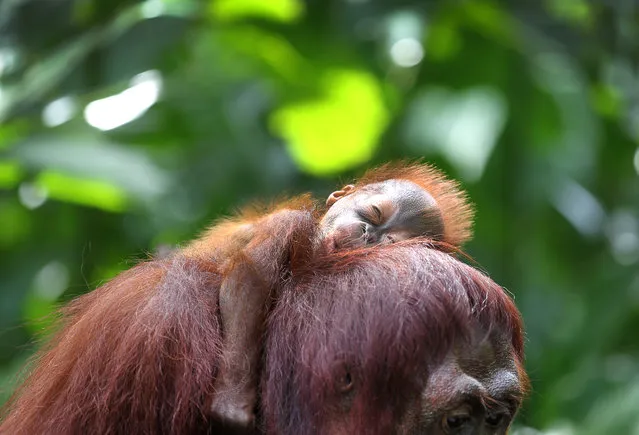
One month-old endangered Bornean Orang Utan sleeps on his mother named Miri on Wednesday, March 6, 2013, in Singapore. The Singapore Zoo is renowned for its flagship animal, the Orang Utan, and exhibits both the endangered Bornean and critically endangered Sumatran sub-species in a social setting. It is also known for its efforts in promoting and educating the public about the importance of wildlife conservation through its educational programs and breeding of these endangered species. (Photo by Wong Maye-E/AP Photo)

One month-old endangered Bornean Orang Utan sleeps on his mother named Miri on Wednesday, March 6, 2013, in Singapore. The Singapore Zoo is renowned for its flagship animal, the Orang Utan, and exhibits both the endangered Bornean and critically endangered Sumatran sub-species in a social setting. It is also known for its efforts in promoting and educating the public about the importance of wildlife conservation through its educational programs and breeding of these endangered species. (Photo by Wong Maye-E/AP Photo)
Details
20 Sep 2013 11:35:00
A demonstrator holds up a picture depicting Russian President Vladimir Putin with make-up, during a protest by the gay community in Amsterdam April 8, 2013. Russia does not discriminate against homosexuals, Putin told reporters in Amsterdam on Monday where he was greeted by gay rights and other activists critical of Russia's track record. Putin is on one-day visit in the Netherlands for the start of the Netherlands-Russia Year. (Photo by Cris Toala Olivares/Reuters)

A demonstrator holds up a picture depicting Russian President Vladimir Putin with make-up, during a protest by the gay community in Amsterdam April 8, 2013. Russia does not discriminate against homosexuals, Putin told reporters in Amsterdam on Monday where he was greeted by gay rights and other activists critical of Russia's track record. Putin is on one-day visit in the Netherlands for the start of the Netherlands-Russia Year. (Photo by Cris Toala Olivares/Reuters)
Details
10 Apr 2013 12:32:00
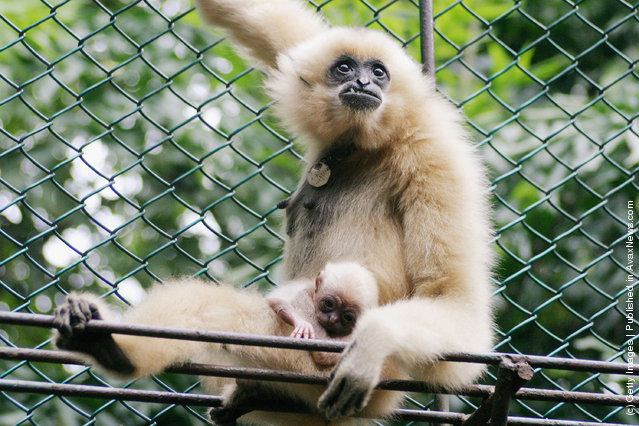
Newborn White-Cheeked Gibbon Nomascus

“Nomascus is the second most speciose genus of gibbons (family Hylobatidae). Originally this genus was a subgenus of Hylobates, and all individuals were considered one species, Hylobates concolor. Species within Nomascus are characterized by 52 chromosomes. Some species are all black, some light with a distinct black tuft of crown fur, and some by distinct, light-colored cheek patches. Nomascus is found from southern China (Yunnan) to southern Vietnam, and also on Hainan Island. One of the genus' species, Nomascus nasutus, has been deemed “the most critically endangered ape species in the world”. All of the species in this genus are endangered or critically endangered”. – Wikipedia

Photo: A newborn White-Cheeked Gibbon clings to its mother in the Nanning Zoo on April 12, 2004 in Nanning, Guangxi province, China. The White-Cheeked Gibbon's natural habitat is Southern China as well as Vietnam and Laos. They are classified as highly endangered and are on the brink of extinction due to poaching and reduction of natural rainforests. (Photo by Getty Images)
Details
12 Aug 2011 11:51:00
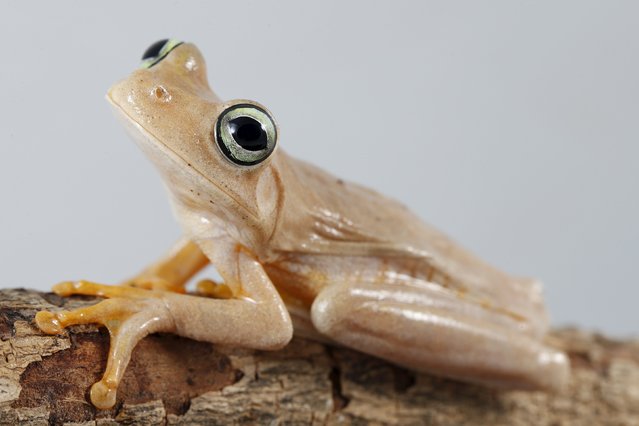
A Hypsiboas crepitans frog is pictured at a terrarium in Caracas November 30, 2015. Venezuelan frogs and toads are in critical danger due to climate change as rising temperatures complicate reproduction and spread a deadly fungus, say scientists, who liken the species to canaries in a coalmine warning of imminent danger. (Photo by Carlos Garcia Rawlins/Reuters)

A Hypsiboas crepitans frog is pictured at a terrarium in Caracas November 30, 2015. Venezuelan frogs and toads are in critical danger due to climate change as rising temperatures complicate reproduction and spread a deadly fungus, say scientists, who liken the species to canaries in a coalmine warning of imminent danger. The survival of a group of nearly 20 frog and toad species, which top Venezuela's list of endangered species, may rest on a small group of academics in a Caracas laboratory attempting to recreate the amphibians' natural reproductive conditions. (Photo by Carlos Garcia Rawlins/Reuters)
Details
17 Dec 2015 08:04:00