Loading...
Done
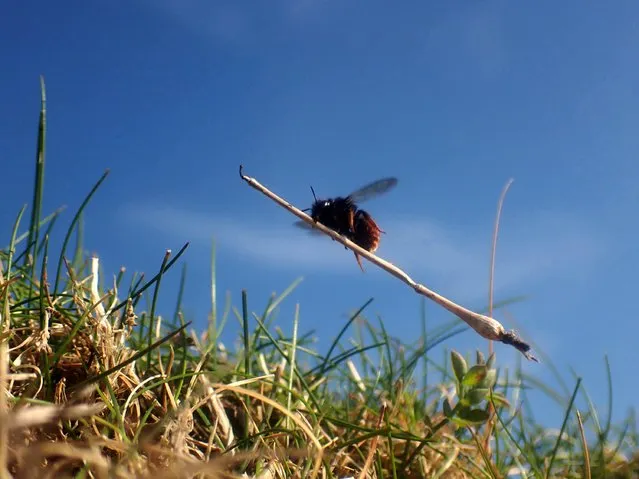
Undated BBC handout photo of a female two-coloured Mason Bee carrying a dried grass stalk back to her snail-shell nest on the British Isles in the latest episode of Sir David Attenborough's Wild Isles series. Issue date: Sunday March 26, 2023. (Photo by John Walters/Silverback Films/BBC/PA Wire)

Undated BBC handout photo of a female two-coloured Mason Bee carrying a dried grass stalk back to her snail-shell nest on the British Isles in the latest episode of Sir David Attenborough's Wild Isles series. Issue date: Sunday March 26, 2023. (Photo by John Walters/Silverback Films/BBC/PA Wire)
Details
31 Mar 2023 04:13:00
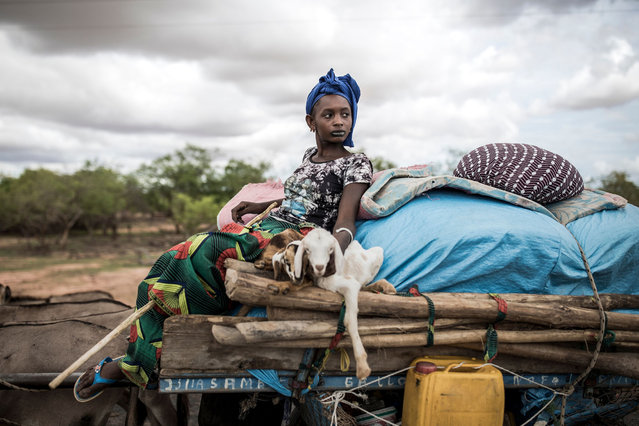
A Fulani Pastoralist carries two baby sheep on her donkey cart as her family move on northwards in Barkedji, Senegal on July 21, 2020. Thousands of Pastoralist families will start the movement north in the next weeks. With the first rains comes fresh grass and water for the Fulani herders' livestock, it also marks the point where most of the Pastoralist will move northwards until the dry season. (Photo by John Wessels/AFP Photo)

A Fulani Pastoralist carries two baby sheep on her donkey cart as her family move on northwards in Barkedji, Senegal on July 21, 2020. Thousands of Pastoralist families will start the movement north in the next weeks. With the first rains comes fresh grass and water for the Fulani herders' livestock, it also marks the point where most of the Pastoralist will move northwards until the dry season. (Photo by John Wessels/AFP Photo)
Details
04 Aug 2020 00:05:00
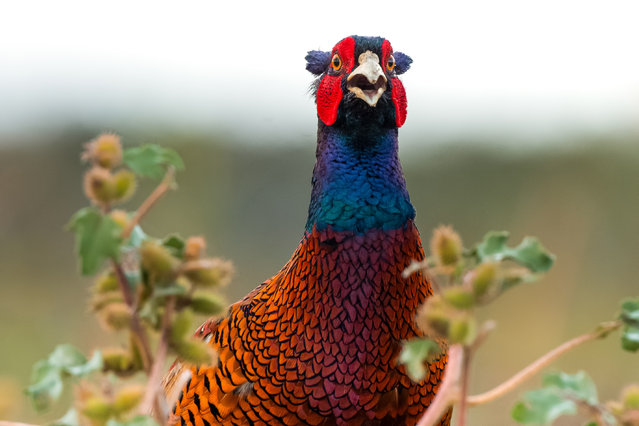
A pheasant is seen among grasses in Bursa, Turkiye on October 07, 2024. Pheasants mostly live in forested areas, thickets and wetlands. Unlike females, male pheasants have a much more remarkable structure with their long tails and feathers in bright and variable colors. Also, they feed on fruits, grains, seeds and invertebrates. (Photo by Alper Tuydes/Anadolu via Getty Images)

A pheasant is seen among grasses in Bursa, Turkiye on October 07, 2024. Pheasants mostly live in forested areas, thickets and wetlands. Unlike females, male pheasants have a much more remarkable structure with their long tails and feathers in bright and variable colors. Also, they feed on fruits, grains, seeds and invertebrates. (Photo by Alper Tuydes/Anadolu via Getty Images)
Details
27 Oct 2024 04:43:00
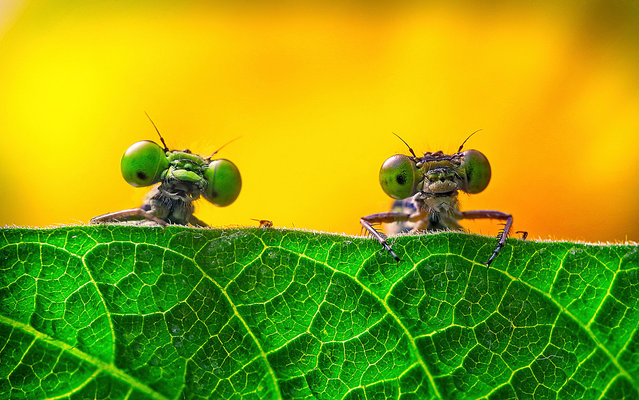
Shortlisted: “Two big eyes” by Miao Yong (Zejiang province, China). Damselflies look over the leaves. “I was photographing insects in a park near my home when suddenly I found two damselflies in the grass. They kept flying and it was very difficult to focus until suddenly they parked behind a leaf”. (Photo by Miao Yong/2017 Royal Society of Biology Photographer of the Year)

Shortlisted: “Two big eyes” by Miao Yong (Zejiang province, China). Damselflies look over the leaves. “I was photographing insects in a park near my home when suddenly I found two damselflies in the grass. They kept flying and it was very difficult to focus until suddenly they parked behind a leaf”. (Photo by Miao Yong/2017 Royal Society of Biology Photographer of the Year)
Details
16 Oct 2017 09:04:00
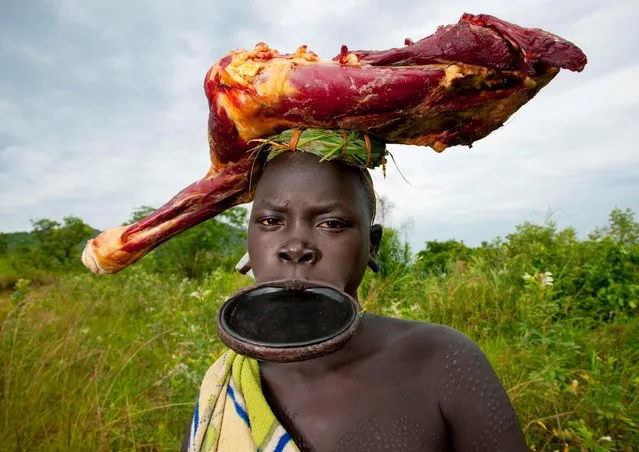
A tribeswoman sporting a huge lip plate and wearing a skinned animal carcass on her head. (Photo by Eric Lafforgue/Exclusivepix Media)

Warriors from the Suri tribe in Ethiopia still stage the savage “Donga” battles – even after many fighters have been died from their injuries. Donga stick fights take place after the harvests, the Surmas count days owing to knots on a long stem of grass or jags on the trunk of a tree dedicated to that specific use. Here: A tribeswoman sporting a huge lip plate and wearing a skinned animal carcass on her head. (Photo by Eric Lafforgue/Exclusivepix Media)
Details
22 Apr 2017 09:30:00
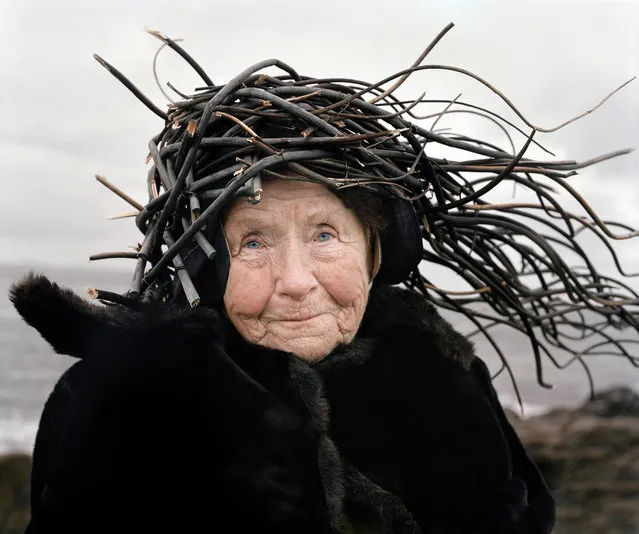
Eyes As Big As Plates – Norway And Finland

Eyes as Big as Plates is a whimsical series by Finnish photographer Riitta Ikonen and Norwegian photographer Karoline Hjorth that features senior citizens donning organic materials like twigs and grass. Ikonen says that the collaborative project originally began as "a play on characters and protagonists from Norwegian folklore" but has since evolved into a collection of images exploring "mental landscapes" that reflect a return of body to nature with the use of scavenged materials.
Details
08 Apr 2013 09:53:00


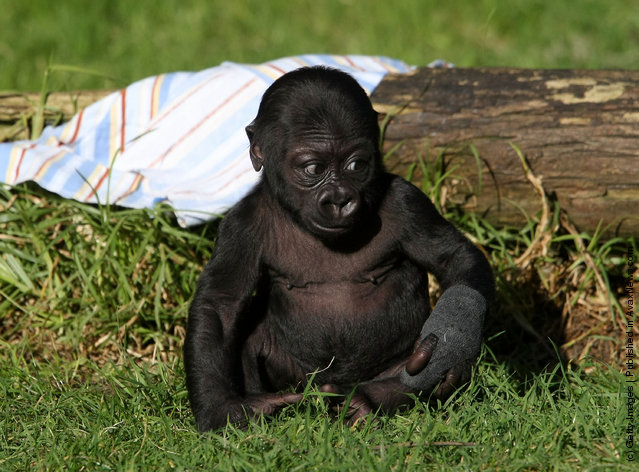
A three month-old baby gorilla named Hasani sits in the grass March 11, 2009 at the San Francisco Zoo in San Francisco, California. The newborn gorilla was given the name Hasani. Hasani's father, a twenty seven year-old gorilla named Oscar Jonsey, picked between five color coded cantaloupes representing the five name finalists to come up with the newborn's name that was submitted by Amanda VerPloeg of Oskaloosa, Iowa. (Photo by Justin Sullivan/Getty Images)
Details
30 Mar 2011 13:46:00
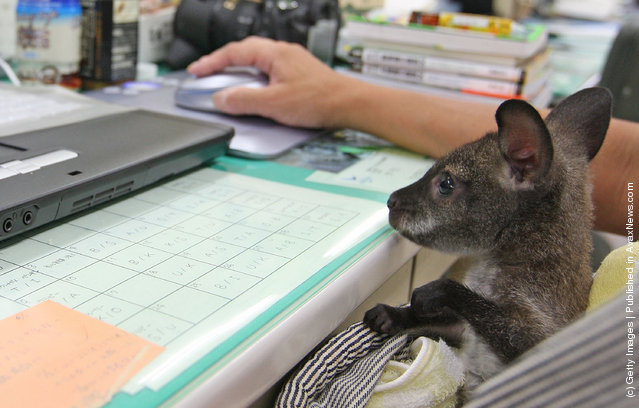
A baby wallaby

“Very small forest-dwelling wallabies are known as pademelons (genus Thylogale) and dorcopsises (genera Dorcopsis and Dorcopsulus). The name wallaby comes from the Eora Aboriginal tribe who were the original inhabitants of the Sydney area. Wallabies are herbivores whose diet consists of a wide range of grasses, vegetables, leaves, and other types of foliage”. – Wikipedia

Photo: A baby wallaby sits in a zoo attendant's lap at Edogawa Natural Zoo on August 4, 2009 in Tokyo, Japan. The staff of the zoo have raised the young wallaby after her mother neglected her. (Photo by Junko Kimura/Getty Images)
Details
07 Sep 2011 13:33:00