Loading...
Done
These stunning coloured images show detailed x-ray images of everything from skulls to light bulbs. Artist Paula Fontaine, from Westminster Massachusetts, created the images using a process called digital map painting. Here: Brain storm, conceptual composite X-ray. (Photo by Paula Fontaine/Barcroft Media)

These stunning coloured images show detailed x-ray images of everything from skulls to light bulbs. Artist Paula Fontaine, from Westminster Massachusetts, created the images using a process called digital map painting. To create the images the x-ray emission source – the head of the machine on an arm which focuses the beam – is placed over the object. Paula then retreats behind a shielded screen before activating the x-ray exposure. Here: Brain storm, conceptual composite X-ray. (Photo by Paula Fontaine/Barcroft Media)
Details
27 Mar 2015 13:34:00
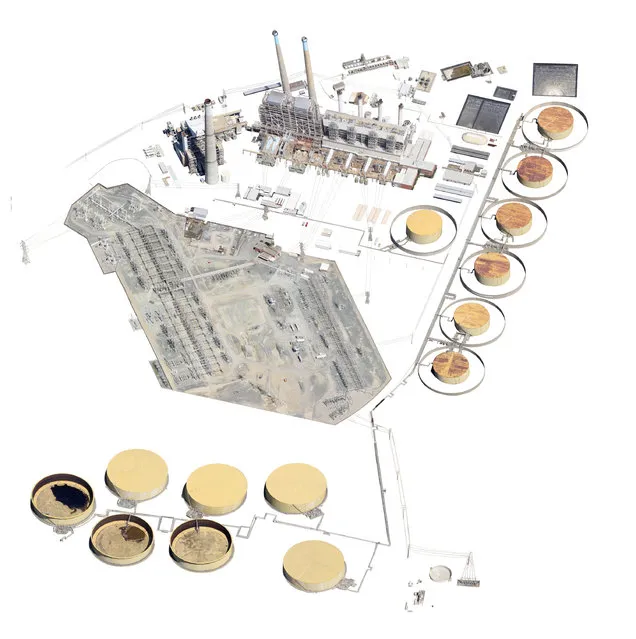
Natural gas plant in Pittsburg, CA (detail of Power Landscape), 2013. (Photo by Jenny Odell)

Jenny Odell repurposes online imagery mostly from Google Maps, but also from YouTube, Craigslist, and other sites. In her “Satellite Collections”, for example, she incorporated aerial views of swimming pools, basketball courts, parking lots, and other recognizable structures, seen from space. Her more recent series, “Satellite Landscapes”, includes painstakingly isolated Google Maps imagery of oil refineries, wastewater treatment plants, solar farms, etc. This work is meant as a reminder of our physically determined and vulnerable existence, since we depend on many of these things for survival and maintenance of our way of life. Photo: Natural gas plant in Pittsburg, CA (detail of Power Landscape), 2013. (Photo by Jenny Odell)
Details
19 Mar 2014 07:28:00
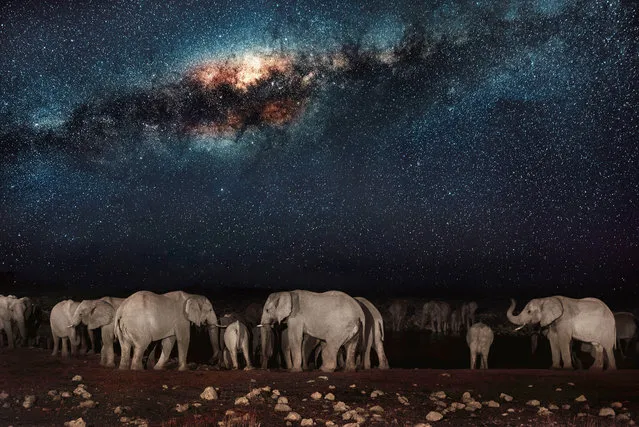
This watering hole is the social hub of the veldt; the scrubby grasslands that stretch across Namibia. The scorched earth supports sometimes fragile populations of magnificent wildlife – from endangered predators to plentiful herds of game. But these gentle giraffes and elephants need to be careful: lions don’t sleep at night, they hunt! The spectacular starscape above southern Africa is unchanged since explorers first mapped the continent. The photographer, Pietro Olivetta from Italy, said he had to be patient to capture these shots – but it was worth the wait. (Photo by Pietro Olivetta/Caters News)

This watering hole is the social hub of the veldt; the scrubby grasslands that stretch across Namibia. The scorched earth supports sometimes fragile populations of magnificent wildlife – from endangered predators to plentiful herds of game. But these gentle giraffes and elephants need to be careful: lions don’t sleep at night, they hunt! The spectacular starscape above southern Africa is unchanged since explorers first mapped the continent. The photographer, Pietro Olivetta from Italy, said he had to be patient to capture these shots – but it was worth the wait. (Photo by Pietro Olivetta/Caters News)
Details
20 Feb 2017 00:05:00
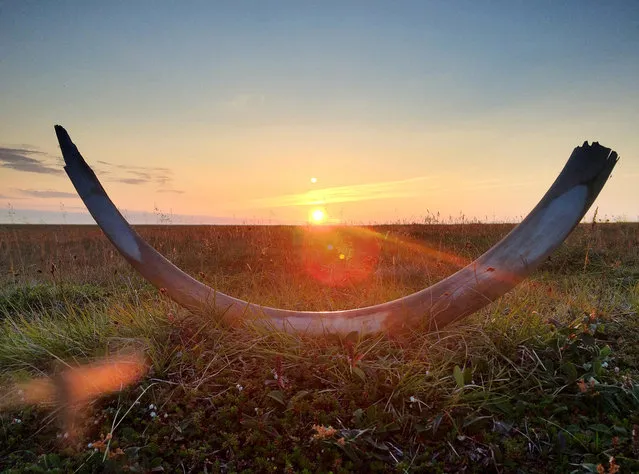
The tusk of a woolly mammoth that lived some 18,000 years ago, from which researchers sequenced the extinct mammal's entire genome, is seen in northeastern Siberia in this photo from 2015. (Photo by Love Dalen/Handout via Reuters)

The tusk of a woolly mammoth that lived some 18,000 years ago, from which researchers sequenced the extinct mammal's entire genome, is seen in northeastern Siberia in this photo from 2015. (Photo by Love Dalen/Handout via Reuters)
Details
09 Jun 2023 02:57:00
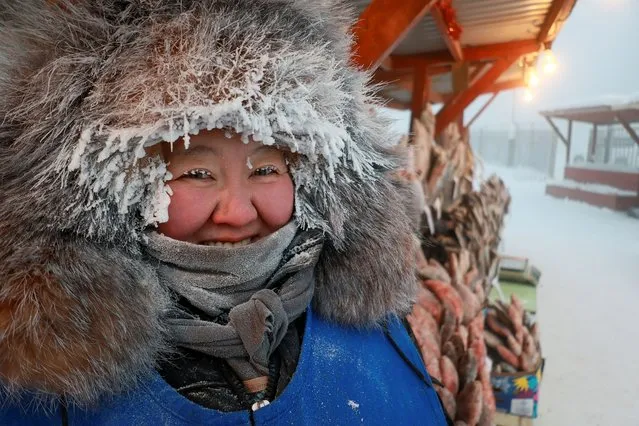
Vendor Nyurgusun Starostina, 47, poses for a picture at an open-air market on a frosty day in Yakutsk, Russia, December 5, 2023. Temperatures in parts of the Sakha Republic, also known as Yakutia and located in the northeastern part of Siberia, went below minus 50 degrees Celsius (minus 58 degrees Fahrenheit) on December 5. (Photo by Roman Kutukov/Reuters)

Vendor Nyurgusun Starostina, 47, poses for a picture at an open-air market on a frosty day in Yakutsk, Russia, December 5, 2023. Temperatures in parts of the Sakha Republic, also known as Yakutia and located in the northeastern part of Siberia, went below minus 50 degrees Celsius (minus 58 degrees Fahrenheit) on December 5. (Photo by Roman Kutukov/Reuters)
Details
20 Dec 2023 02:12:00
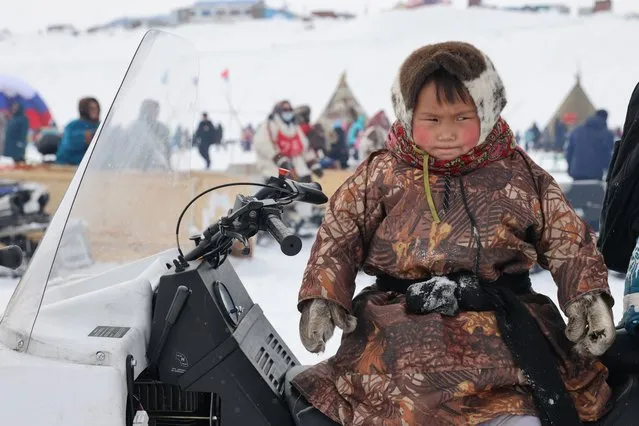
A child is seen during celebrations of Reindeer Breeder Day, the main holiday of indigenous peoples of the Russian Extreme North, in the village of Nosok on Taymyr Peninsula in north-central Siberia, Krasnoyarsk Territory, Russia on April 17, 2021. (Photo by Alexander Ryumin/TASS)

A child is seen during celebrations of Reindeer Breeder Day, the main holiday of indigenous peoples of the Russian Extreme North, in the village of Nosok on Taymyr Peninsula in north-central Siberia, Krasnoyarsk Territory, Russia on April 17, 2021. (Photo by Alexander Ryumin/TASS)
Details
30 Apr 2021 08:56:00
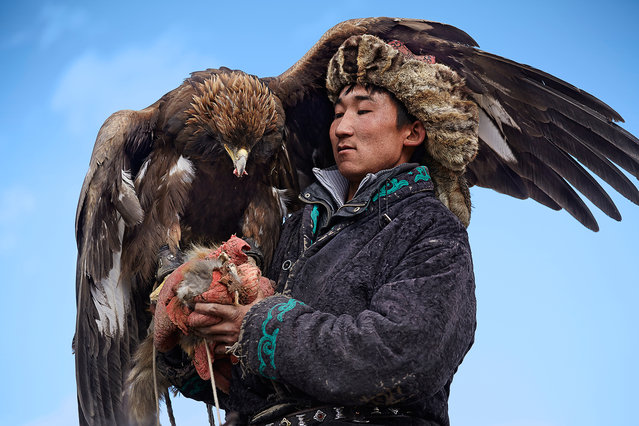
In one of the planet’s most desolate and harsh terrains, the Altai Mountains which run from Siberia in Russia down to Mongolia’s Gobi Desert, hunting with eagles is currently only practiced by a handful of Kyrgyz and Kazakhs. This form of falconry, the practice of hunting with the aid of birds of prey, can be traced back as far as 4,000 years in Central Asia. (Photo by Tariq Zaidi/The Washington Post)

In one of the planet’s most desolate and harsh terrains, the Altai Mountains which run from Siberia in Russia down to Mongolia’s Gobi Desert, hunting with eagles is currently only practiced by a handful of Kyrgyz and Kazakhs. This form of falconry, the practice of hunting with the aid of birds of prey, can be traced back as far as 4,000 years in Central Asia. Here: after a successful hunt, a proud hunter rewards his eagle by feeding it the lungs of the prey, which is considered the most highly prized part of the animal. (Photo by Tariq Zaidi/The Washington Post)
Details
22 Aug 2015 12:46:00
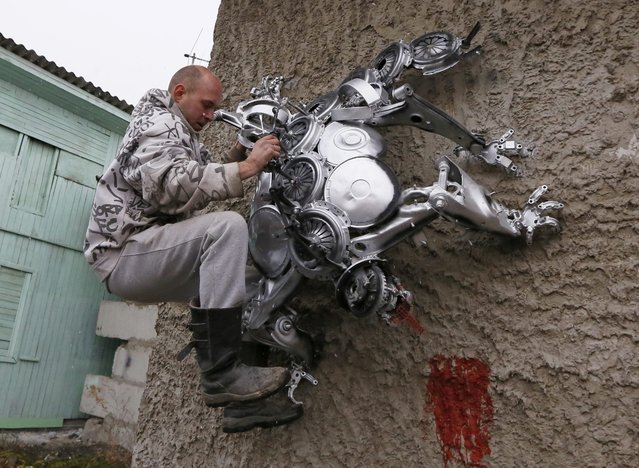
Mechanic and welder Sergei Kulagin, 32, strengthens the bracing of a spider sculpture, made by Kulagin, during a demonstration on the wall of an automobile repair workshop in the town of Divnogorsk outside Krasnoyarsk, Siberia, October 15, 2014. Enthusiast Kulagin, who works as a mechanic of an automobile service station, created about 20 sculptures made of used car parts and components during his non-working hours. (Photo by Ilya Naymushin/Reuters)

Mechanic and welder Sergei Kulagin, 32, strengthens the bracing of a spider sculpture, made by Kulagin, during a demonstration on the wall of an automobile repair workshop in the town of Divnogorsk outside Krasnoyarsk, Siberia, October 15, 2014. Enthusiast Kulagin, who works as a mechanic of an automobile service station, created about 20 sculptures made of used car parts and components during his non-working hours. (Photo by Ilya Naymushin/Reuters)
Details
18 Oct 2014 10:36:00