Loading...
Done
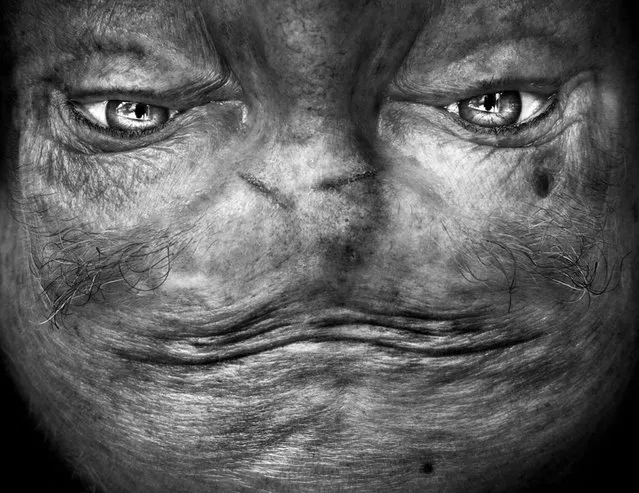
Upside-Down Portrait Photos By Anelia Loubser

This latest photo series by Anelia Loubser, a photographer in Cape Town, reminds us that even the simplest change in perspective can change how things look drastically. By selectively cropping and flipping the dark portraits in her “Alienation” series, Loubser makes basic human portraits look like creepy alien close-ups.
Details
12 Sep 2014 16:54:00
An Indian farmer from Tamil Nadu state wearing a necklace of human skulls representing suicides by agricultural workers takes part in a protest with other farmers in New Delhi on March 15, 2017. Tamil Nadu state farmers protested to demand a profitable price for their agricultral products, and called for the formation of management committee for solving Cauvery river water disputes. More than 200 farmers have committed suicide in Tamil Nadu in recent months following crop failure due to poor rainfall and inadequate water for irrigation. (Photo by Prakash Singh/AFP Photo)

An Indian farmer from Tamil Nadu state wearing a necklace of human skulls representing suicides by agricultural workers takes part in a protest with other farmers in New Delhi on March 15, 2017. Tamil Nadu state farmers protested to demand a profitable price for their agricultral products, and called for the formation of management committee for solving Cauvery river water disputes. More than 200 farmers have committed suicide in Tamil Nadu in recent months following crop failure due to poor rainfall and inadequate water for irrigation. (Photo by Prakash Singh/AFP Photo)
Details
17 Mar 2017 00:02:00
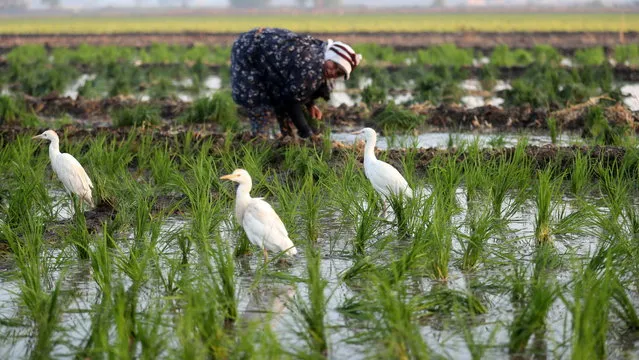
Egrets stand on a field as an Egyptian farmer plants rice seedling in Egypt's fertile Delta in Tanta, Algharbeya governorate, 100 km from Cairo, Egypt, 22 June 2022.  Egyptian Government reduced the planting of some crops that need a massive amount of irrigation water, while the government said it will reduce the rice agriculture area in Egypt, amid fear the Renaissance Dam project in Ethiopia could affect the amount of River Nile water reaching Egypt. (Photo by Khaled Elfiqi/EPA/EFE)

Egrets stand on a field as an Egyptian farmer plants rice seedling in Egypt's fertile Delta in Tanta, Algharbeya governorate, 100 km from Cairo, Egypt, 22 June 2022. Egyptian Government reduced the planting of some crops that need a massive amount of irrigation water, while the government said it will reduce the rice agriculture area in Egypt, amid fear the Renaissance Dam project in Ethiopia could affect the amount of River Nile water reaching Egypt. (Photo by Khaled Elfiqi/EPA/EFE)
Details
23 Jul 2022 04:52:00
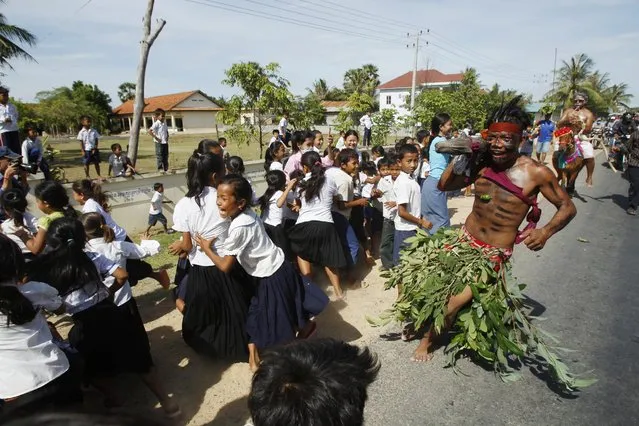
A local youth, front right, scares pupils on a street as he takes part in a ceremony to exorcize evil spirits and pray for rain amid the rice planting season at Pring Ka-ek village, northwest of Phnom Penh, Cambodia, Friday, May 22, 2015. Cambodia is a country which heavily relies on agriculture as over 80 percent of its 14 million people are farmers, growing rice as their main crop. (Photo by Heng Sinith/AP Photo)

A local youth, front right, scares pupils on a street as he takes part in a ceremony to exorcize evil spirits and pray for rain amid the rice planting season at Pring Ka-ek village, northwest of Phnom Penh, Cambodia, Friday, May 22, 2015. Cambodia is a country which heavily relies on agriculture as over 80 percent of its 14 million people are farmers, growing rice as their main crop. (Photo by Heng Sinith/AP Photo)
Details
25 May 2015 08:43:00
This photo taken on February 10, 2025 shows a captured green iguana being held by hunters after it was brought down by a slingshot in Pingtung. Taiwan's iguana population has exploded since the spikey-backed giant lizards were introduced from Central and South America more than 20 years ago as exotic pets. Many escaped or were dumped by their owners and have bred rapidly in the warm climate of southern Taiwan, invading neighbourhoods and ravaging farmers' crops. (Photo by I-Hwa Cheng/AFP Photo)

This photo taken on February 10, 2025 shows a captured green iguana being held by hunters after it was brought down by a slingshot in Pingtung. Taiwan's iguana population has exploded since the spikey-backed giant lizards were introduced from Central and South America more than 20 years ago as exotic pets. Many escaped or were dumped by their owners and have bred rapidly in the warm climate of southern Taiwan, invading neighbourhoods and ravaging farmers' crops. (Photo by I-Hwa Cheng/AFP Photo)
Details
02 Mar 2025 04:03:00
Royal sacred white oxen are offered food to consult the oracles during the Royal Ploughing Ceremony at the Royal Ground, Sanam Luang near the Grand Palace in Bangkok, Thailand, 09 May 2016. The ancient Brahmin rite is of great importance to the country's farmers. Thousands of farmers converge in Bangkok for the annual event, which is believed to assure a successful planting season and an abundance of crops. (Photo by Rungroj Yongrit/EPA)

Royal sacred white oxen are offered food to consult the oracles during the Royal Ploughing Ceremony at the Royal Ground, Sanam Luang near the Grand Palace in Bangkok, Thailand, 09 May 2016. The ancient Brahmin rite is of great importance to the country's farmers. Thousands of farmers converge in Bangkok for the annual event, which is believed to assure a successful planting season and an abundance of crops. This year the sacred oxen ate paddy, sesame seeds, water and liquor which according to traditional soothsayers predicts that the country will have abundant food, sufficient water for agriculture as well as communication and foreign trade will improve leading to the prosperous economy. (Photo by Rungroj Yongrit/EPA)
Details
10 May 2016 13:11:00
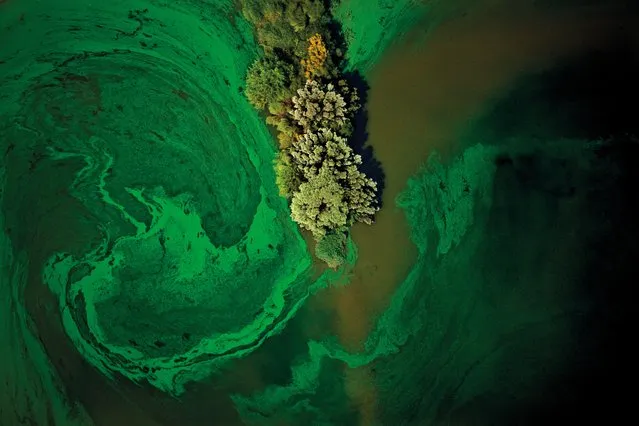
Luling, Louisiana US. New evidence contradicts previous claims of the relative safety of glyphosate, the world’s most widely used herbicide, which is manufactured here. It is often used in conjunction with seeds that have been genetically modified to tolerate its application, meaning that anyone consuming these crops is eating a genetically modified plant, and whatever residue of the pesticide that remains. (Photo by J. Henry Fair/Industrial Scars/Papadakis Publisher)

Luling, Louisiana, US. New evidence contradicts previous claims of the relative safety of glyphosate, the world’s most widely used herbicide, which is manufactured here. It is often used in conjunction with seeds that have been genetically modified to tolerate its application, meaning that anyone consuming these crops is eating a genetically modified plant, and whatever residue of the pesticide that remains. (Photo by J. Henry Fair/Industrial Scars/Papadakis Publisher)
Details
25 Oct 2016 10:40:00
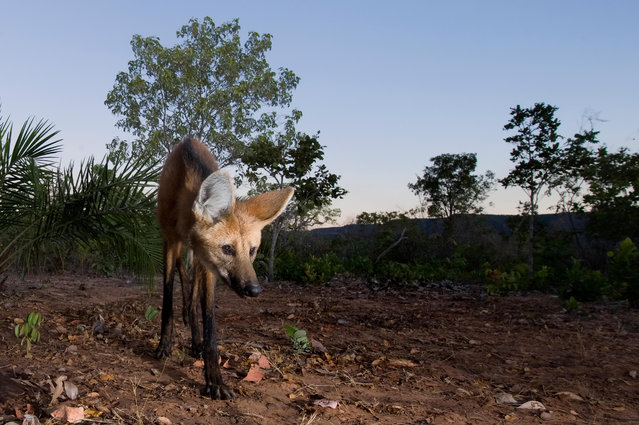
The maned wolf is among the large mammals in the Brazilian Cerrado that are threatened by the increasing conversion of grasslands into farmland for grazing and growing crops. (Photo by Ben Cranke/Nature Picture Library/Alamy Stock Photo)

Global wildlife populations will decline by 67% by 2020 unless urgent action is taken to reduce human impact on species and ecosystems, warns the biennial Living Planet Index report from WWF (World Wide Fund for Nature) and ZSL (Zoological Society of London). From elephants to eels, here are some of the wildlife populations most affected by human activity. Here: The maned wolf is among the large mammals in the Brazilian Cerrado that are threatened by the increasing conversion of grasslands into farmland for grazing and growing crops. (Photo by Ben Cranke/Nature Picture Library/Alamy Stock Photo)
Details
28 Oct 2016 10:47:00