Loading...
Done
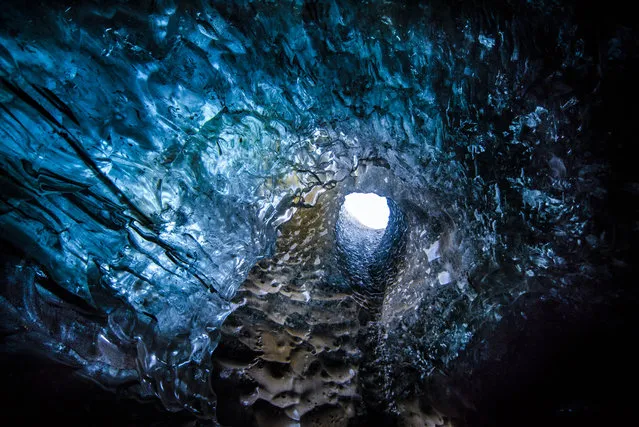
The ice caves, taken in the Vatnajokull National Park in Iceland, on November 11, 2017. (Photo by Matej Kriz/Caters News Agency)

These frozen caves seem almost otherworldly as they daylight illuminates them. Matej Kriz’s shots reveal the beauty of the brilliant caves, but he’s also very aware of how deadly they can be. The photographer captured the amazing shots in the Vatnajokull National Park on the Breidamerkurjokull glacier tongue. Here: The ice caves, taken in the Vatnajokull National Park in Iceland, on November 11, 2017. (Photo by Matej Kriz/Caters News Agency)
Details
17 Jan 2018 07:45:00


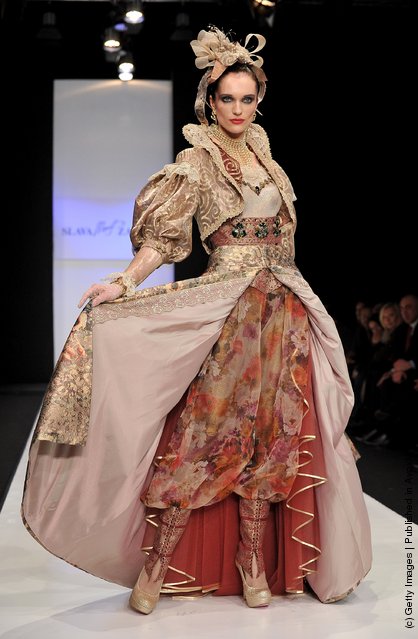
“Vyacheslav Mikhailovich Zaitsev (Russian: Вячеслав Михайлович Зайцев), more commonly known as Slava Zaitsev (Russian: Слава Зайцев), born 2 March 1938 in Ivanovo, Russian Soviet Federative Socialist Republic, is a Russian fashion designer, painter, graphic artist and theatrical costume designer”. – Wikipedia

Photo: A models wears a creation by designer Slava Zaitsev during his fashion show on Day 1 of the Mercedes-Benz Fashion Week Russia Fall/Winter 2011/2012 at the Congress Hall on March 31, 2011 in Moscow, Russia. (Photo by Pascal Le Segretain/Getty Images)
Details
03 Apr 2011 11:29:00
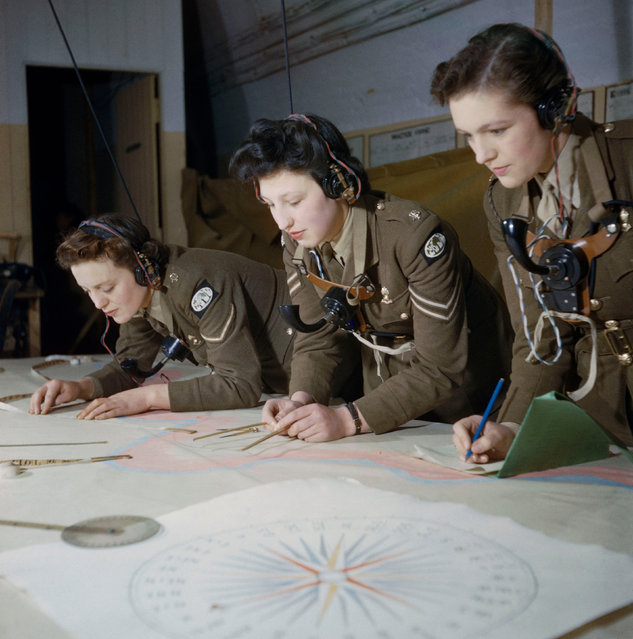
Auxiliary Territorial Service (ATS) plotters at work at Coastal Artillery Headquarters in Dover, December 1942. (Photo by Ted Dearberg/IWM/PA Wire)

Auxiliary Territorial Service (ATS) plotters at work at Coastal Artillery Headquarters in Dover, December 1942. The Auxiliary Territorial Service was the women's branch of the British Army during the Second World War. It was formed on 9 September 1938, initially as a women's voluntary service, and existed until 1 February 1949, when it was merged into the Women's Royal Army Corps. The ATS had its roots in the Women's Auxiliary Army Corps (WAAC), which was formed in 1917 as a voluntary service. During the First World War its members served in a number of jobs including clerks, cooks, telephonists and waitresses. The WAAC was disbanded after four years in 1921. (Photo by Ted Dearberg/IWM/PA Wire)
Details
13 Jul 2017 07:52:00
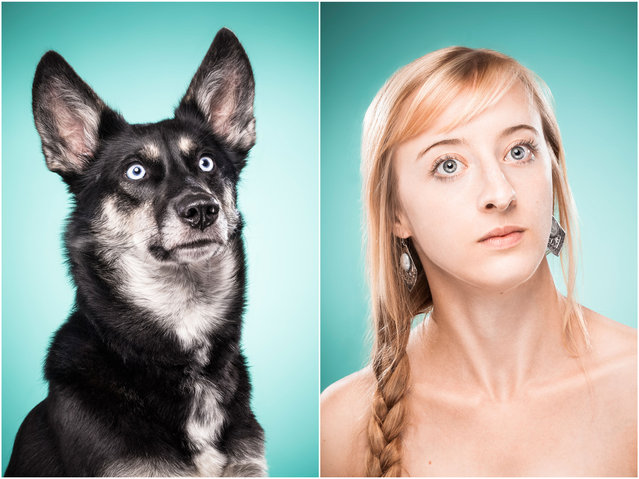
Amina and Zazou the dog. (Photo by Ines Opifanti/Caters News)

Barking mad owners have proved they really do look like their pets – by performing impressions of their own dogs. In a series of hilarious “paw”-traits, owners pull their best faces to look like their pooches. Snapped by photographer Ines Opifanti, people stuck their tongues out, yawned and tilted their heads in curiosity at the camera. Opifanti, from Hamburg, Germany, came up with the idea while interacting with her own dogs, two pug/French bulldog crossbreeds. Here: Amina and Zazou the dog. (Photo by Ines Opifanti/Caters News)
Details
02 Sep 2015 12:21:00
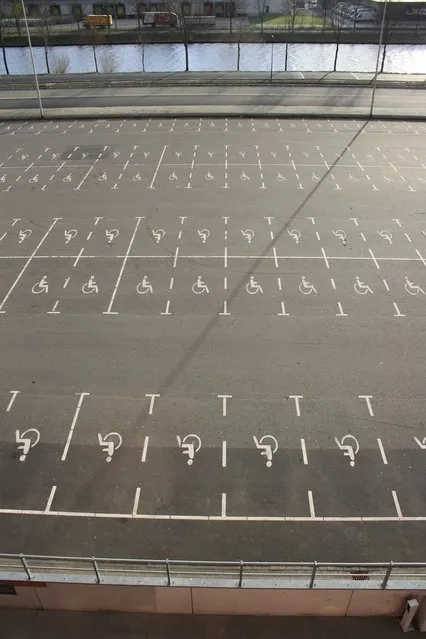
Robert Rickhoff  By "Out Of Place"

German artist Robert Rickhoff re-interprets the idea of public space with humor through a series of digitally manipulated photographs in a project entitled “out of place”. Rickhoff augments scenes within a seemingly commonplace environment to depict impractical yet lighthearted situations – including a playground slippery dip facing towards a busy road to a speed bump placed in an unassuming residential street that is actually a daredevil ramp. the visualizations are subtle yet provocative, forcing the audience to look twice to notice the unusual setting infused with tongue-in-cheek wit.
Details
17 Feb 2013 11:43:00
“Potholes” Project by Photographer Davide Luciano

“Potholes” is a series of photographs depicting the concave street cracks and holes as a collection of imaginative tableaux in the city. Captured within the backdrops of New York City, Los Angeles, Toronto and Montreal, the sets explore the urban flaws as a playground creating a multitude of uses out of the potholes. Directly engaging the street and the city, the highly imaginative series transforms the bad into good, creating a tongue-in-cheek collection that is at once contextual and surreal”. (Photo and caption by Davide Luciano)
Details
03 Dec 2013 06:15:00
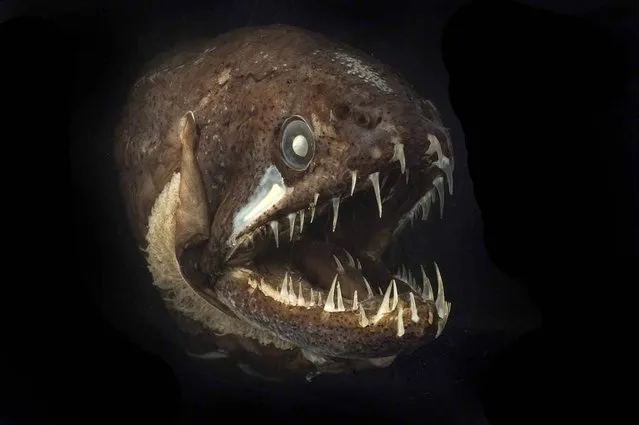
Imagine living in the sea where it is permanently dark, cold, and food is hard to find. For many animals at depth, it may be weeks to months between meals. If you find something to eat, you have to hang on to it

Imagine living in the sea where it is permanently dark, cold, and food is hard to find. For many animals at depth, it may be weeks to months between meals. If you find something to eat, you have to hang on to it. This is why so many deep-sea fishes have lots of big teeth. This dragonfish, spotted off the coast of Australia, even has teeth on its tongue. They would be terrifying animals ... if they weren’t the size of a banana. (Photo by Julian Finn/Museum Victoria)
Details
21 May 2012 12:14:00
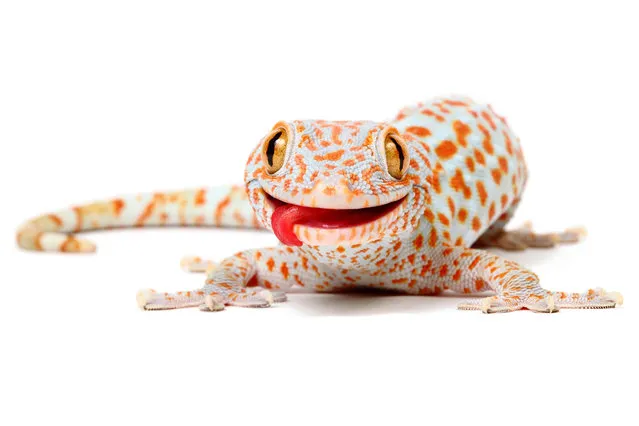
Gecko. (Photo by Mickael Leger/Caters News)

Most probably wouldnt think of snakes, spiders and lizards as beautiful animals – but these photographs could change some minds. The images show the reptiles seemingly playful sides, from a gleeful looking Budgetts frog, a cheeky leopard sticking out its tongue at the camera and a stack of four colourful iguanas. Contrasted against a white background and shot with a Canon EOS 5D Mark 2 and macro lens, photographer Mickael Leger really made sure they could be seen in all their glory. Here: Gecko. (Photo by Mickael Leger/Caters News)
Details
22 Apr 2015 09:59:00