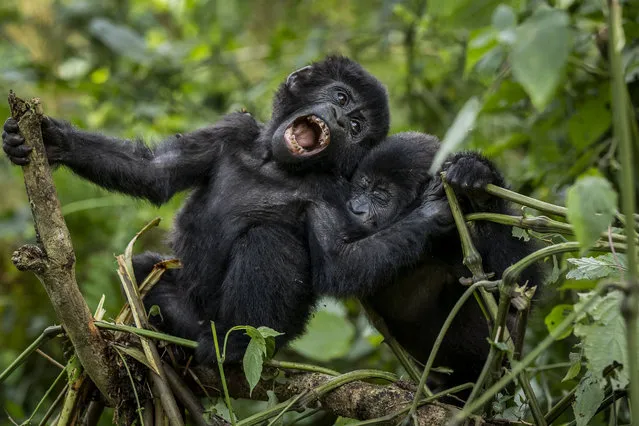
Two one-year old baby mountain gorillas play together in the forest of Bwindi Impenetrable National Park in southwestern Uganda on Saturday, April 3, 2021. (Photo by AP Photo/Stringer)
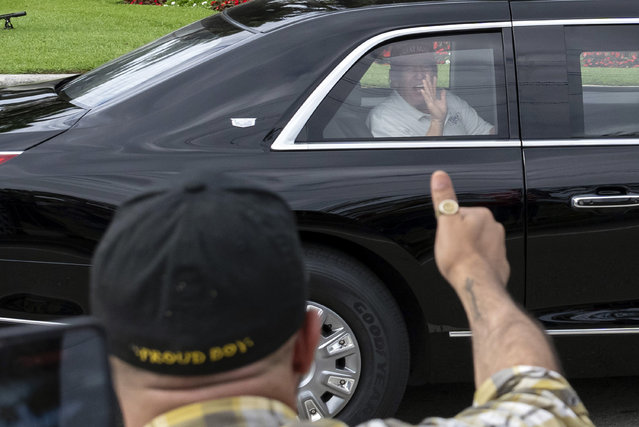
President Donald Trump waves in the direction of supporters as former Proud Boys leader Enrique Tarrio gives a thumbs-up, as he leaves the Trump International Golf Club, Monday, February 17, 2025, in West Palm Beach, Fla. (Photo by Ben Curtis/AP Photo)
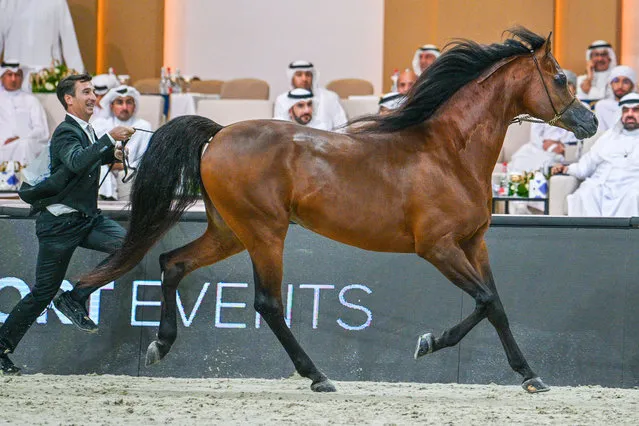
Horses compete during the 21st Dubai International Arabian Horse Championship with the participation of 205 horses from many countries in Dubai, UAE on March 24, 2024. (Photo by Waleed Zein/Anadolu via Getty Images)
A model waits to present a creation by Chinese designer Hu Sheguang for his collection show during China Fashion Week S/S 2016 in Beijing October 26, 2015. (Photo by Jason Lee/Reuters)
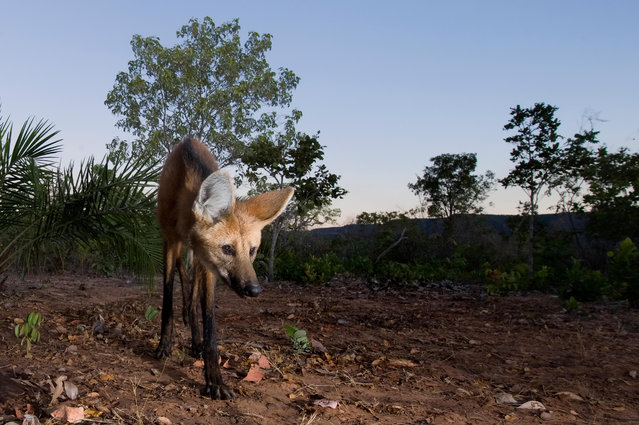
Global wildlife populations will decline by 67% by 2020 unless urgent action is taken to reduce human impact on species and ecosystems, warns the biennial Living Planet Index report from WWF (World Wide Fund for Nature) and ZSL (Zoological Society of London). From elephants to eels, here are some of the wildlife populations most affected by human activity. Here: The maned wolf is among the large mammals in the Brazilian Cerrado that are threatened by the increasing conversion of grasslands into farmland for grazing and growing crops. (Photo by Ben Cranke/Nature Picture Library/Alamy Stock Photo)
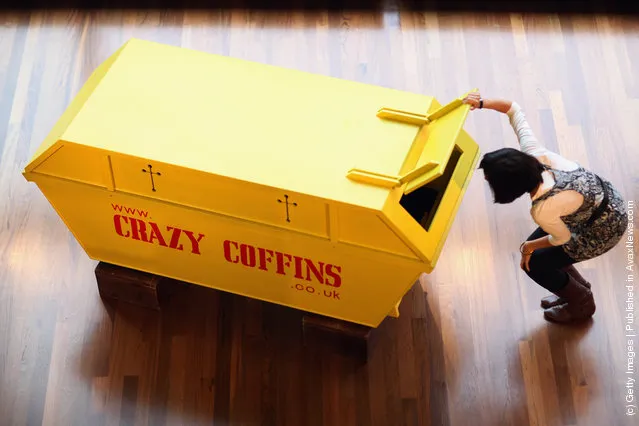
A coffin in the shape of a skip is displayed at the South bank Centre on January 20, 2012 in London, England. A collection of bespoke coffins by “Crazy Coffins” in Nottingham and the famous “Pa Joe” workshop in Ghana are currently on display at the South Bank centre, who are currently running a festival celebrating life and death. (Photo by Dan Kitwood/Getty Images)
Twenty-year-old women draped in traditional kimonos gather for their “Coming-of-Age Day” ceremony at the Tokyo Disneyland in Urayasu, eastern suburb of Tokyo on January 13, 2020. (Photo by Kazuhiro Nogi/AFP Photo)