Loading...
Done
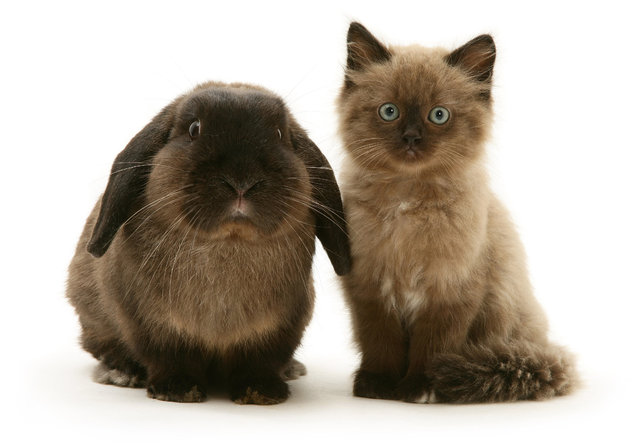
Chocolate Birman-cross kitten with chocolate Lop rabbit. (Photo by Mark Taylor/Warren Photographic/Caters News Agency)

These “snapcats” have found their bunny doppelgängers in a series of sweet photo shoots. Animal photographer Mark Taylor, from Surrey, England, and his assistants have scoured the U.K. to bring together carbon-copy rabbits and cats. Here: Chocolate Birman-cross kitten with chocolate Lop rabbit. (Photo by Mark Taylor/Warren Photographic/Caters News Agency)
Details
11 Nov 2017 07:14:00
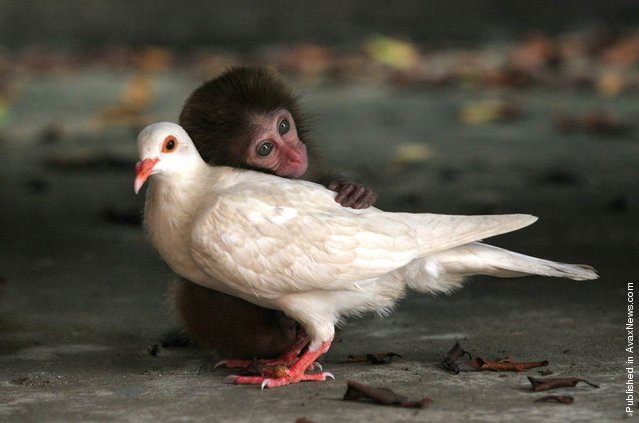
An orphaned rhesus monkey and white dove that seemed to have lost its mate forged a special bond at the Neilingding Island-Futian National Nature Reserve in China. The monkey was born on the island but had strayed from its mother. Luckily, it was taken in by work staff in the protection center and became friends with the pigeon that had lingered there after possibly losing its mate

An orphaned rhesus monkey and white dove that seemed to have lost its mate forged a special bond at the Neilingding Island-Futian National Nature Reserve in China. The monkey was born on the island but had strayed from its mother. Luckily, it was taken in by work staff in the protection center and became friends with the pigeon that had lingered there after possibly losing its mate. (Photo by CNImaging/Photoshot)
Details
16 Apr 2012 11:44:00


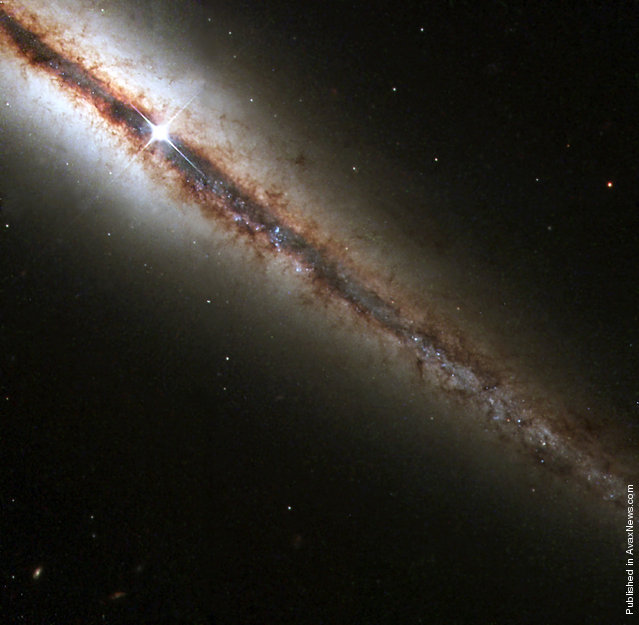
An image produced by the Hubble telescope of the perfectly “edge-on” galaxy, or NGC 4013, March 1, 2001. This new Hubble picture reveals, with great detail, huge clouds of dust and gas extending along, as well as far above, the galaxy's main disk. NGC 4013 is a spiral galaxy, similar to the Milky Way, lying some 55 million light-years from Earth in the direction of the constellation Ursa Major. Viewed face-on, it would look like a nearly circular pinwheel, but NGC 4013 happens to be seen edge-on from our vantage point. Even at 55 million light-years, the galaxy is larger than Hubble's field of view, and the image shows only a little more than half of the object, albeit with unprecedented detail. (Photo Courtesy of NASA/Newsmakers)
Details
28 Feb 2015 22:33:00
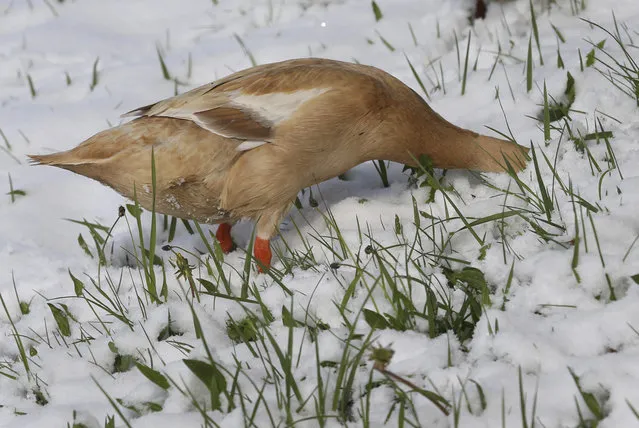
An Indian Runner duck searches for food on a snow-covered meadow in Aitrang, southern Germany, Wednesday. April 19, 2017. (Photo by Karl-Josef Hildenbrand/DPA via AP Photo)

An Indian Runner duck searches for food on a snow-covered meadow in Aitrang, southern Germany, Wednesday. April 19, 2017. (Photo by Karl-Josef Hildenbrand/DPA via AP Photo)
Details
23 Apr 2017 08:45:00
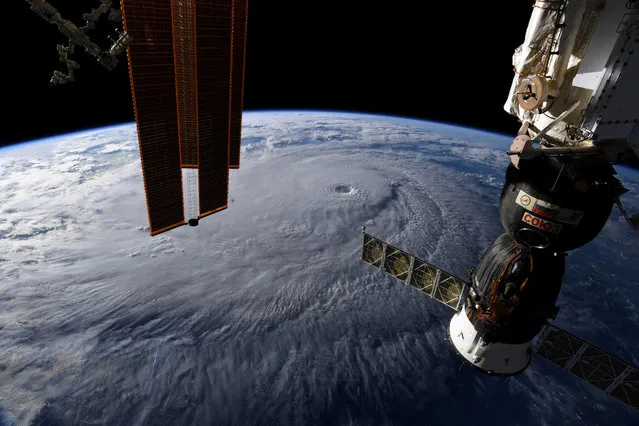
A photo taken from the International Space Station shows Hurricane Lane in the early morning hours near Hawaii, August 22, 2018. (Photo by Courtesy @astro_ricky/NASA/Handout via Reuters)

A photo taken from the International Space Station shows Hurricane Lane in the early morning hours near Hawaii, August 22, 2018. (Photo by Courtesy @astro_ricky/NASA/Handout via Reuters)
Details
01 Jan 2019 00:01:00
Cheerleaders wearing face masks due to the outbreak of the coronavirus disease (COVID-19) are seen at the first professional baseball league game of the season at Taoyuan International baseball stadium in Taoyuan city, Taiwan, April 11, 2020. (Photo by Ann Wang/Reuters)

Cheerleaders wearing face masks due to the outbreak of the coronavirus disease (COVID-19) are seen at the first professional baseball league game of the season at Taoyuan International baseball stadium in Taoyuan city, Taiwan, April 11, 2020. (Photo by Ann Wang/Reuters)
Details
25 Apr 2020 00:05:00
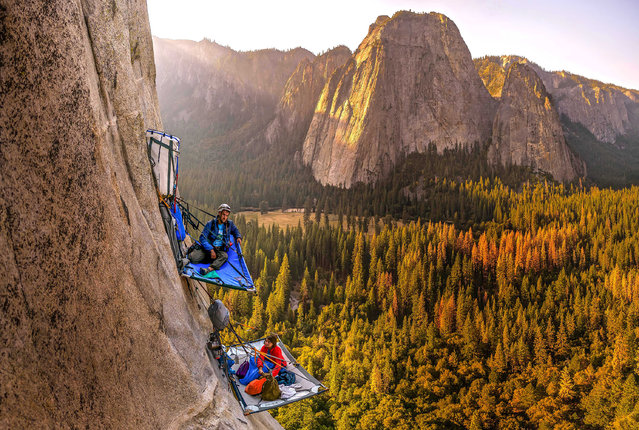
Morgane Choquet and Samuel Cobb relax in a vertical campsite on the slopes of El Capitan, Yosemite National Park. (Photo by Alexandre Eggermont/Caters News)

Here are the bravest of the brave in 2016. Weve gathered some of the finest images showing daredevils taking their lives into their own hands and going to the very brink this year. Whether they are perched hundreds of feet up on a high wire, courageously clinging to a rockface or taking on a volcano, these adventurers take the breath away. Here: Morgane Choquet and Samuel Cobb relax in a vertical campsite on the slopes of El Capitan, Yosemite National Park. (Photo by Alexandre Eggermont/Caters News)
Details
29 Dec 2016 08:03:00
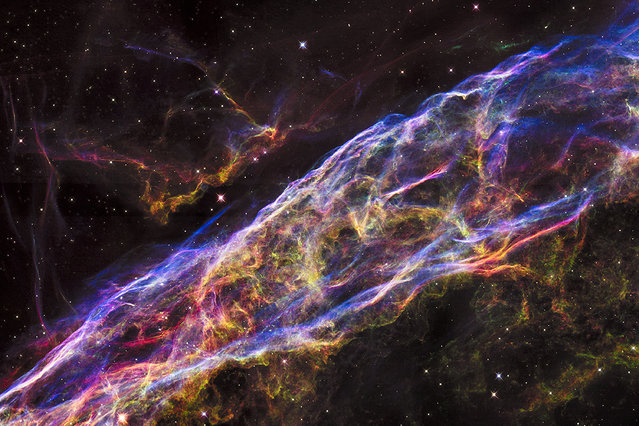
A small section of the expanding remains of the Veil Nebula, a massive star that exploded about 8,000 years ago. The entire nebula is 110 light-years across, covering six full moons on the sky as seen from Earth, and resides about 2,100 light-years away in the constellation Cygnus, the Swan. Image taken by NASA's Hubble Space Telescope. Released September 24, 2015. (Photo by Reuters/NASA/ESA/Hubble Heritage Team)

A small section of the expanding remains of the Veil Nebula, a massive star that exploded about 8,000 years ago. The entire nebula is 110 light-years across, covering six full moons on the sky as seen from Earth, and resides about 2,100 light-years away in the constellation Cygnus, the Swan. Image taken by NASA's Hubble Space Telescope. Released September 24, 2015. (Photo by Reuters/NASA/ESA/Hubble Heritage Team)
Details
10 Dec 2015 08:01:00