A general view of atmosphere at the annual VOLT Festival in Sopron, 208 kms west of Budapest, Hungary on August 16, 2016. (Photo by Rockstar Photographers)
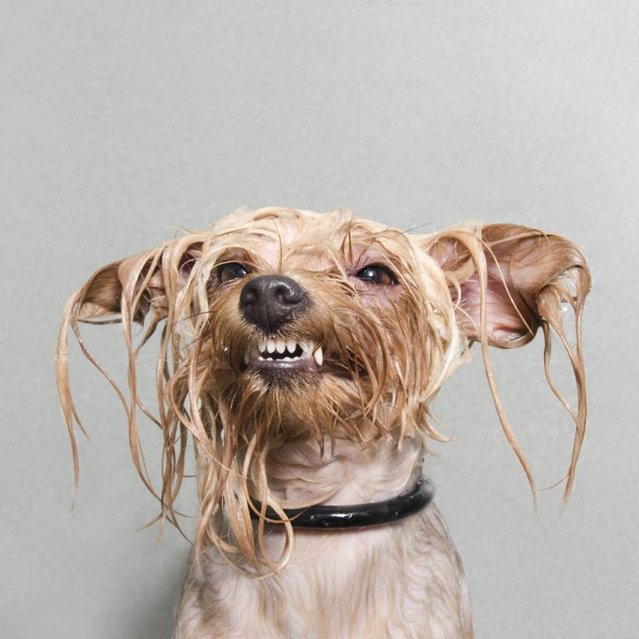
In collaboration with Pet Stylist Ruben Santana, Sophie Gamand has photographed dogs as they are being washed before grooming. The way the water plays with their hair, and their facial expressions as the water is poured on them creates striking portraits that resemble famous humans or important characters.
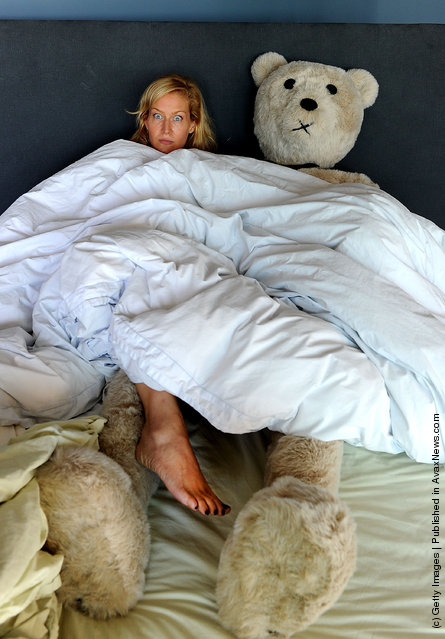
Photographer and artist Jill Greenberg poses at her home to promote her Exhibit “Glass Ceiling: American Girl Doll” And Billboard For LA on September 29, 2011 in Los Angeles, California. (Photo by Frazer Harrison/Getty Images)
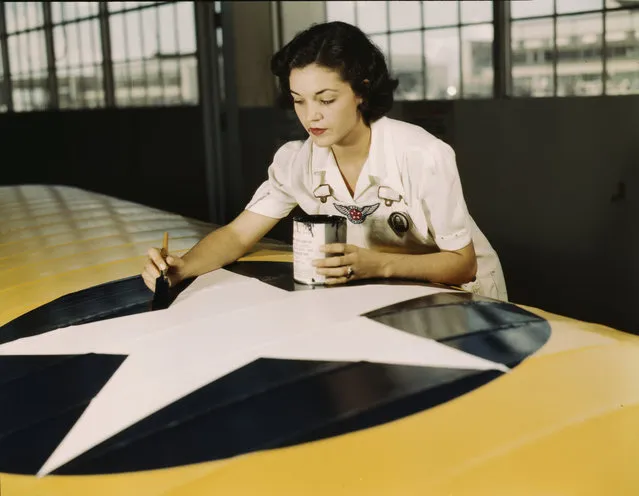
These stunning color portraits, produced by the U.S. Office of War Information during World War II depict the role of women in the US war effort. All of the images were shot on 4x5 color transparency film by Howard R. Hollem and Alfred T. Palmer during 1942 and 1943 and were turned over to the Library of Congress Prints and Photographs Division in 1944. They are seen here with their original captions.
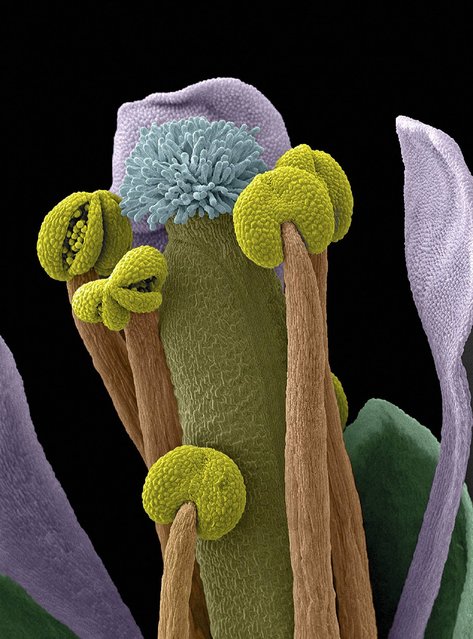
Beautiful, strange and occasionally alarming pictures from the shortlist for this year’s Wellcome image awards – which celebrate the very best in science photography and imaging – from an x-ray of a bat to a micrograph of a kidney stone. The exhibition opens on 12 March at three science centres and the Museum of Science and Industry in Manchester. Photo: Scanning electron micrograph (SEM) of an Arabidopsis thaliana flower, also commonly known as thale cress. Some of the anthers are open, revealing pollen grains ready for dispersal. Arabidopsis was the first plant to have its entire genome sequenced and is widely used as a model organism in molecular and plant biology. Horizontal width of image is 1200 microns. Magnification 100x. (Photo by Stefan Eberhard/Wellcome Images)
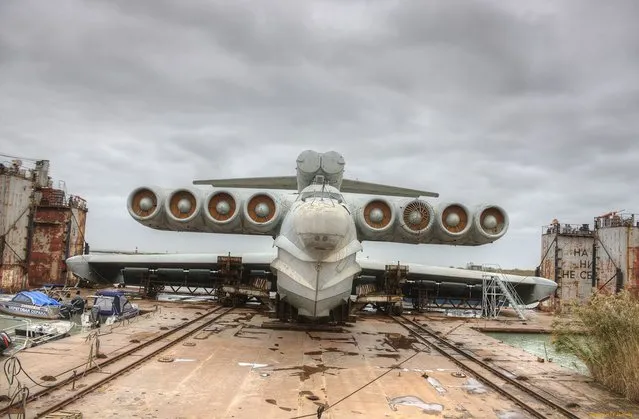
“The Lun-class ekranoplan (NATO reporting name Duck) was a ground effect vehicle (GEV) designed by Rostislav Evgenievich Alexeev and used by the Soviet and Russian navies from 1987 until sometime in the late 1990s. It “flew” using the lift generated by the ground effect of its large wings when close to the surface of the water – about four metres or less. Although they might look similar and/or have related technical characteristics, ekranoplans like the Lun are not aircraft, seaplanes, hovercraft, or hydrofoils – ground effect is a separate technology altogether. The International Maritime Organization classifies these vehicles as maritime ships. The name Lun comes from the Russian for harrier”. – Wikipedia (Photo by Igor113)
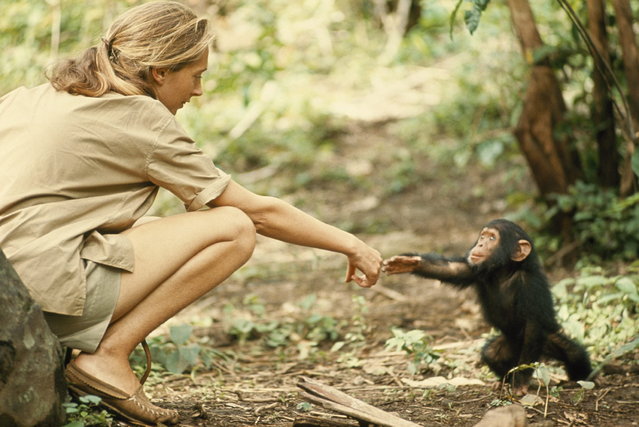
Tanzania, 1964. A touching moment between primatologist and National Geographic grantee Jane Goodall and young chimpanzee Flint at Tanzania's Gombe Stream Reserve. (Photo by Hugo van Lawick via National Geographic)
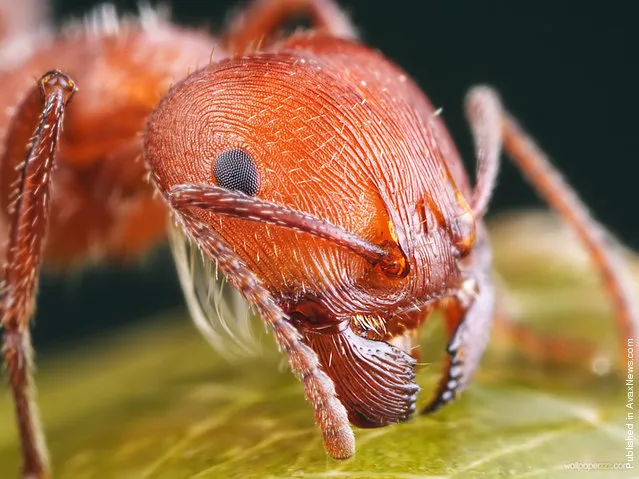
Once upon a time a myth was born that insects, unlike animals, are just a machines that not capable of learning and survive only based on their instincts. That myth has become the widespread opinion. Of course, this opinion is indeed erroneous, like many other widespread opinions. Let us try to find out which part is a myth and which part is true.