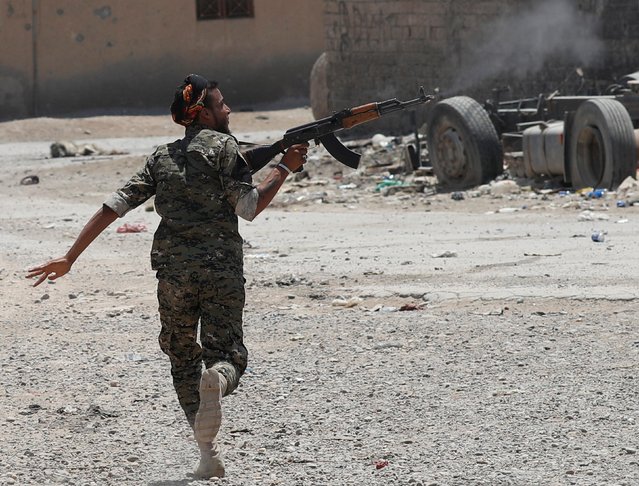
A Kurdish fighter from the People's Protection Units (YPG) fires his rifle at Islamic State militants as he runs across a street in Raqqa, Syria, July 2017. (Photo by Goran Tomasevic/Reuters)
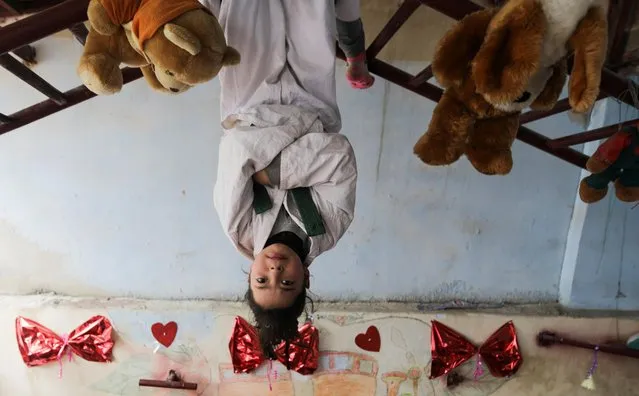
A girl practices martial arts during a training at a school in Syrian opposition-held village of al-Jeineh, Syria on April 11, 2021. (Photo by Khalil Ashawi/Reuters)
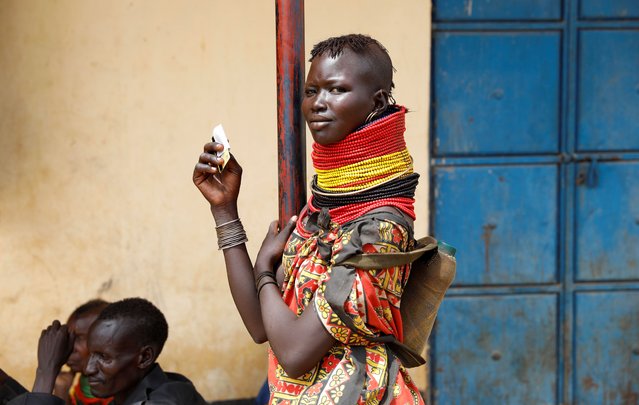
A woman from the Turkana tribe waits at a shop at the village of Lorengippi near the town of Lodwar, Turkana county, Kenya, July 3, 2020. (Photo by Baz Ratner/Reuters)
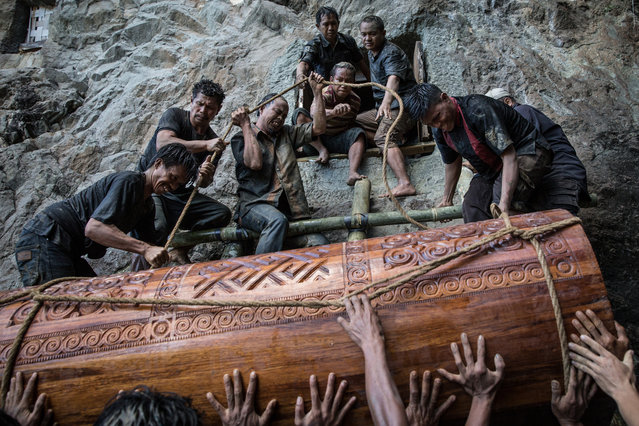
It is said that Torajans are people who “live to die”. For this Indonesian ethnic group, funerals are such extravagant events that they sometimes attract tourists. Families can postpone burials years (and the deceased are considered sick and hosted at home until the funeral) until the family can raise enough money and gather as many relatives as possible. And then it’s a jubilant multiday social event with a parade, dances and animal sacrifices. Agung Parameswara photographed these funerary practices when he traveled to South Sulawesi province, where the Torajans live. (Photo by Agung Parameswara/The Washington Post)
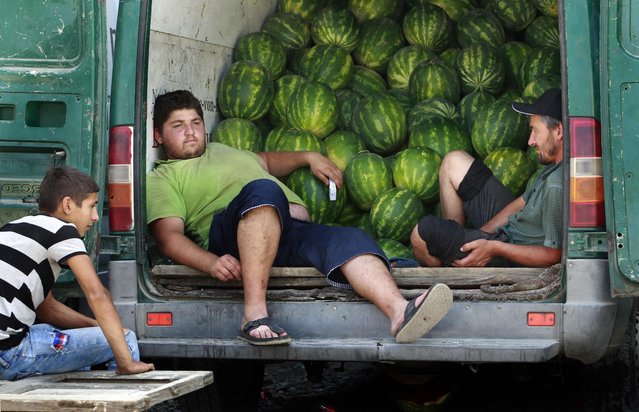
Georgian men take a break from selling fruit and vegetable at a street market in Tbilisi, Georgia, Wednesday, July 20, 2016. (Photo by Shakh Aivazov/AP Photo)
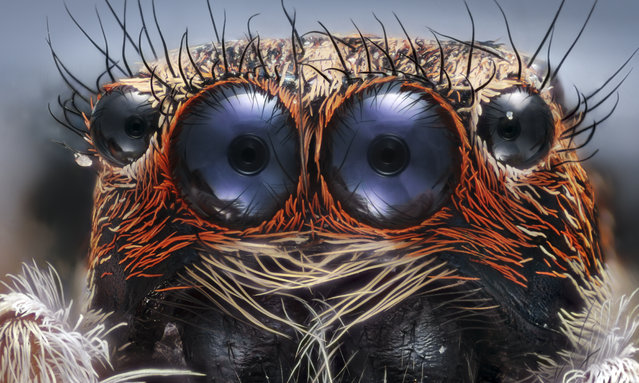
A competition, now in its 43rd year, dedicated to showcasing the beautiful and bizarre as seen under a light microscope attracted over 2,000 entries from 88 countries. Here: Honorable Mention by Emre Can Alagöz, Istanbul, Turkey: The eyes of a jumping spider, magnified 6x. (Photo by Emre Can Alagöz/2017 Nikon Small World Photomicrography Competition)
Tanzania, 1964. A touching moment between primatologist and National Geographic grantee Jane Goodall and young chimpanzee Flint at Tanzania's Gombe Stream Reserve. (Photo by Hugo van Lawick via National Geographic)
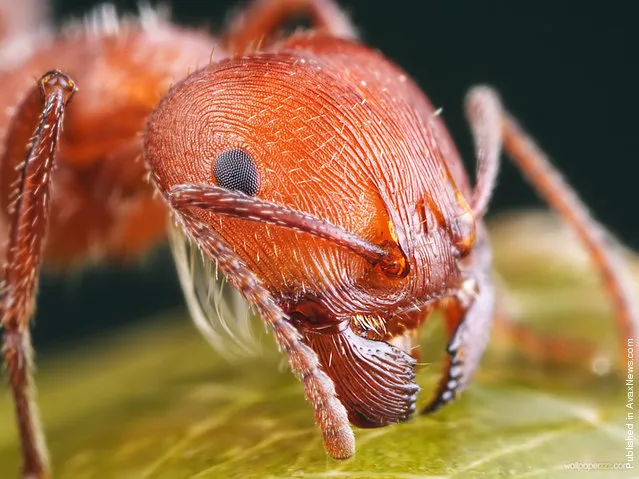
Once upon a time a myth was born that insects, unlike animals, are just a machines that not capable of learning and survive only based on their instincts. That myth has become the widespread opinion. Of course, this opinion is indeed erroneous, like many other widespread opinions. Let us try to find out which part is a myth and which part is true.