Loading...
Done
A woman runs across the street next to an anti-tank constructions in central Kyiv, Ukraine on March 10, 2022. (Photo by Gleb Garanich/Reuters)

A woman runs across the street next to an anti-tank constructions in central Kyiv, Ukraine on March 10, 2022. (Photo by Gleb Garanich/Reuters)
Details
12 Mar 2022 06:02:00
A vender arranges goods for sale at a market on the outskirts of Buenos Aires, Argentina, Wednesday, January 10, 2024. (Photo by Natacha Pisarenko/AP Photo)

A vender arranges goods for sale at a market on the outskirts of Buenos Aires, Argentina, Wednesday, January 10, 2024. (Photo by Natacha Pisarenko/AP Photo)
Details
25 Jan 2024 09:55:00
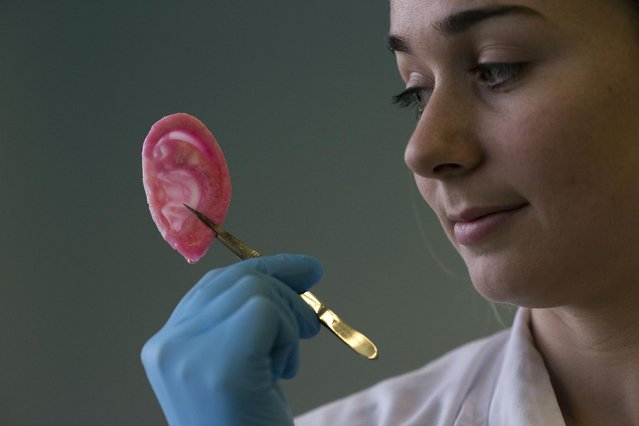
Dr Michelle Griffin, a plastic research fellow, poses for photographs with a synthetic polymer ear at her research facility in the Royal Free Hospital in London, Monday, March 31, 2014. (Photo by Matt Dunham/AP Photo)

In a north London hospital, scientists are growing noses, ears and blood vessels in the laboratory in a bold attempt to make body parts using stem cells. It is among several labs around the world, including in the U.S., that are working on the futuristic idea of growing custom-made organs in the lab. (Photo by Matt Dunham/AP Photo)
Details
10 Apr 2014 09:21:00
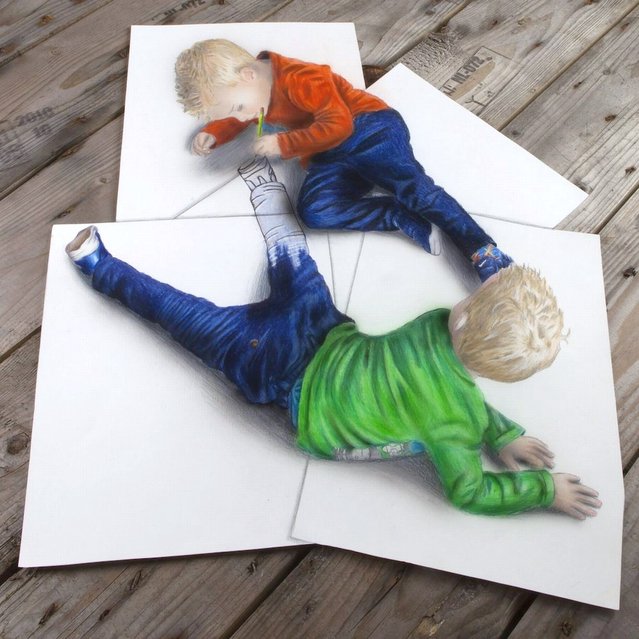
Ramon Bruin’s 3D illustration of two twins drawing each other. (Photo by Ramon Bruin/Medavia)

Armed with only paper, graphite and coloured pencils – plus his vivid imagination – the artist creates remarkable drawings that leap from the page when photographed. The 32-year-old, from Alkmaar in Holland, began experimenting with anamorphic 3D drawing five years ago. Photo: Ramon Bruin’s 3D illustration of two twins drawing each other. (Photo by Ramon Bruin/Medavia)
Details
28 Jul 2014 11:10:00
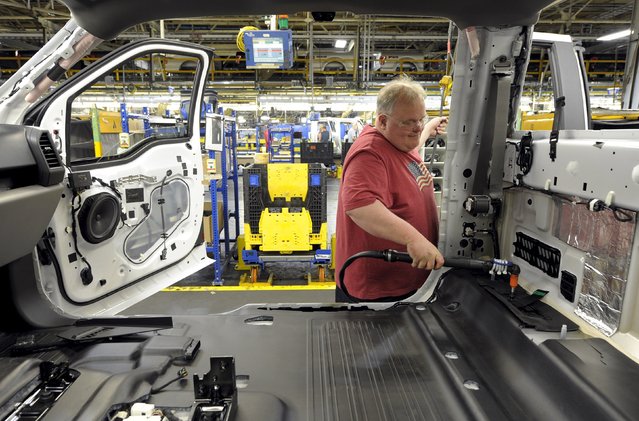
Auto worker Christopher Brower screws a component into the cab of a four-door F150 at Ford's Kansas City Assembly Plant where new aluminum intensive Ford F-Series pickups are built in Claycomo, Missouri May 5, 2015. (Photo by Dave Kaup/Reuters)

Auto worker Christopher Brower screws a component into the cab of a four-door F150 at Ford's Kansas City Assembly Plant where new aluminum intensive Ford F-Series pickups are built in Claycomo, Missouri May 5, 2015. (Photo by Dave Kaup/Reuters)
Details
06 May 2015 13:03:00
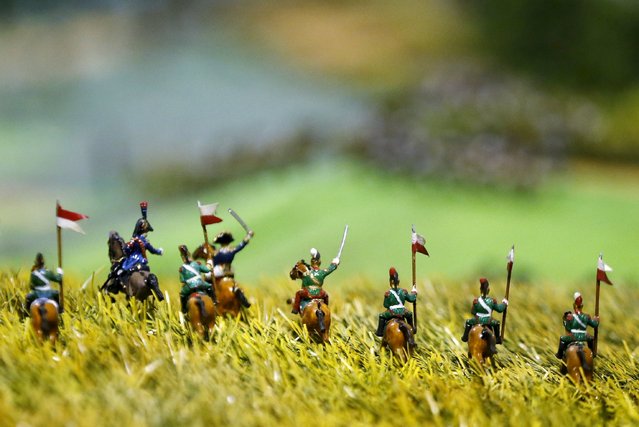
Figurines representing French Brigade of Lancers are seen on a 40-square-metre miniature model of the June 18, 1815 Waterloo battlefield, in Diest, Belgium, in this picture taken on April 29, 2015. (Photo by Francois Lenoir/Reuters)

Figurines representing French Brigade of Lancers are seen on a 40-square-metre miniature model of the June 18, 1815 Waterloo battlefield, in Diest, Belgium, in this picture taken on April 29, 2015. Waterloo enthusiast Willy Smout said he spent 40,000 hours and around 150,000 euros over the past 40 years, to recreate the battlefield as closely as possible in a purpose-built room in his house. (Photo by Francois Lenoir/Reuters)
Details
06 May 2015 13:42:00
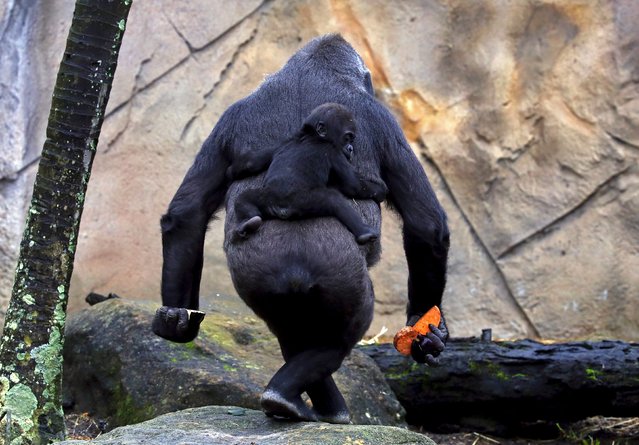
A Western Lowland Gorilla baby named “Mjukuu”, that was born in October last year, rides on the back of its Mother “Mbeli” in their enclosure at Taronga Zoo in Sydney, Australia, May 19, 2015. (Photo by David Gray/Reuters)

A Western Lowland Gorilla baby named “Mjukuu”, that was born in October last year, rides on the back of its Mother “Mbeli” in their enclosure at Taronga Zoo in Sydney, Australia, May 19, 2015. The baby gorilla was born six days ago, and is the second sired by the zoo's new Silverback, Kibali, who arrived from France in 2012. (Photo by David Gray/Reuters)
Details
20 May 2015 09:07:00
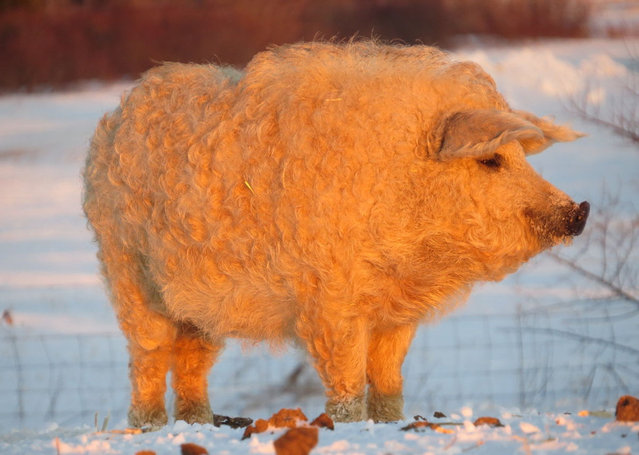
Mangalitsa The Hairy Pig

When you look at the picture of a furry pig that resembles a sheep from a distance, you may think that this may be the result of the work of some crazy scientist that tinkered with the pig’s genome. However, in this case, this is not true. Mangalica is a natural breed of pigs, which were bred in Europe for their lard. This breed of pigs is very unique, since the only other breed of pigs which had a long coat was Loncolnshire Curly Coat, which is now extinct. In the past, these pigs were quite popular, since they were able to produce a lot of lard. However, when the demand for pig lard dwindled, the population of these pigs rapidly decreased, making it a “rare breed”.

Details
01 Dec 2014 13:42:00