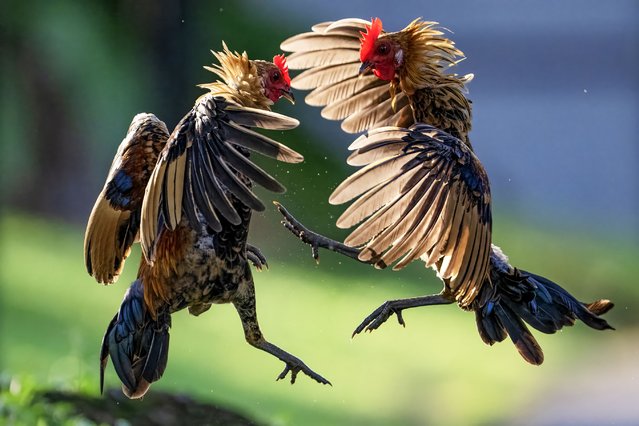
A pair of red junglefowl fight over territory in Pasir Ris Park, Singapore in the second decade of February 2025. (Photo by Liew Tong Leng/Solent News)
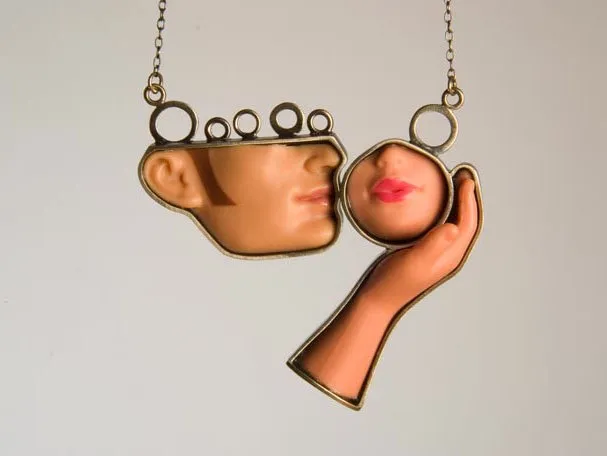
Margaux Lange’s Plastic Body Series art jewelry collection utilizes salvaged Barbie doll parts in combination with sterling silver and pigmented resins. The series is a result of Lange’s desire to re-purpose mass produced materials into handmade, wearable art. It is meant to examine and celebrate her own as well as pop culture’s relationship with the icon known simply as: Barbie
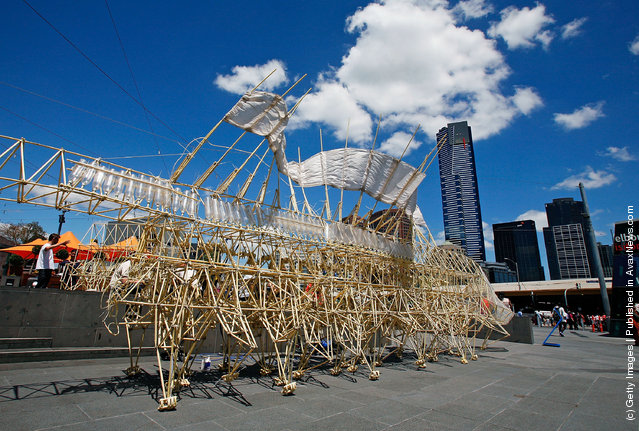
The “Strandbeest” sculpture created by Dutch artist Theo Jansen walks at Federation Square on February 1, 2012 in Melbourne, Australia. The 12 metre long, 4 metre high and 2 metre wide structure built of plastic tubes and bottles designed to walk using wind energy will be on display at Federation Square until February 26. (Photo by Scott Barbour/Getty Images)
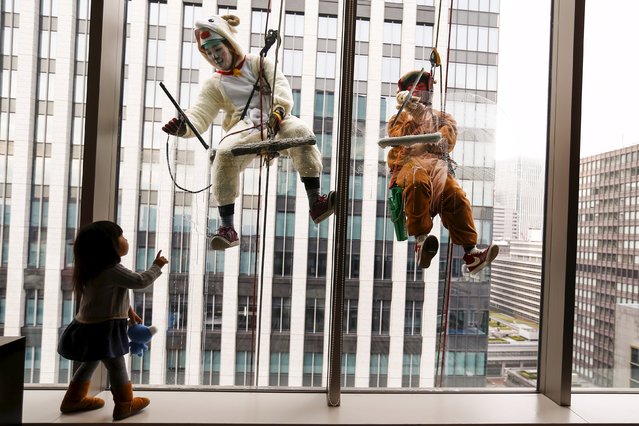
A child looks at window cleaners work while dressed in sheep (C) and monkey costumes, denoting animal signs of the Chinese zodiac calendar, during an event marking the upcoming end of the year at a hotel in Tokyo, Japan, December 21, 2015. According to the zodiac calendar, 2015 is the year of the sheep and 2016 is the year of the monkey. (Photo by Thomas Peter/Reuters)
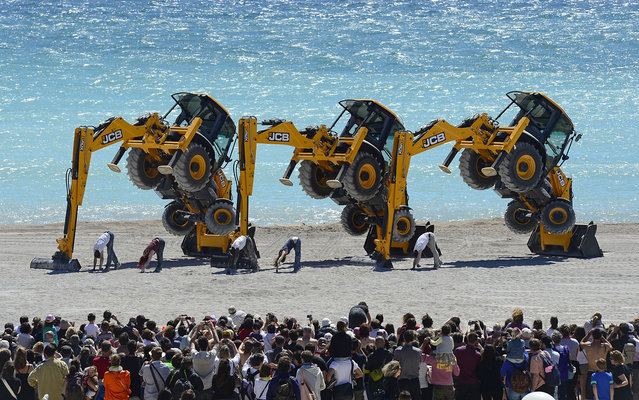
Dancers from the British theater company Motionhouse perform a show with excavators entitled “Traction” on the Prado beach in Marseille, France, on May 10, 2013. (Photo by Boris Horvat/AFP Photo)
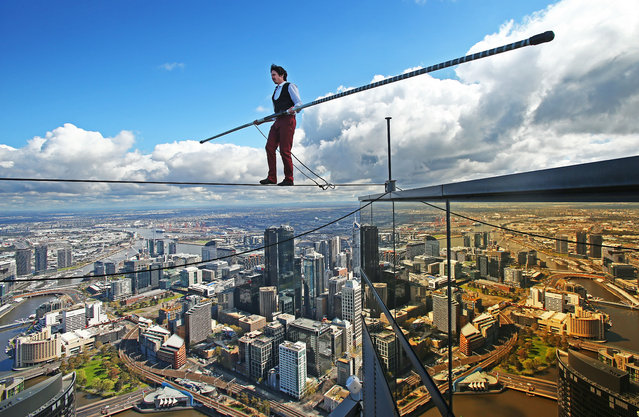
High-wire artist Kane Petersen successfully walks a tightrope 300 metres above the ground at Eureka Skydeck on September 16, 2015 in Melbourne, Australia. The walk was the highest tightrope walk ever attempted in the Southern Hemisphere. The stunt is to mark the arrival of the film “The Walk” to Australian cinemas in October. The stunt saw Kane mimic the film's French high-wire artist Philippe Petit, who successfully walked between the twin towers of the World Trade Center in 1974. (Photo by Scott Barbour/Getty Images)
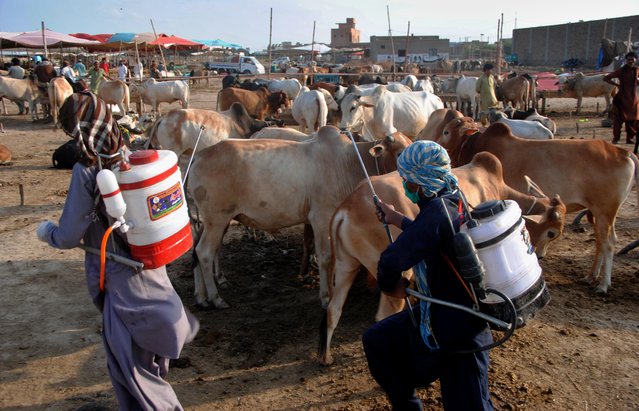
Health workers wearing face masks spray disinfectant liquid on sacrificial animals amid concerns over the spread of the SARS-CoV-2 coronavirus that causes the pandemic COVID-19 disease ahead of the Muslim festival of Eid al-Adha at an animal market in Hyderabad, southern Pakistan, 21 July 2020. (Photo by Nadeem Khawar/EPA/EFE)