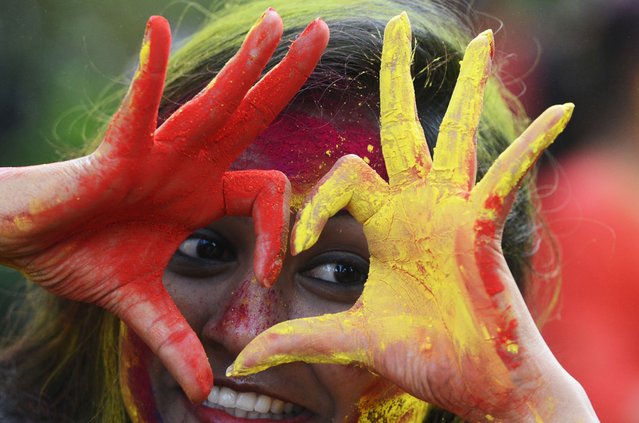
Indian students play with coloured powders as they celebrate “holi” or the “festival of colours” during a special function in Kolkata on March 12, 2017. Holi, the popular Hindu spring festival of colours, is observed in India at the end of the winter season on the last full moon of the lunar month, and will be celebrated on March 13 this year. (Photo by Dibyangshu Sarkar/AFP Photo)
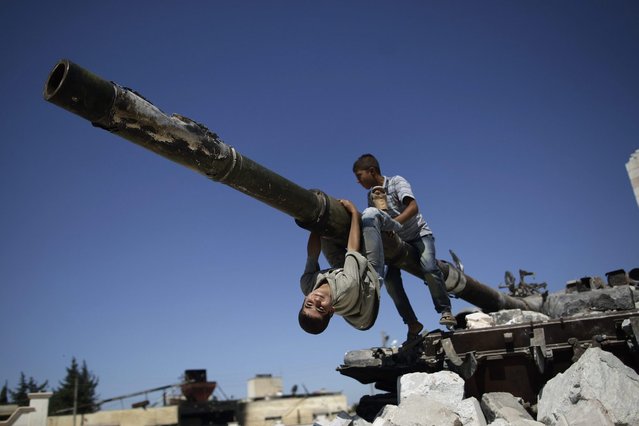
A boy looks back while he and another boy play on a Syrian military tank, destroyed during fighting with the Rebels, in the Syrian town of Azaz, on the outskirts of Aleppo, Sunday, September 2, 2012. (Photo by Muhammed Muheisen/AP Photo)
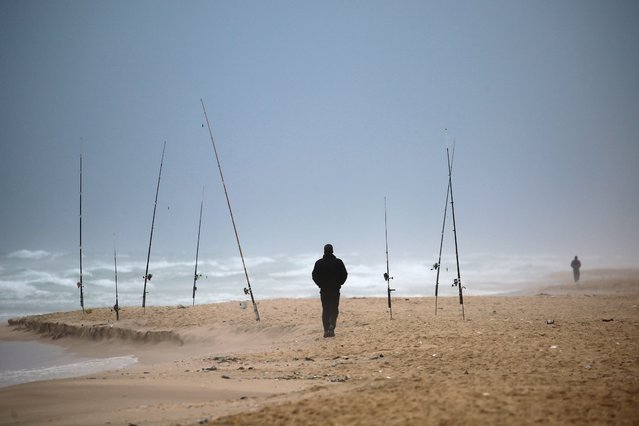
A Palestinian man walks on the beach, as storm winds blow, near a camp for internally displaced on the beach near the Nuseirat refugee in the central Gaza Strip on December 20, 2024, amid the continuing war between Israel and Hamas. (Photo by Eyad Baba/AFP Photo)
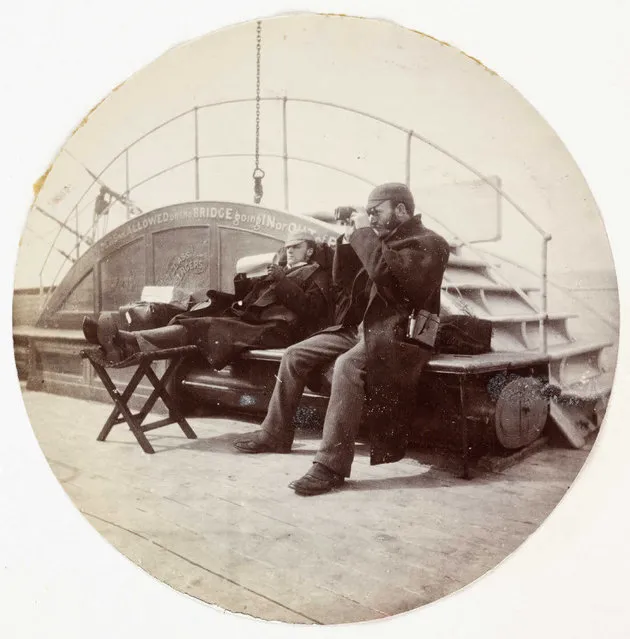
“Today, we take photography for granted. Anyone can take a photograph simply by pressing a button. Yet, it was not always so simple. The invention of photography was announced in 1839, but during its first fifty years taking a photograph was a complicated and expensive business. In 1888, all this was to change following the appearance of a camera that was to revolutionize photography. Popular photography can properly be said to have started 120 years ago with the introduction of the Kodak”. – The UK National Media Museum. Photo: Two men on the deck of a ship, about 1890. (Photo by Collection of National Media Museum/Kodak Museum)
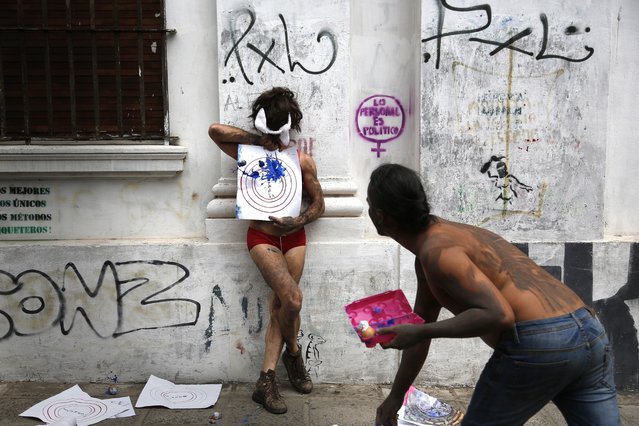
In this September 30, 2017 photo, people perform “transvestite target practice” to protest the killings of transvestite prostitutes during the annual LGBQT march in Asuncion, Paraguay. Advocacy groups fear the stigma and attacks against the LGBQT community could get worse now that the country's education minister has banned classes about sexual diversity in schools and even volunteered to help burn all books related to the subject. (Photo by Jorge Saenz/AP Photo)