Loading...
Done
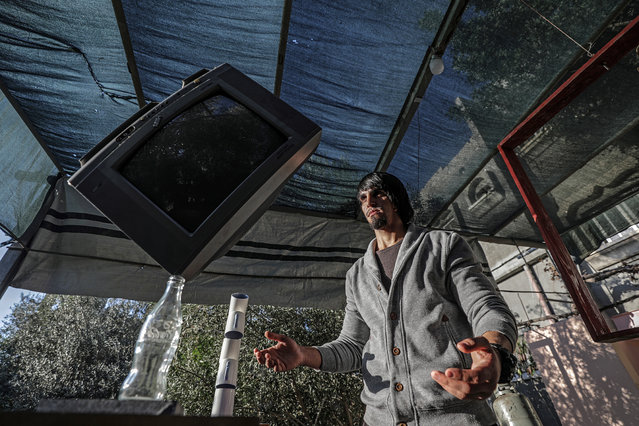
Mohammed Al-Shinbari, 24, balances objects using what he calls a mix of mind and body, in his family house in Beit Hanun town in the northern Gaza Strip, 30 November 2019. Al-Shinbari says he can put almost any object in balance. (Photo by Mohammed Saber/EPA/EFE)

Mohammed Al-Shinbari, 24, balances objects using what he calls a mix of mind and body, in his family house in Beit Hanun town in the northern Gaza Strip, 30 November 2019. Al-Shinbari says he can put almost any object in balance. (Photo by Mohammed Saber/EPA/EFE)
Details
03 Dec 2019 00:05:00
A woman fills her basket with marigold flowers, used to make garlands and offer prayers, as she plucks them before selling to the market for the Tihar festival, also called Diwali, in Kathmandu, Nepal on October 25, 2019. (Photo by Navesh Chitrakar/Reuters)

A woman fills her basket with marigold flowers, used to make garlands and offer prayers, as she plucks them before selling to the market for the Tihar festival, also called Diwali, in Kathmandu, Nepal on October 25, 2019. (Photo by Navesh Chitrakar/Reuters)
Details
07 Dec 2019 00:03:00
A woman uses protection masks to cover her face as protestors from the Million Mask March and anti lockdown protesters demonstrate, amid the coronavirus (COVID-19) outbreak in London, Britain on November 5, 2020. (Photo by Henry Nicholls/Reuters)

A woman uses protection masks to cover her face as protestors from the Million Mask March and anti lockdown protesters demonstrate, amid the coronavirus (COVID-19) outbreak in London, Britain on November 5, 2020. (Photo by Henry Nicholls/Reuters)
Details
08 Nov 2020 00:07:00
A woman takes pictures using her mobile phone on a deserted square decorated ahead of Christmas, in Pristina on December 7, 2020, during a government-imposed curfew from 7pm to 5am, as part of preventive measures against the spread of the Covid-19. (Photo by Armend Nimani/AFP Photo)

A woman takes pictures using her mobile phone on a deserted square decorated ahead of Christmas, in Pristina on December 7, 2020, during a government-imposed curfew from 7pm to 5am, as part of preventive measures against the spread of the Covid-19. (Photo by Armend Nimani/AFP Photo)
Details
19 Dec 2020 00:03:00
Ko Min, 26, manually extracts oil from one of three 300 feet deep wells he works on in the Minhla township of the Magwe district October 27, 2013. Everyday, Ko Min makes around $30 extracting crude oil from three small wells after he bought rights to use them for close to $1000 from a farmer who owns the land. (Photo by Damir Sagolj/Reuters)

Ko Min, 26, manually extracts oil from one of three 300 feet deep wells he works on in the Minhla township of the Magwe district October 27, 2013. Everyday, Ko Min makes around $30 extracting crude oil from three small wells after he bought rights to use them for close to $1000 from a farmer who owns the land. In Myanmar, an impoverished country rich with natural resources, people from poor communities find ways to supplement their income by exploiting such resources, such as the Minhla township, traditionally rich with oil, often using primitive and dangerous methods. (Photo by Damir Sagolj/Reuters)
Details
21 Apr 2014 10:06:00
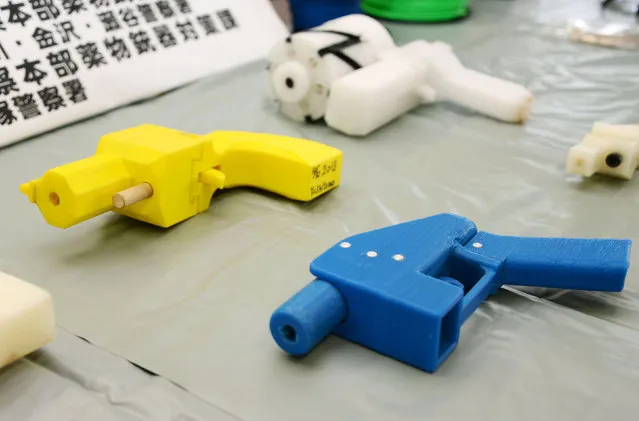
Seized plastic handguns which were created using 3D printing technology are displayed at Kanagawa police station in Yokohama, south of Tokyo, in this photo taken by Kyodo May 8, 2014. (Photo by Reuters/Kyodo)

Seized plastic handguns which were created using 3D printing technology are displayed at Kanagawa police station in Yokohama, south of Tokyo, in this photo taken by Kyodo May 8, 2014. Yoshimoto Imura became the first man to be arrested in Japan for illegal possession of two guns he created himself using 3D printing technology, Japanese media said on Thursday. The 27-year-old, a college employee in the city of Kawasaki, was arrested after police found video online posted by Imura claiming to have produced his own guns. Gun possession is strictly regulated in Japan. Police raided Imura's home and found five guns, two of which could fire real bullets, Japanese media said. (Photo by Reuters/Kyodo)
Details
12 May 2014 10:46:00
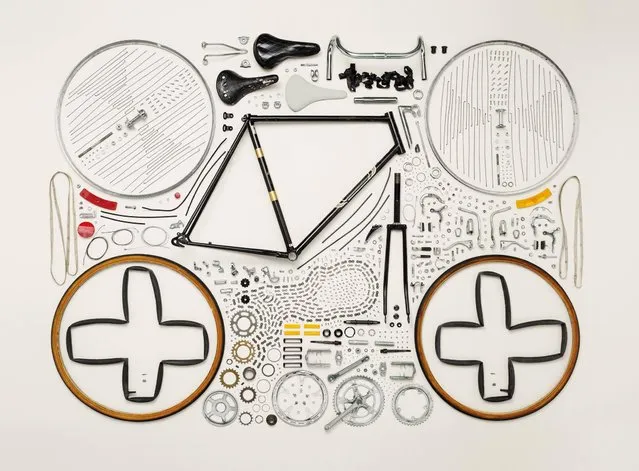
Deconstructed Objects By Todd McLellan

It is simply staggering how complicated some items really are. We never think about it, but some items that we use every day consist of hundreds of parts meticulously put together and working perfectly. Todd McLellan is a photographer who based his newest book “Things Come Apart” on the complexity of various old and new tech. By carefully taking apart various items and arranging all of the parts in perfect order, Todd has allowed us not only to look inside various appliances, but also to appreciate the astounding complexity of these items. Just like the human mind, we are so used to seeing and talking with people that we forget just how complicated their minds really are. It would be great if we could “take apart” the human mind in order to gain some insight into the person’s thoughts and desires. However, very few people are capable of doing it, while the rest will remain blind to the obvious. (Photo by Todd McLellan)
Details
15 Nov 2014 12:30:00
The Lun-class Ekranoplane was used by the Soviet Navy starting in 1987, and wasn't retired until the late 1990s, after the Soviet Union's fall. (Igor113)

“The Lun-class ekranoplan (NATO reporting name Duck) was a ground effect vehicle (GEV) designed by Rostislav Evgenievich Alexeev and used by the Soviet and Russian navies from 1987 until sometime in the late 1990s. It “flew” using the lift generated by the ground effect of its large wings when close to the surface of the water – about four metres or less. Although they might look similar and/or have related technical characteristics, ekranoplans like the Lun are not aircraft, seaplanes, hovercraft, or hydrofoils – ground effect is a separate technology altogether. The International Maritime Organization classifies these vehicles as maritime ships. The name Lun comes from the Russian for harrier”. – Wikipedia (Photo by Igor113)
Details
08 Aug 2014 10:51:00