Loading...
Done
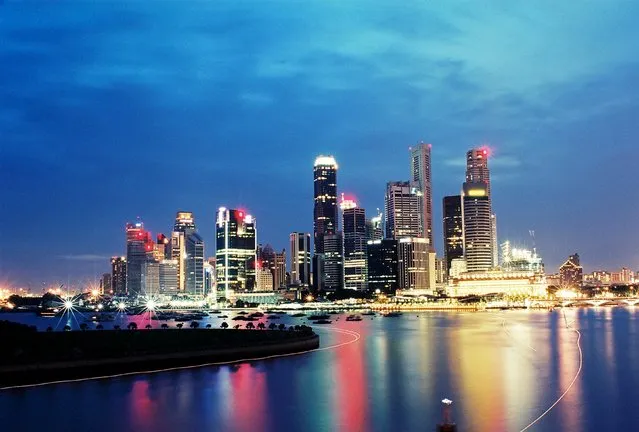
Small transportation boats, known as bumboats, leave trails of light as they travel across Marina Bay past the skyline of Singapore in this photo taken in 2004. Singapore holds a Jubilee weekend from 7 to 10 August to celebrate the 50th anniversary of its independence. (Photo by Edgar Su/Reuters)

Small transportation boats, known as bumboats, leave trails of light as they travel across Marina Bay past the skyline of Singapore in this photo taken in 2004. Singapore holds a Jubilee weekend from 7 to 10 August to celebrate the 50th anniversary of its independence. Fifty years ago, hundreds of small boats lined the Singapore river in the city centre. Today, most small boats are gone, except a handful of neon-lit tourist ferries. Maritime trade is still the backbone of the city-state but after decades of rapid growth Singapore, which at less than half the size of London is among the world’s most densely populated nations, is also a popular tourist destination and a thriving global financial hub. (Photo by Edgar Su/Reuters)
Details
01 Aug 2015 12:26:00
Deconstructed Objects By Todd McLellan

It is simply staggering how complicated some items really are. We never think about it, but some items that we use every day consist of hundreds of parts meticulously put together and working perfectly. Todd McLellan is a photographer who based his newest book “Things Come Apart” on the complexity of various old and new tech. By carefully taking apart various items and arranging all of the parts in perfect order, Todd has allowed us not only to look inside various appliances, but also to appreciate the astounding complexity of these items. Just like the human mind, we are so used to seeing and talking with people that we forget just how complicated their minds really are. It would be great if we could “take apart” the human mind in order to gain some insight into the person’s thoughts and desires. However, very few people are capable of doing it, while the rest will remain blind to the obvious. (Photo by Todd McLellan)
Details
15 Nov 2014 12:30:00
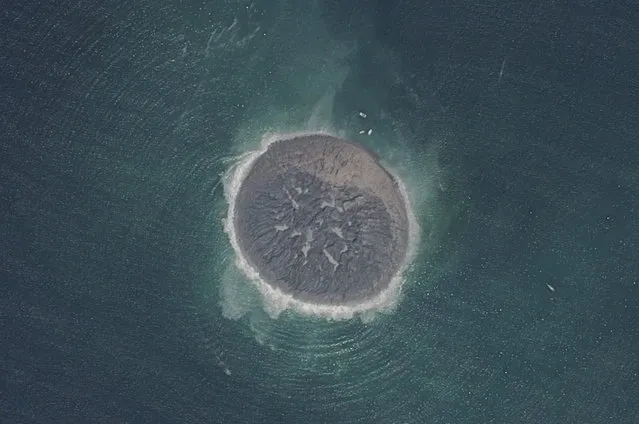
This handout picture taken by Pleiades satellite and released on September 27, 2013 shows a small island of mud and rock created by the huge earthquake that hit southwest Pakistan has fascinated locals but experts – who found methane gas rising from it – say it is unlikely to last long

This handout picture taken by Pleiades satellite and released on September 27, 2013 shows a small island of mud and rock created by the huge earthquake that hit southwest Pakistan has fascinated locals but experts – who found methane gas rising from it – say it is unlikely to last long. The 7.7-magnitude quake struck on September 25 in Baluchistan's remote Awaran district, killing at least 271 people and affecting hundreds of thousands. The island is about 60 to 70 feet (18 to 21 metres) high, up to 300 feet wide and up to 120 feet long and sits about 650 feet from the coast. (Photo by AFP Photo/CNES/Distribution Astrium Services)
Details
01 Oct 2013 08:23:00
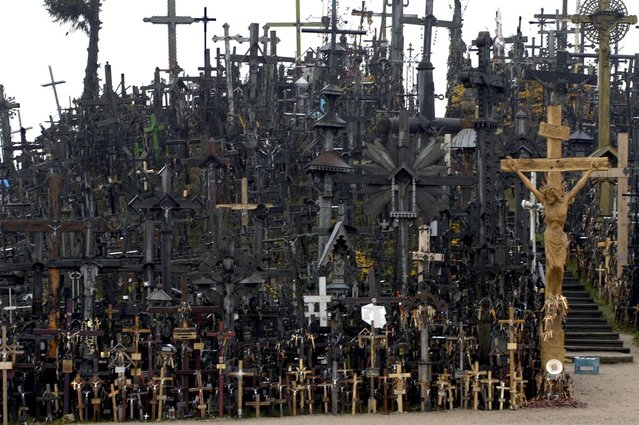
In 1831 an unsuccessful uprising against the Russian czar left many rebels dead. Relatives of the dead rebels, with no bodies to bury, instead left crosses, according to the Daily Mail. (Photo by Richard Gardner/Rex USA)

The phenomenon of the Hill of Crosses in northern Lithuania began when people started leaving crosses there hundreds of years ago – and continues to this day. These photos of a hill covered in crosses show the amazing sight it has become. Photo: In 1831 an unsuccessful uprising against the Russian czar left many rebels dead. Relatives of the dead rebels, with no bodies to bury, instead left crosses, according to the Daily Mail. (Photo by Richard Gardner/Rex USA)
Details
06 Jun 2013 09:56:00
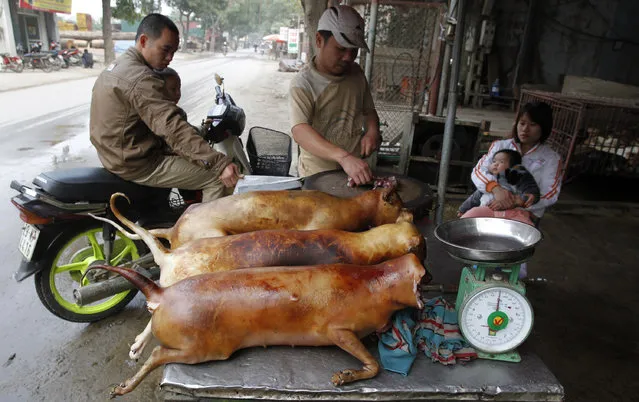
A vendor (C) cuts slaughtered dogs for sale at his roadside stall in Duong Noi village, outside Hanoi December 16, 2011. While animal rights activists have condemned eating dog meat as cruel treatment of the animals, it is still an accepted popular delicacy for some Vietnamese, as well in some other Asian countries. (Photo by Reuters/Kham)

A vendor (C) cuts slaughtered dogs for sale at his roadside stall in Duong Noi village, outside Hanoi December 16, 2011. While animal rights activists have condemned eating dog meat as cruel treatment of the animals, it is still an accepted popular delicacy for some Vietnamese, as well in some other Asian countries. Duong Noi is well-known as a dog-meat village, where hundreds of dogs are killed each day for sale as popular traditional food. Dog-eating as a custom is rooted in Vietnam and was developed as a result of poverty. One kilogram of dog meat costs about 130,000 dongs ($6.2). (Photo by Reuters/Kham)
Details
16 Jul 2013 11:40:00
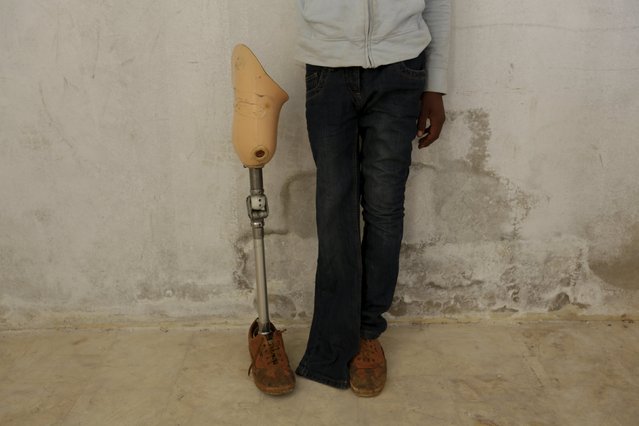
A young man with an amputated leg poses for a photograph standing by his broken artificial limb in the rebel-controlled area of Maaret al-Numan town in Idlib province, Syria March 20, 2016. (Photo by Khalil Ashawi/Reuters)

A young man with an amputated leg poses for a photograph standing by his broken artificial limb in the rebel-controlled area of Maaret al-Numan town in Idlib province, Syria March 20, 2016. Two university students forced to interrupt their studies have learnt to make and fit hundreds of new limbs in the past four years in opposition-held areas of Syria. A mobile clinic operating from a truck has gone some way to improve access to treatment. While most patients are between 15 and 45, the clinic also helps children and the elderly with replacement limbs. (Photo by Khalil Ashawi/Reuters)
Details
16 Apr 2016 12:03:00
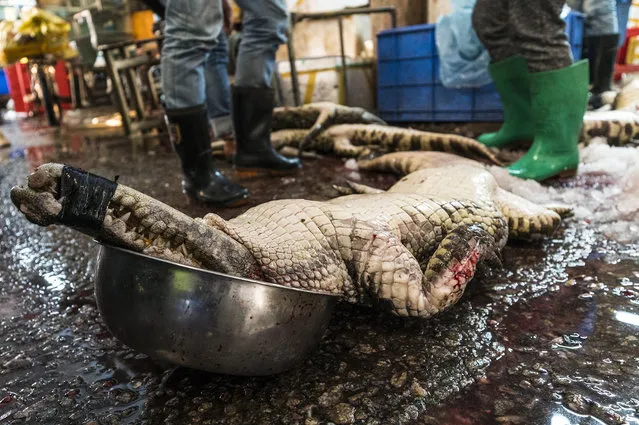
A dead crocodile is seen on Huangsha Seafood Market in Guangzhou, Guandong Province, China, 22 January 2018. Tsukiji Market of China or Huangsha Seafood Market is biggest one in Southern China and one of the biggest in China, as there are literally hundreds of different varieties of fish and seafood scattered throughout the market. Since the proximity of the fish market is so close to the Zhujiang River, it's quite easy for the large fishing vessels and fishermen to unload their fresh catch right at the market, which ensures that the fish and seafood remain fresh. Fish and other seafood are coming there from all around the globe. Seafood Market is full of different kinds of live fish, live shellfish, and live seafood on display in crystal clear tanks and it's common to see 5-star chefs, retailers and expats to source for fresh and high-quality seafood supplies for reasonable prices. While it is a wholesale fish market, since many Guangzhou restaurants and businesses come to purchase their seafood here, the public is welcome to come and even purchase. Many local Chinese have the vendors slice up fresh salmon fillets to take home or carry seafood into one of the nearby specialty restaurants, where they will cook if for them and serve it with vegetables and other side dishes of their choice. One of the biggest attractions for both, tourists and buyers, on market are crocodiles, which are brought there alive in wooden cases with taped jaws so they can?t accidentally bite. They are from crocodile farms from Guangdong, China and from Vietnam. Crocodile meat is popular in most Asian countries and it is consider as delicate one. Crocodiles weight from 10 to 25 kg and bigger ones are about 2 years old. They cost about 70 RMB (8.90 EURO) when bout as whole, or if you buy as parts most expensive and appreciated parts are paws 120 RMB (15.26 EURO) per kg, and tail 100 RMB (12.72 EURO) per kg. (Photo by Aleksandar Plavevski/EPA/EFE)

A dead crocodile is seen on Huangsha Seafood Market in Guangzhou, Guandong Province, China, 22 January 2018. Tsukiji Market of China or Huangsha Seafood Market is biggest one in Southern China and one of the biggest in China, as there are literally hundreds of different varieties of fish and seafood scattered throughout the market. (Photo by Aleksandar Plavevski/EPA/EFE)
Details
17 Apr 2020 00:05:00
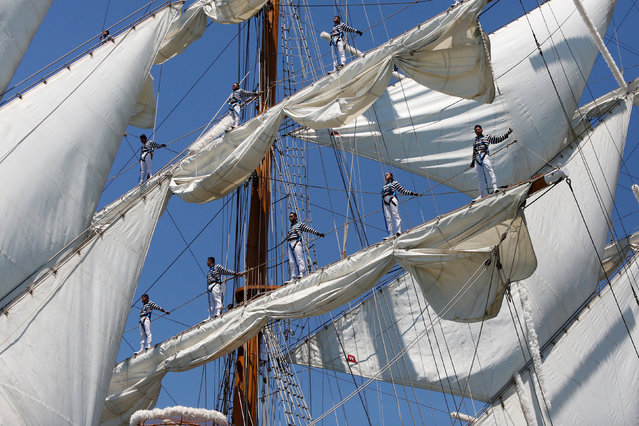
The Mexican ship Cuauhtemoc is pictured during the Tall Ships Races 2016 parade, in Lisbon, Portugal, July 25, 2016. (Photo by Pedro Nunes/Reuters)

The Mexican ship Cuauhtemoc is pictured during the Tall Ships Races 2016 parade, in Lisbon, Portugal, July 25, 2016. The Tall Ships' Races are races for sail training “tall ships” (sailing ships). The races are designed to encourage international friendship and training for young people in the art of sailing. The races are held annually in European waters and consists of two racing legs of several hundred nautical miles, and a “cruise in company” between the legs. Over one half (fifty-percent) of the crew of each ship participating in the races must consist of young people. (Photo by Pedro Nunes/Reuters)
Details
26 Jul 2016 10:49:00