Loading...
Done
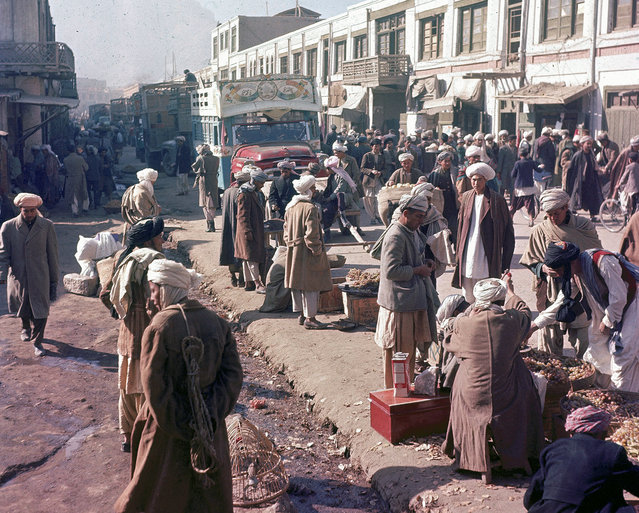
Men stroll past roadside vendors as a painted truck makes its way through the busy street in Kabul, Afghanistan, November, 1961. (Photo by Henry S. Bradsher/AP Photo via The Atlantic)

Men stroll past roadside vendors as a painted truck makes its way through the busy street in Kabul, Afghanistan, November, 1961. (Photo by Henry S. Bradsher/AP Photo via The Atlantic)
Details
03 Jul 2013 11:04:00
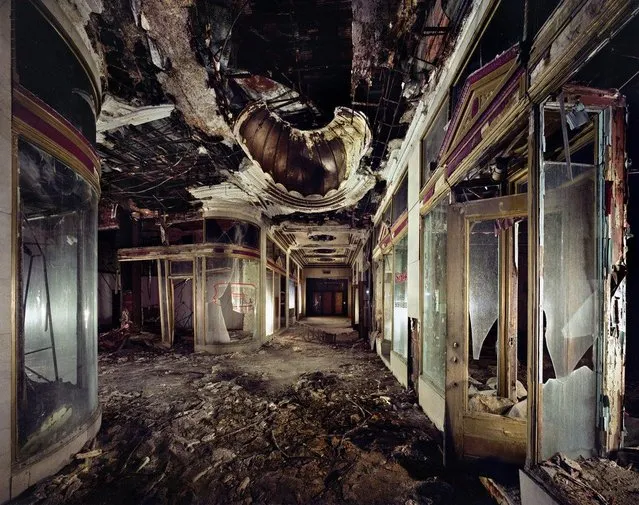
Lafayette Building. (Photo by Yves Marchand/Romain Meffre)

Lafayette Building. (Photo by Yves Marchand/Romain Meffre)
Details
21 Jul 2013 10:51:00
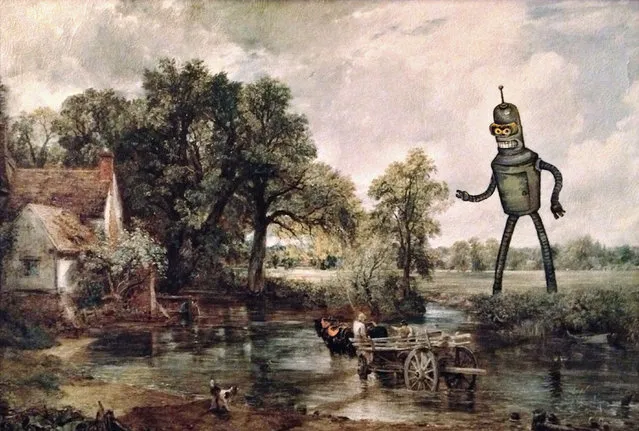
“John Constables's «The Hay Wein» meets «Bender» from «Futurama»”. (Photo and caption by Dave Pollot/Caters News)

“John Constables's «The Hay Wein» meets «Bender» from «Futurama»”. (Photo and caption by Dave Pollot/Caters News)
Details
07 Mar 2014 10:05:00
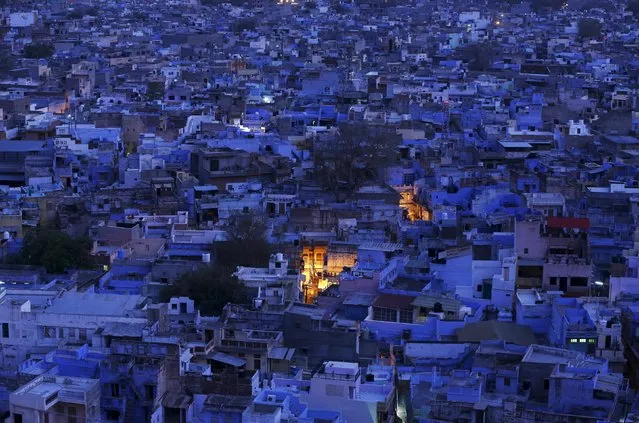
A general view of the residential area is pictured during dusk at Jodhpur in Rajasthan, April 5, 2015. Jodhpur, also known as the blue city in the desert Indian state of Rajasthan, which residents say originally, was used to show where the highest caste of priestly Hindus live, who wanted to set them apart from the rest of the population. Later the rest of the population followed suit. Another reason for the city to be blue is to keep the buildings cool during the summers, local residents said. (Photo by Adnan Abidi/Reuters)


A general view of the residential area is pictured during dusk at Jodhpur in Rajasthan, April 5, 2015. Jodhpur, also known as the blue city in the desert Indian state of Rajasthan, which residents say originally, was used to show where the highest caste of priestly Hindus live, who wanted to set them apart from the rest of the population. Later the rest of the population followed suit. Another reason for the city to be blue is to keep the buildings cool during the summers, local residents said. (Photo by Adnan Abidi/Reuters)
Details
12 Apr 2015 08:27:00
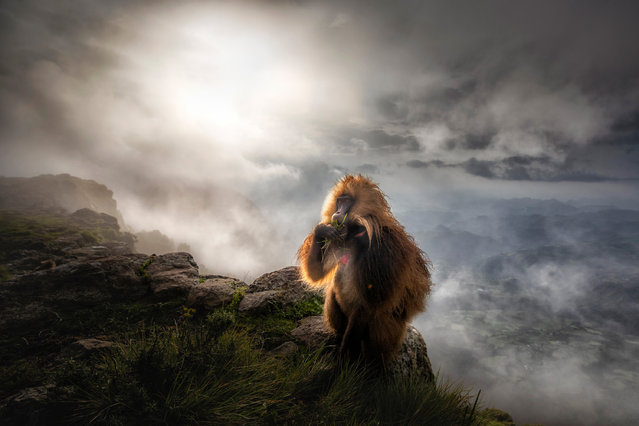
Highly commended, mammals: Gelada after the storm – Marco Gaiotti (Italy). “Gelada baboons are the only monkey species in the world that feed on grasses. They are native to the tableland of Ethiopia. Every morning large family groups wander from their sleeping places in the steep rock face, up to 1,000 metres high, to the feeding grounds at the tablelands. This image clearly depicts their feeding strategy: they pull out bunches of grass, sort the stalks and then lift them to their mouth. This shot was taken towards the end of the rainy season after a heavy storm”. (Photo by Marco Gaiotti/2019 GDT European Wildlife Photographer of the Year)

Highly commended, mammals: Gelada after the storm – Marco Gaiotti (Italy). “Gelada baboons are the only monkey species in the world that feed on grasses. They are native to the tableland of Ethiopia. Every morning large family groups wander from their sleeping places in the steep rock face, up to 1,000 metres high, to the feeding grounds at the tablelands. This image clearly depicts their feeding strategy: they pull out bunches of grass, sort the stalks and then lift them to their mouth. This shot was taken towards the end of the rainy season after a heavy storm”. (Photo by Marco Gaiotti/2019 GDT European Wildlife Photographer of the Year)
Details
31 Oct 2019 00:03:00
The eruption of Cordon Caulle began on June 4, 2011, located in the Region of Los Rios in Chile. For about 12 months, people and animals became accustomed to living with the daily fall of ash, which also caused problems in the air traffic in South America. The explosions and lightning during first days of the eruption could be seen from hundreds of miles around. This photograph was taken on the second night of eruption from the town of Lago Ranco. (Photo and caption by Francisco Negroni/National Geographic Traveler Photo Contest)

The eruption of Cordon Caulle began on June 4, 2011, located in the Region of Los Rios in Chile. For about 12 months, people and animals became accustomed to living with the daily fall of ash, which also caused problems in the air traffic in South America. The explosions and lightning during first days of the eruption could be seen from hundreds of miles around. This photograph was taken on the second night of eruption from the town of Lago Ranco. (Photo and caption by Francisco Negroni/National Geographic Traveler Photo Contest)

ATTENTION! All pictures are presented in high resolution. To see Hi-Res images – just TWICE click on any picture. In other words, click small picture – opens the BIG picture. Click BIG picture – opens VERY BIG picture.
Details
23 Jun 2013 11:24:00
“Double head vulture”. On the day of windy days during raptors migration some people in my country start to catch these tired raptors, so in this day we go to photograph some raptors and we saw these tow tired vultures, so we start to drag them away from the hunters until they reach a good hidden place, to make them safe until they start a new journey. Photo location: Kuwait. (Photo and caption by Mohd Khorshed/National Geographic Photo Contest)

“Double head vulture”. On the day of windy days during raptors migration some people in my country start to catch these tired raptors, so in this day we go to photograph some raptors and we saw these tow tired vultures, so we start to drag them away from the hunters until they reach a good hidden place, to make them safe until they start a new journey. Photo location: Kuwait. (Photo and caption by Mohd Khorshed/National Geographic Photo Contest)
Details
06 Nov 2014 09:40:00
Breath at sunset, captures a sea turtle at a dive site called Black Rock. Kāʻanapali, Hawaiʻi, August 2013. (Photo by Christopher Doherty/Smithsonian.com)

Breath at sunset, captures a sea turtle at a dive site called Black Rock. Kāʻanapali, Hawaiʻi, August 2013. (Photo by Christopher Doherty/Smithsonian.com)
Details
28 Apr 2014 12:20:00