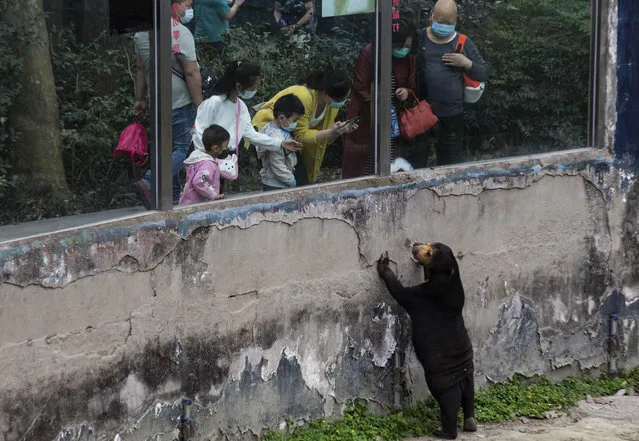
People look at a black bear at the Chengdu zoo amid the coronavirus outbreak on March 26, 2020 in Chengdu, Sichuan Province of China. (Photo by Wang Lei/China News Service via Getty Images)
A mobile phone showing the time at noon, is displayed for a photo in front of an almost empty road with low traffic, during the coronavirus disease (COVID-19) outbreak, in Wuhan, Hubei province, China, March 31, 2020. (Photo by Aly Song/Reuters)
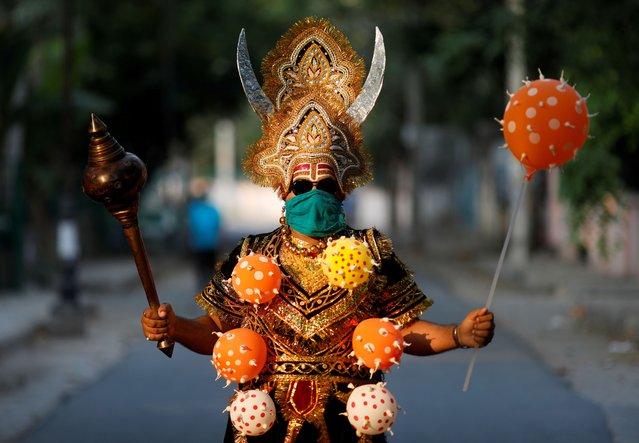
A local resident dressed as Yamraj or Hindu god of death, wearing a novel coronavirus-themed balloon necklace, gestures as he poses during an awareness about social distancing and staying at home organised by Delhi police during a nationwide lockdown to slow the spreading of the coronavirus disease (COVID-19), in New Delhi, India, April 28, 2020. (Photo by Adnan Abidi/Reuters)
A dog named Izzy licks its chops as Craig Morland of Crofton, Maryland, buys a bucket of Thrashers famous fries on the first day of eased coronavirus disease (COVID-19) restrictions for the beach and boardwalk in Ocean City, Maryland, U.S., May 9, 2020. (Photo by Kevin Lamarque/Reuters)
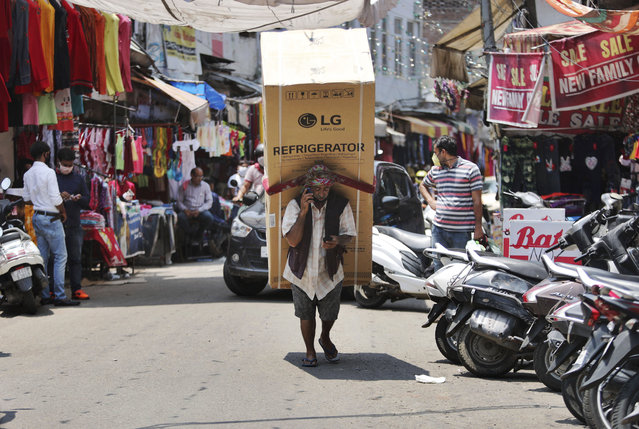
An Indian laborer talks on his mobile phone as he transports a refrigerator on his back at a market in Jammu, India, Sunday, June 7, 2020. India whose coronavirus caseload is fifth highest in the world has partially restored trains and domestic flights and allowed reopening of shops and manufacturing. (Photo by Channi Anand/AP Photo)
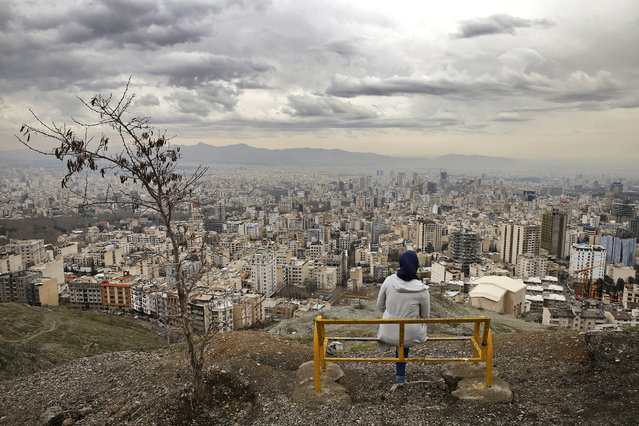
A woman spends her time outdoors to observe the ancient festival of Sizdeh Bedar, an annual public picnic day on the 13th day of the Iranian new year, at the Tochal mountainous area northern Tehran, Iran, Sunday, April, 2, 2017. Sizdeh Bedar, which comes from the Farsi words for “thirteen” and “day out”, is a legacy from Iran's pre-Islamic past that hard-liners in the Islamic Republic never managed to erase from calendars. (Photo by Ebrahim Noroozi/AP Photo)
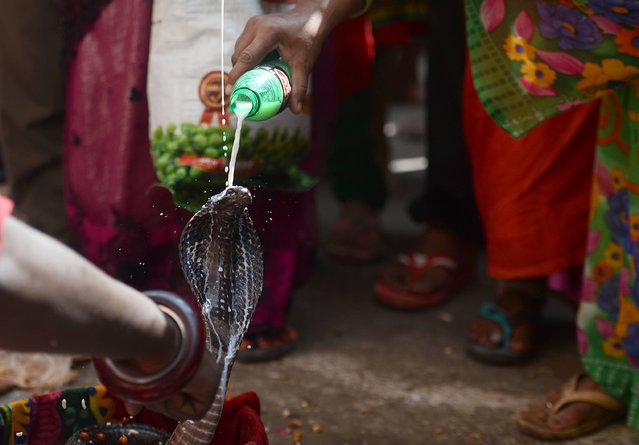
An Indian Hindu devotee pours milk on a snake as an offering during the annual Nag Panchami festival, dedicated to the worship of snakes outside the Nagvasuki temple, in Allahabad, on July 28, 2017. Officially the snake charmers' profession is banned in India, but many in the country offered prayers and milk blessings to cobras and other deadly serpents on July 28 in an annual tribute. The 800,000 charmers and their young apprentices come to the fore for the Nag Panchami festival which dates back several centuries. (Photo by Sanjay Kanojia/AFP Photo)