Loading...
Done
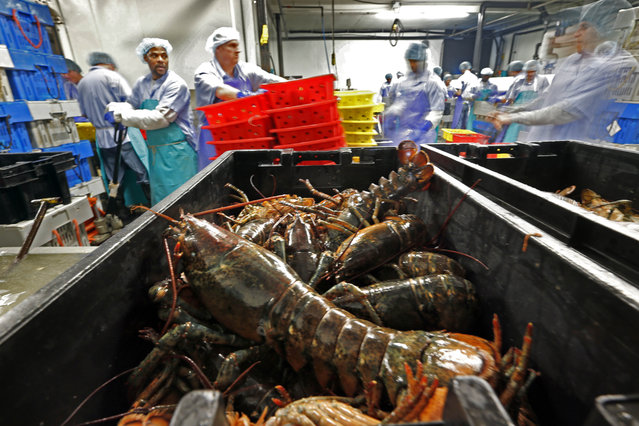
In this June 20, 2014, file photo, lobsters are processed at the Sea Hag Seafood plant in St. George, Maine. More and more American and Canadian-caught lobsters have been turning up at fancy restaurants in China, marketed as “Boston lobster”, say Maine-based processors. One processing firm owner says it's now the biggest live lobster important day of the year after Christmas in Europe. (Photo by Robert F. Bukaty/AP Photo)

In this June 20, 2014, file photo, lobsters are processed at the Sea Hag Seafood plant in St. George, Maine. More and more American and Canadian-caught lobsters have been turning up at fancy restaurants in China, marketed as “Boston lobster”, say Maine-based processors. One processing firm owner says it's now the biggest live lobster important day of the year after Christmas in Europe. (Photo by Robert F. Bukaty/AP Photo)
Details
18 Feb 2015 13:11:00
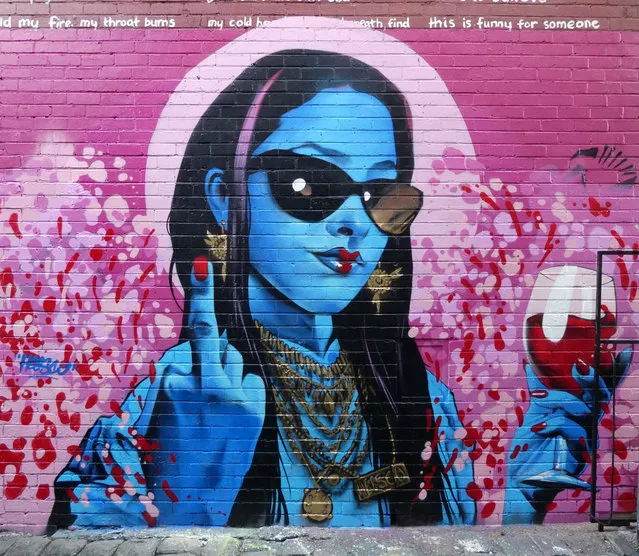
Heesco, Windsor. Born and raised in Mongolia and now living and working in Melbourne, Heesco is well known for his skill in rendering photo-realistic portraits. They speak to the viewer in a way that the subtext is enjoyable to decipher. Just what is the Blue Lady’s message? The sunglasses might mask the confronting gaze but her body language fills in the gaps. Heesco’s characters often wear traditional jewellery and clothing that remind us of his Mongolian cultural heritage. (Photo by Lou Chamberlin/The Guardian)

Heesco, Windsor. Born and raised in Mongolia and now living and working in Melbourne, Heesco is well known for his skill in rendering photo-realistic portraits. They speak to the viewer in a way that the subtext is enjoyable to decipher. Just what is the Blue Lady’s message? The sunglasses might mask the confronting gaze but her body language fills in the gaps. Heesco’s characters often wear traditional jewellery and clothing that remind us of his Mongolian cultural heritage. (Photo by Lou Chamberlin/The Guardian)
Details
26 Dec 2017 08:28:00
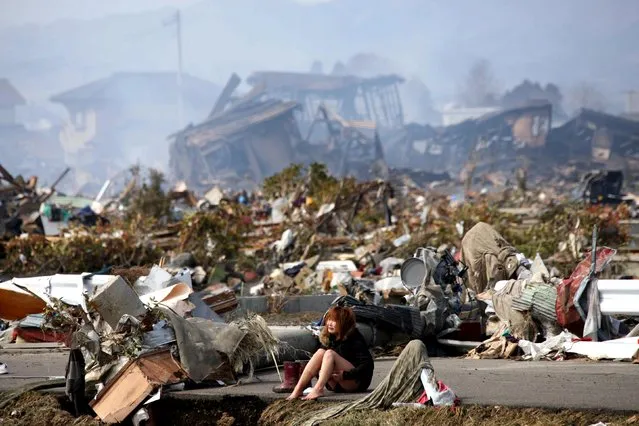
A woman cries while sitting on a road amid the destroyed city of Natori, Miyagi Prefecture in northern Japan March 13, 2011, after a massive earthquake and tsunami that are feared to have killed more than 10,000 people. (Photo by Asahi Shimbun/Reuters)

A woman cries while sitting on a road amid the destroyed city of Natori, Miyagi Prefecture in northern Japan March 13, 2011, after a massive earthquake and tsunami. Five years on from the tsunami that triggered meltdowns at Japan's Fukushima nuclear plant, the page is anything but turned. A magnitude 9 earthquake and towering tsunami on March 11, 2011 killed nearly 16,000 people along Japan's northeastern coast and left more than 2,500 missing. The 10-metre (33-foot) tsunami swept away everything in its path, including houses, ships, cars and farm buildings. (Photo by Asahi Shimbun/Reuters)
Details
09 Mar 2016 12:40:00
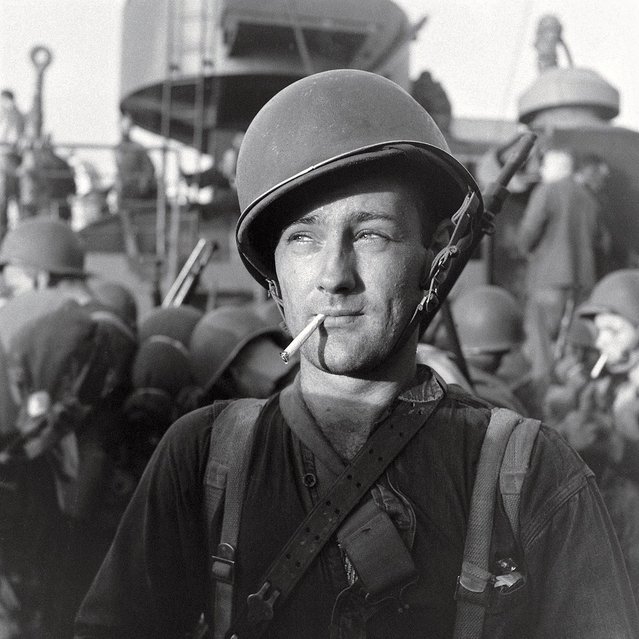
An American Marine readies to land on Guadalcanal during the five-month struggle for the island between late 1942 and early 1943. Three thousand miles south of Tokyo, Guadalcanal was a major shipping point for military supplies. The Allied victory there in February, 1943, marked a major turning point in the war after a string of Japanese victories in the Pacific. (Photo by Joe Scherschel/Time & Life Pictures)

An American Marine readies to land on Guadalcanal during the five-month struggle for the island between late 1942 and early 1943. Three thousand miles south of Tokyo, Guadalcanal was a major shipping point for military supplies. The Allied victory there in February, 1943, marked a major turning point in the war after a string of Japanese victories in the Pacific. (Photo by Joe Scherschel/Time & Life Pictures)
Details
10 Mar 2013 12:50:00
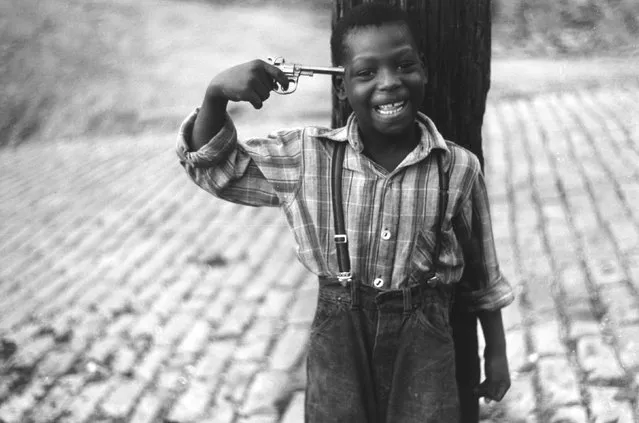
Usa, Pittsburgh, Pennsylvania, 1950. (Photo by Elliott Erwitt/Contrasto)

USA, Pittsburgh, Pennsylvania, 1950. (Photo by Elliott Erwitt/Contrasto)
Details
27 May 2013 11:50:00
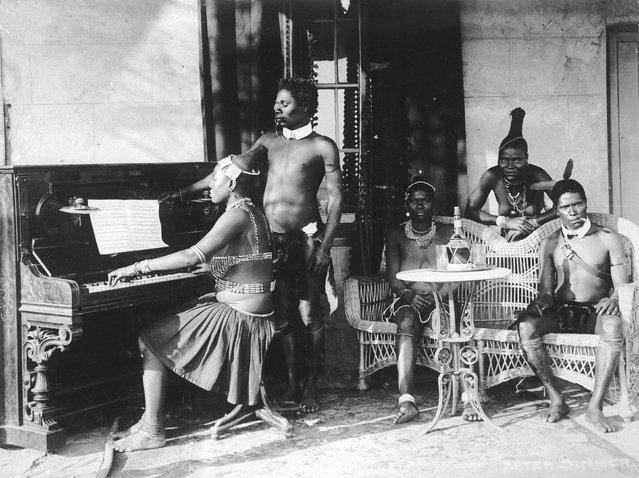
circa 1925:  A Zulu woman playing the piano while a group of others sit and listen.  (Photo by General Photographic Agency/Getty Images)

“The Zulu are the largest South African ethnic group, with an estimated 10–11 million people living mainly in the province of KwaZulu-Natal. Small numbers also live in Zimbabwe, Zambia, and Mozambique. Their language, Zulu, is a Bantu language; more specifically, part of the Nguni subgroup. The Zulu Kingdom played a major role in South African history during the 19th and 20th centuries. Under apartheid, Zulu people were classed as third-class citizens and suffered from state-sanctioned discrimination. They remain today the most numerous ethnic group in South Africa, and now have equal rights along with all other citizens”. – Wikipedia.

Photo: A Zulu woman playing the piano while a group of others sit and listen (to put it briefly, Englishmen scoff over Zulu). South Africa, circa 1925. (Photo by General Photographic Agency)

Details
03 Feb 2014 09:40:00
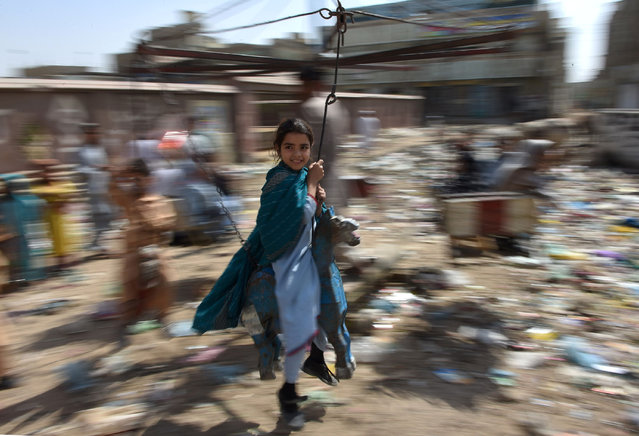
In this photograph taken on February 18, 2016, Pakistani children ride on swings in the predominantly Pashtun Korangi District of Karachi. In a rundown district of Karachi, Rabia balks at a neighbour's proposal to vaccinate her children, demonstrating one of the biggest hurdles to eradicating polio in Pakistan by the end of the year: confused and frightened parents. (Photo by Asif Hassan/AFP Photo)

In this photograph taken on February 18, 2016, Pakistani children ride on swings in the predominantly Pashtun Korangi District of Karachi. In a rundown district of Karachi, Rabia balks at a neighbour's proposal to vaccinate her children, demonstrating one of the biggest hurdles to eradicating polio in Pakistan by the end of the year: confused and frightened parents. (Photo by Asif Hassan/AFP Photo)
Details
04 Apr 2016 10:37:00
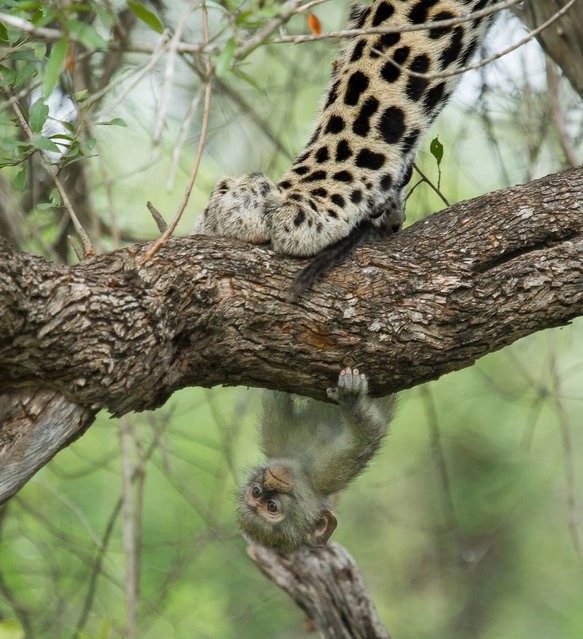
Chris Renshaw has recently been awarded the 2015 Africa Geographic “Photographer of the Year” award. Chris tells that his love “for anything wild and adventurous came from a deep rooted attachment to the African continent. This image shows that timing, a bit of anticipation, and luck allowed this incredible moment in time to be captured”. (Photo by Chris Renshaw)

Chris Renshaw has recently been awarded the 2015 Africa Geographic “Photographer of the Year” award. Chris tells that his love “for anything wild and adventurous came from a deep rooted attachment to the African continent. This image shows that timing, a bit of anticipation, and luck allowed this incredible moment in time to be captured”. (Photo by Chris Renshaw)
Details
19 Nov 2015 08:00:00