Loading...
Done
Adonna Khare and her Pencil

Originally hailing from a small town in Iowa, Adonna Khare was this year’s recipient of the Art Prize 2012 for her amazingly detailed large-scale pencil on paper works. All of Khare’s work evolve naturally without much pre-planning, essentially building her pieces as she continues to work.
Details
29 May 2015 15:02:00
Baby Fennec Fox

“The fennec fox or fennec (Vulpes zerda) is a small nocturnal fox found in the Sahara of North Africa. Its most distinctive feature is its unusually large ears, which serve to dissipate heat”. – Wikipedia. (Photo by In Cherl Kim)
Details
14 Sep 2012 12:15:00
A dog rides a wave during the Surf City Surf Dog competition in Huntington Beach, California, U.S., September 25, 2016. (Photo by Lucy Nicholson/Reuters)

A dog rides a wave during the Surf City Surf Dog competition in Huntington Beach, California, U.S., September 25, 2016. The dogs compete in contest categories ranging from small to extra large, to two dogs on a board, as well as owner and dog. (Photo by Lucy Nicholson/Reuters)
Details
27 Sep 2016 09:43:00
Las Luminarias de San Anton Festival

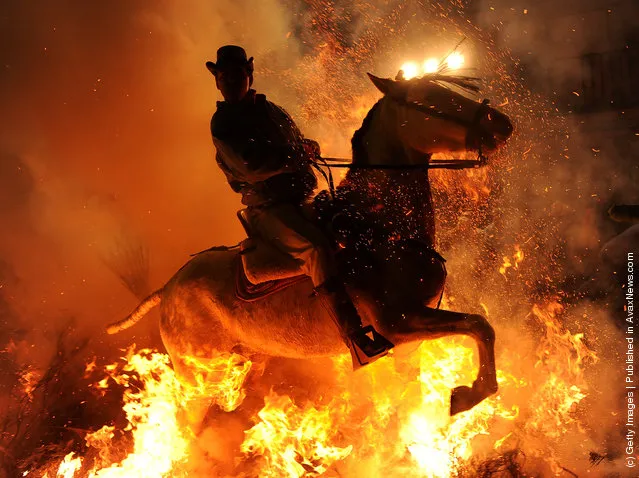
A man rides a horse through a bonfire on January 16, 2012 in the small village of San Bartolome de Pinares, Spain. In honor of San Anton, the patron saint of animals, horses are riden through the bonfires on the night before the official day of honoring animals in Spain. (Photo by Jasper Juinen/Getty Images)
Details
19 Jan 2012 09:00:00


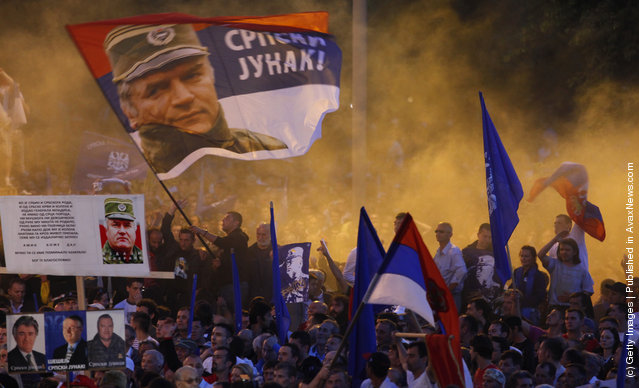
Supporters of Ratko Mladic wave flags with his picture and reading in Serbian “Serbian hero” during a rally organized by the ultra nationalist Serbian Radical Party in front of the Parliament building on May 29, 2011 in Belgrade, Serbia. Some 7,000 supporters of the former Bosnian Serb army chief Ratko Mladic, who was arrested on Thursday in a village in Serbia after 16 years on the run, took to the streets of Belgrade, to hear speeches and protest Mladic's arrest. Mladic, who is facing extradition to the The Hague, is accused of war crimes, including the 1995 massacre of 7,500 Muslin men and boys in Srebrenica. (Photo by Srdjan Stevanovic/Getty Images)

Details
30 May 2011 08:02:00


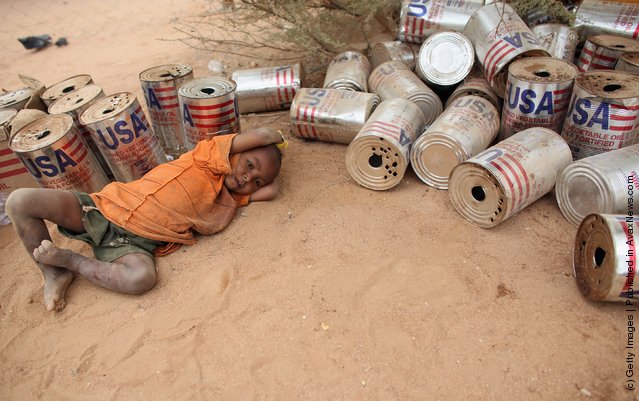
A young boy rests by empty USAID vegetable oil tins in the Dagahaley refugee camp which makes up part of the giant Dadaab refugee settlement on July 19, 2011 in Dadaab, Kenya. The refugee camp at Dadaab, located close to the Kenyan border with Somalia, was originally designed in the early 1990s to accommodate 90,000 people but the UN estimates over 4 times as many reside there. The ongoing civil war in Somalia and the worst drought to affect the Horn of Africa in six decades has resulted in an estimated 12 million people whose lives are threatened. (Photo by Oli Scarff/Getty Images)
Details
20 Jul 2011 12:08:00
Indias LGBT Community Celebrates 4th Queer Pride March

A boy dances as he and others participate during the 4th Delhi Queer Pride 2011 March on November 27, 2011 in New Delhi, India. India's Lesbian, Gay, Bisexual and Transgender (LGBT) community celebrated the 4th Delhi Queer Pride March with a parade through the streets of Delhi. People gathered to protest violence, harassment and discrimination faced by the LGBT community in India. (Photo by Daniel Berehulak/Getty Images)
Details
28 Nov 2011 12:23:00
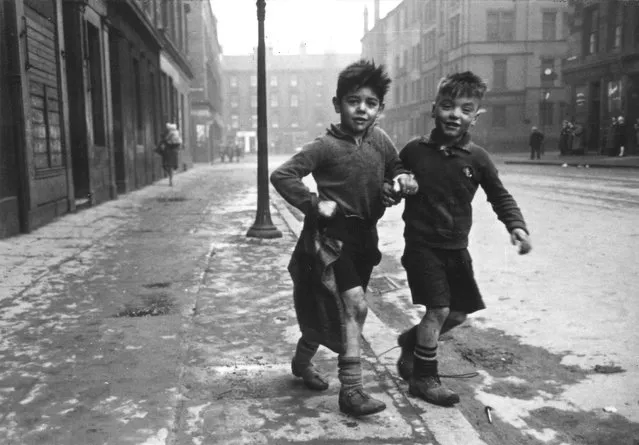
Two boys in the Gorbals area of Glasgow, UK on January 31, 1948. The Gorbals tenements were built quickly and cheaply in the 1840s, providing housing for Glasgow's burgeoning population of industrial workers. Conditions were appalling; overcrowding was standard and sewage and water facilities inadequate. The tenements housed about 40,000 people with up to eight family members sharing a single room, 30 residents sharing a toilet and 40 sharing a tap. By the time this photograph was taken 850 tenements had been demolished since 1920. Redevelopment of the area began in the late 1950s and the tenements were replaced with a modern tower block complex in the sixties. (Photo by Bert Hardy/Getty Images)

Two boys in the Gorbals area of Glasgow, UK on January 31, 1948. The Gorbals tenements were built quickly and cheaply in the 1840s, providing housing for Glasgow's burgeoning population of industrial workers. Conditions were appalling; overcrowding was standard and sewage and water facilities inadequate. The tenements housed about 40,000 people with up to eight family members sharing a single room, 30 residents sharing a toilet and 40 sharing a tap. By the time this photograph was taken 850 tenements had been demolished since 1920. Redevelopment of the area began in the late 1950s and the tenements were replaced with a modern tower block complex in the sixties. (Photo by Bert Hardy/Getty Images)
Details
09 Mar 2017 00:03:00