Loading...
Done
Galapagos – Rocking the Cradle: Four major ocean currents converge along the Galapagos archipelago, creating the conditions for an extraordinary diversity of animal life, April 25, 2016. The islands are home to at least 7,000 flora and fauna species, of which 97 percent of the reptiles, 80 percent of the land birds, 50 percent of the insects and 30 percent of the plants are endemic. The local ecosystem is highly sensitive to the changes in temperature, rainfall and ocean currents that characterize the climatic events known as El Niño and La Niña. These changes cause marked fluctuations in weather and food availability. Many scientists expect the frequency of El Niño and La Niña to increase as a result of climate change, making the Galapagos a possible early-warning location for its effects. (Photo by Thomas P. Peschak for National Geographic/World Press Photo)

Galapagos – Rocking the Cradle: Four major ocean currents converge along the Galapagos archipelago, creating the conditions for an extraordinary diversity of animal life, April 25, 2016. The islands are home to at least 7,000 flora and fauna species, of which 97 percent of the reptiles, 80 percent of the land birds, 50 percent of the insects and 30 percent of the plants are endemic. (Photo by Thomas P. Peschak for National Geographic/World Press Photo)
Details
16 Apr 2018 00:01:00
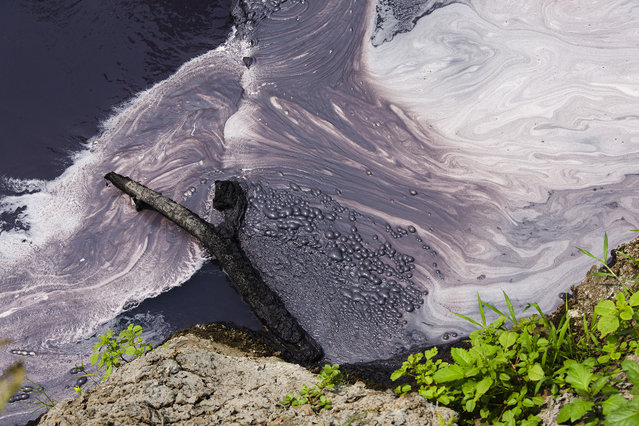
Factory waste including dyes from the many textile factories in the region drain into a tributary of the Citarum river on August 27, 2018 outside Bandung, Java, Indonesia. (Photo by Ed Wray/Getty Images)

Factory waste including dyes from the many textile factories in the region drain into a tributary of the Citarum river on August 27, 2018 outside Bandung, Java, Indonesia. (Photo by Ed Wray/Getty Images)
Details
06 Sep 2018 00:03:00
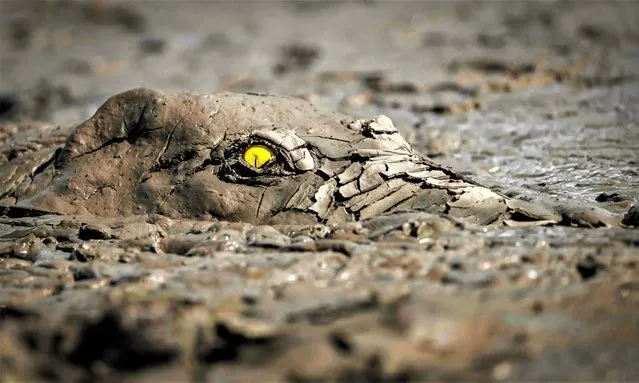
“Danger in the mud” – a crocodile at Mana Pools National Park, Zimbabwe. The grand prize winner. (Photo by Jens Cullmann/World Nature Photography Awards 2022)

“Danger in the mud” – a crocodile at Mana Pools National Park, Zimbabwe. The grand prize winner. (Photo by Jens Cullmann/World Nature Photography Awards 2022)
Details
08 Mar 2023 04:28:00
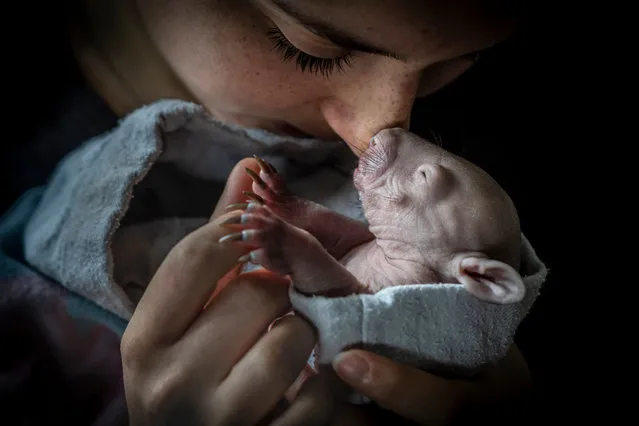
Nose to Nose; Human/Nature winner. “Doug Gimesy was documenting work at the Joey and Bat Sanctuary near Melbourne when he met a wombat (Vombatus ursinus) whose mother had been killed by a car. Gimesy watched as a young veterinary student bottle-fed the orphaned joey, then touched her nose to the joey’s in a tender moment of interspecies bonding”. (Photo by Doug Gimesy/BigPicture)

Nose to Nose; Human/Nature winner. “Doug Gimesy was documenting work at the Joey and Bat Sanctuary near Melbourne when he met a wombat (Vombatus ursinus) whose mother had been killed by a car. Gimesy watched as a young veterinary student bottle-fed the orphaned joey, then touched her nose to the joey’s in a tender moment of interspecies bonding”. (Photo by Doug Gimesy/BigPicture)
Details
25 Jun 2023 05:33:00
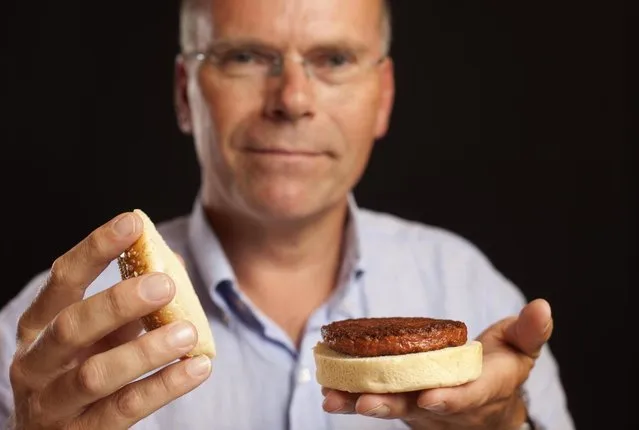
In this handout image provided by Ogilvy, a burger made from cultured beef, which has been developed by Professor Mark Post of Maastricht University in the Netherlands (pictured) is shown to the media during a press conference on August 5, 2013 in London, England. Cultured Beef could help solve the coming food crisis and combat climate change with commercial production of Cultured Beef beginning within ten to twenty years. (Photo by David Parry via Getty Images)

In this handout image provided by Ogilvy, a burger made from cultured beef, which has been developed by Professor Mark Post of Maastricht University in the Netherlands (pictured) is shown to the media during a press conference on August 5, 2013 in London, England. The in-vitro burger, cultured from cattle stem cells, the first example of what its creator says could provide an answer to global food shortages and help combat climate change, was fried in a pan and tasted by two volunteers. The burger is the result of years of research by Dutch scientist Mark Post, a vascular biologist at the University of Maastricht, who is working to show how meat grown in petri dishes might one day be a true alternative to meat from livestock.The meat in the burger has been made by knitting together around 20,000 strands of protein that has been cultured from cattle stem cells in Post's lab. (Photo by David Parry)
Details
06 Aug 2013 08:48:00
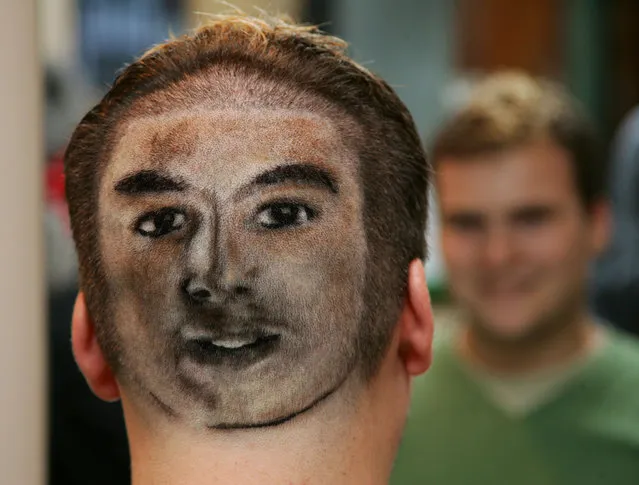
England fan Joel Moore (23) has had a haircut featuring the face of World Cup star Theo Walcott by Daren Terry from Lotus Styling in Bognor Regis, West Sussex. (Photo by Southern News & Pictures)

Passionate fans are doing something unique (wacky) to celebrate the World Cup. They’re getting the likeness of their favorite player shaved into the back of their head. Photo: England fan Joel Moore (23) has had a haircut featuring the face of World Cup star Theo Walcott by Daren Terry from Lotus Styling in Bognor Regis, West Sussex. (Photo by Southern News & Pictures)
Details
30 Jun 2014 12:03:00
In this handout image supplied by Qatar 2022  The Al-Rayyan stadium  is pictured in this artists impression as Qatar 2022 World Cup bid unveils it's stadiums on September 16, 2010 in Doha, Qatar. It has been designed to include a “media facade” that includes a membrane that acts as a screen for projections; news, commercials, sports updates and current tournament information and matches. (Photo by Qatar 2022 via Getty Images)

In this handout image supplied by Qatar 2022 The Al-Rayyan stadium is pictured in this artists impression as Qatar 2022 World Cup bid unveils it's stadiums on September 16, 2010 in Doha, Qatar. It has been designed to include a “media facade” that includes a membrane that acts as a screen for projections; news, commercials, sports updates and current tournament information and matches. (Photo by Qatar 2022 via Getty Images)
Details
13 Jul 2014 10:29:00
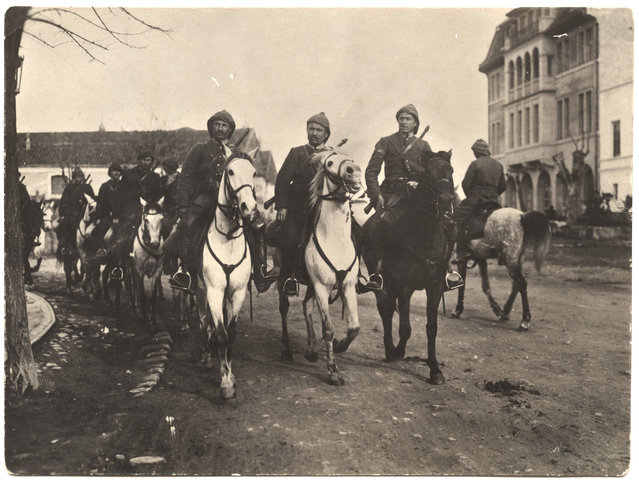
Turkish army, including cavalry, infantry and artillery. (Photo by Dr. P.A. Smithe/National World War I Museum, Kansas City, Mo.)

Dr. P.A. Smithe was sent by the American Red Cross as a doctor and surgeon to work at a hospital in Vienna. He sailed to Europe in December 1915 and returned home in August 1916, according to his daughter, who donated his images to the National World War I Museum. Photo: Turkish army, including cavalry, infantry and artillery. (Photo by Dr. P.A. Smithe/National World War I Museum, Kansas City, Mo.)
Details
29 Jul 2014 11:53:00