Girls refresh themselves and their dog with water spray frames set along the central street of the Ukrainian capital of Kiev during a heatwave on June 25, 2020. (Photo by Sergei Supinsky/AFP Photo)
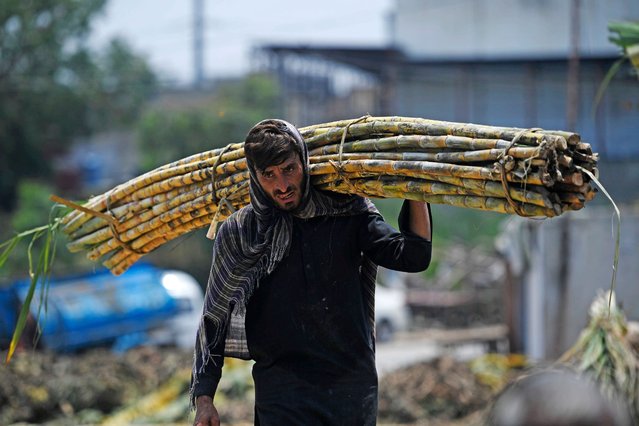
A labourer carries sugarcane to load onto a mini truck at the main vegetable and fruit market in Islamabad on July 7, 2020. (Photo by Aamir Qureshi/AFP Photo)
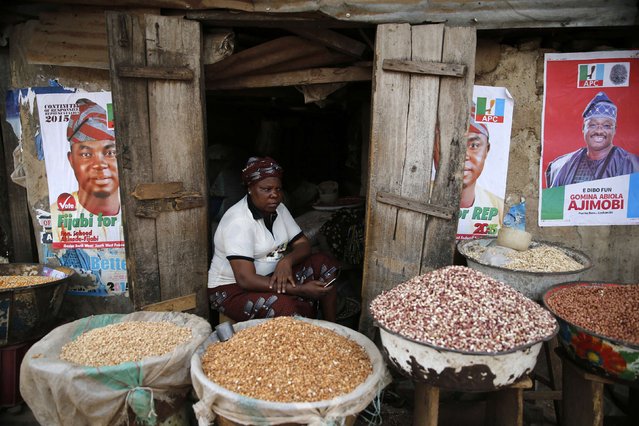
Latefat Alao, 56, a ethnic Yoruba Muslim woman, waits for customers in front of her in Beere market in Ibadan, southwest Nigeria, January 29, 2015. Much of the grain and wheat traders like Alao sell comes from the north and Boko Haram's campaign has negatively affected farmers and food markets. Reuters photographer Akintunde Akinleye photographed Nigerians and asked them about their views on the elections as well as their hopes and concerns for the country. (Photo by Akintunde Akinleye/Reuters)
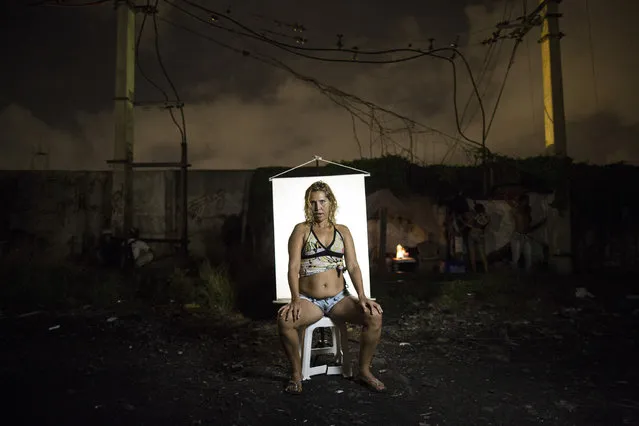
In this March 18, 2015 photo, Andrea, better known as Loira, which is the Portuguese word for “blonde”, poses for a portrait in an open-air crack cocaine market, known as a “cracolandia” or crackland where users can buy crack, and smoke it in plain sight, day or night, in Rio de Janeiro, Brazil. Andrea says she is married and has a home, but she keeps returning to crackland to feed her addiction. (Photo by Felipe Dana/AP Photo)
Ramoncito Campo kisses his wife Hernelie Ruazol Campo on a flooded street during a southwest monsoon that battered Manila August 8, 2012. The newly-wed couple pushed through with their scheduled wedding despite severe flooding that inundated wide areas of the capital and nearby nine provinces. (Photo by Reuters/Courtesy of Ramoncito Campo)
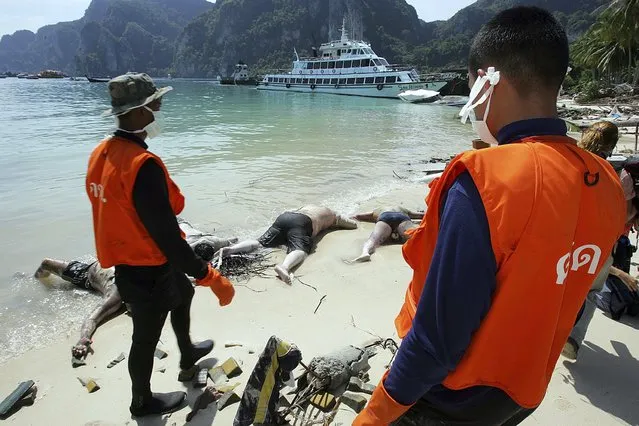
Rescue workers stand near dead bodies washed ashore in Ton Sai Bay in Thailand's Phi Phi island in this December 28, 2004 file photo. On December 26, 2004, a magnitude 9.15 quake off the coast of Indonesia's Aceh province triggered an Indian Ocean tsunami that killed around 226,000 people in Indonesia, Sri Lanka, India, Thailand and nine other countries. (Photo by Luis Enrique Ascui/Reuters)
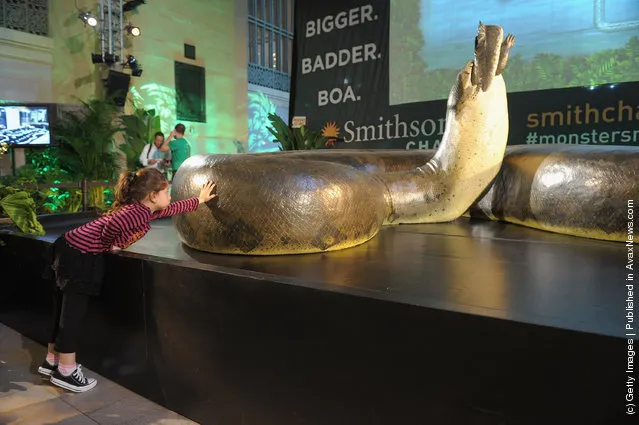
“Titanoboa is a genus of snake that lived approximately 58–60 million years ago, during the Paleocene epoch, a 10-million-year period immediately following the dinosaur extinction event. The only known species is the Titanoboa cerrejonensis, the largest snake ever discovered, which supplanted the previous record holder, Gigantophis”. – Wikipedia
Photo: Leah Del Rio views a replica of the prehistoric Titanoboa, the largest snake to ever live, on display at Grand Central Terminal on March 23, 2012 in New York City. (Photo by Michael Loccisano/Getty Images)