Loading...
Done
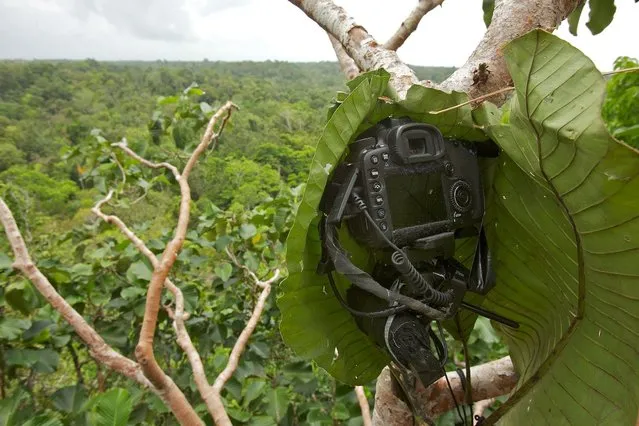
Tim Laman - Wildlife Photojournalist

Tim Laman is a field biologist and wildlife photojournalist. His pioneering research in the rain forest canopy in Borneo led to a PhD from Harvard and his first National Geographic article in 1997. Since then, he has pursued his passion for exploring wild places and documenting little-known and endangered wildlife by becoming a regular contributor to National Geographic. He has eighteen articles to his credit to date, all of which have had a conservation message. Some have focused on endangered species such as Orangutans or Hornbills, while others, such as a series of articles on Conservation International’s Biodiversity Hotspots, have highlighted regions under intense pressure.
Details
14 Sep 2013 10:13:00
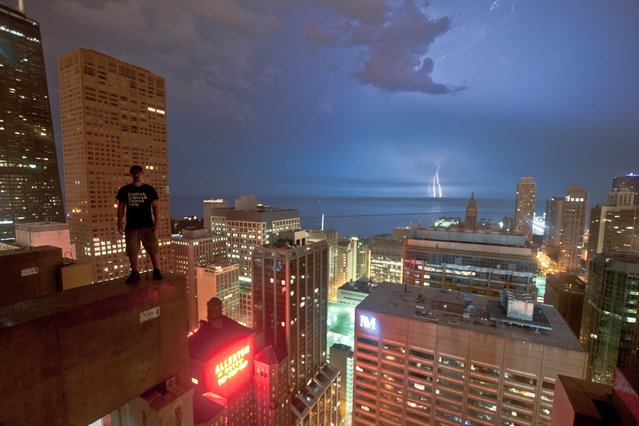
Bradley Garrett stands on the edge of the Ritz-Carlton Chicago as lightning strikes in the distance in Chicago, US. (Photo by Bradley L. Garrett/Barcroft Media)

These photographs are the work of urban explorer Dr Bradley Garrett who made headlines back in 2012 when he posted a series of snaps from the top of The Shard skyscraper while it was still under construction. Garrett, now a researcher at the University of Oxford, took these shots during his time with the London Consolidation Crew (LCC), a loose collection of urban explorers based in the English capital. Photo: Bradley Garrett stands on the edge of the Ritz-Carlton Chicago as lightning strikes in the distance in Chicago, US. (Photo by Bradley L. Garrett/Barcroft Media)
Details
24 Sep 2013 08:09:00
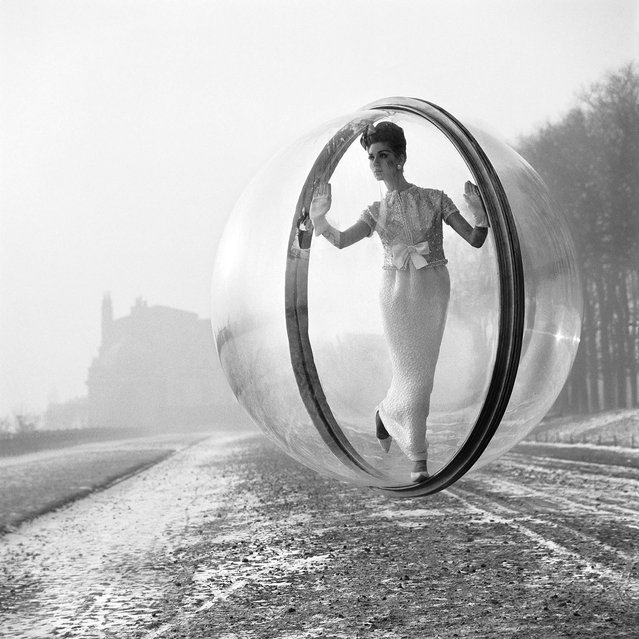
“Paris 1963” – Harper's Bazaar “Bubble” Spring Collection. (Photo by Melvin Sokolsky)

Born 1938 in New York, Melvin Sokolsky was a major figure in the revival of fashion photography from the 1960s. He was only 21 when he started working at Harper's Bazaar for which he produced the “Bubble” series of photographs depicting fashion models floating in giant clear plastic bubbles suspended in midair above the Seine river in Paris. Alongside his steady collaboration with Bazaar, he also worked for publications such as Vogue and the New York Times. Photo: “After Delvaux” – “Paris 1963” – Harper's Bazaar “Bubble” Spring Collection. (Photo by Melvin Sokolsky)
Details
30 Sep 2013 08:19:00
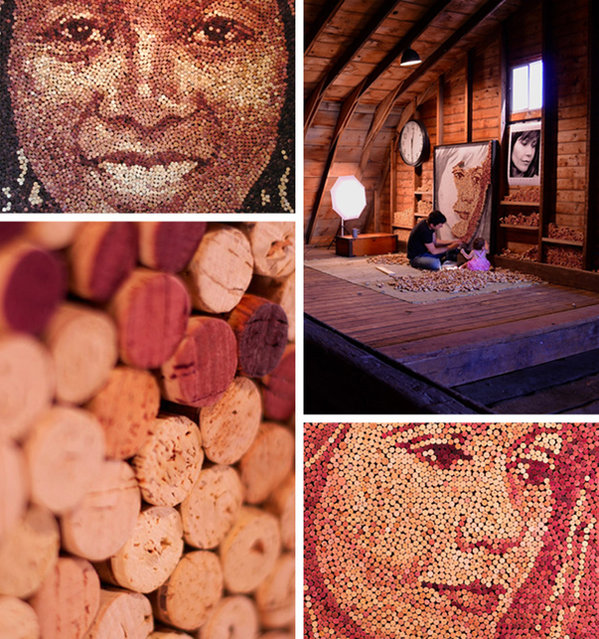
Wine Cork Portraits By Scott Gundersen

Grand Rapids (Michigan) based illustrator and artist Scott Gundersen creates his portraits from thousands of used and recycled corks. Starting with a large photograph that’s transferred to a drawing, Gundersen pins each cork to the canvas, creating a correlation between the hues of the wine-stained corks and the value of light or shadow in the portrait. Scott Gundersen has made these incredible portraits, one using 3,621, 3,842 and the other using 9,217 natural wine corks.
Details
22 Nov 2013 11:42:00
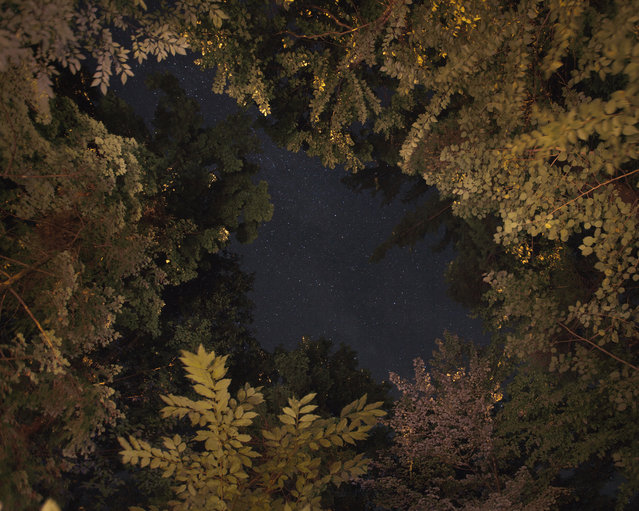
LSD

“After taking LSD. I lighting up a candle in the middle of the wood and during the 30 secondes of exposure, i make a meditation about the holism of nature surrounding me. Feeling the crystal vibration irradiating from the center of the Gaia mother earth. So in this picture i try to show you the magic, sacred metaphysical quality of the nature and new age bullshiting you”. – Benoit Paillé. (Photo by Benoit Paillé)
Details
27 Mar 2015 10:26:00
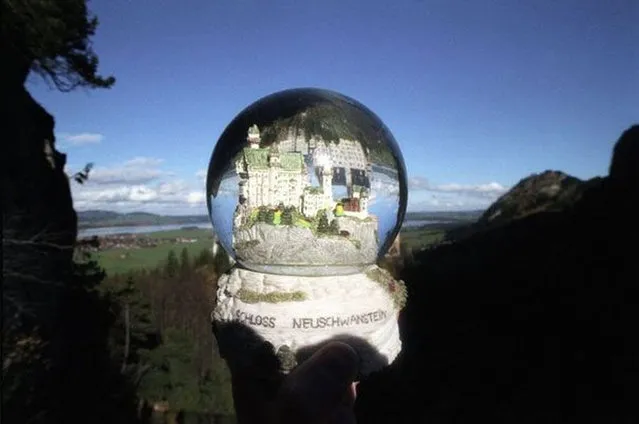
Optical Illusions By Michael Hughes

Michael Hughes creates cool optical illusions by placing cheap souvenirs in front of famous landmarks. Michael has discovered the technique back in 1998 when he held up a postcard he bought for his daughter on the tourist platform at the Lorelei cliffs next to the river Rhine. “I was amazed because it just seemed to fill a massive grey hole that was in the sky and it was the exact position the photographer had taken the picture from,” said Michael to Daily Mail.
Details
14 Dec 2013 11:35:00
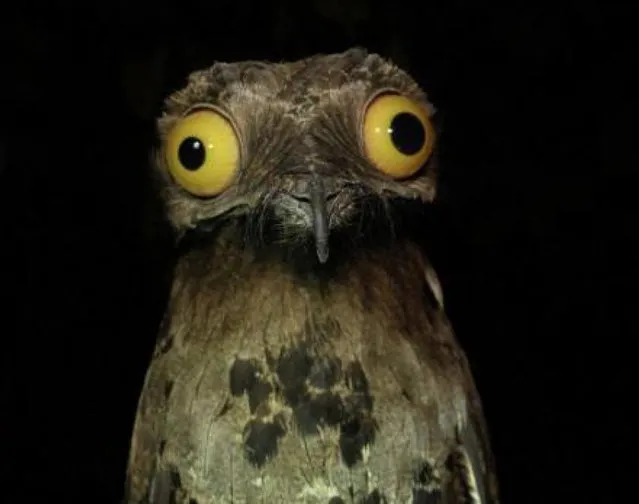
Nightjars And Pooto Bird

Potoos (family Nyctibiidae) are a group of near passerine birds related to the nightjars and frogmouths. They are sometimes called Poor-me-ones, after their haunting calls. There are seven species in one genus, Nyctibius, in tropical Central and South America.
These are nocturnal insectivores which lack the bristles around the mouth found in the true nightjars. They hunt from a perch like a shrike or flycatcher. During the day they perch upright on tree stumps, camouflaged to look like part of the stump. The single spotted egg is laid directly on the top of a stump.
Details
20 Jan 2014 14:34:00
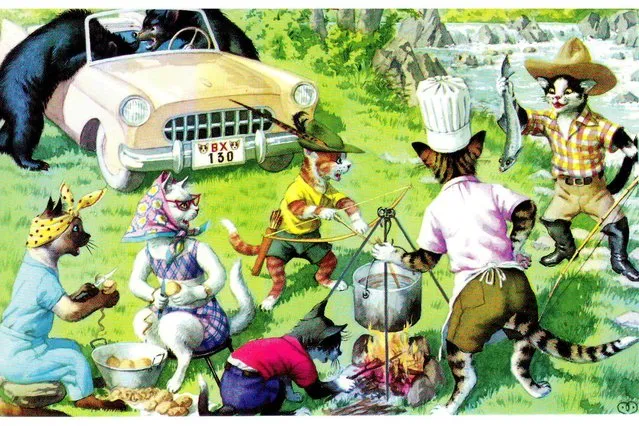
Dressed Cats By  Alfred Mainzer

From the 1940s through the 1960s, the Alfred Mainzer Company of Long Island City, NY published a series of linen and photochrome humorous cat postcards illustrated by Eugen Hartung (or Hurtong) (1897–1973), sometimes referred to as “Mainzer Cats”. These postcards normally illustrate settings that are filled with action, often with a minor disaster just about to occur. While the dressed cats were by far the most popular and most plentiful cards, Hartung also painted other dressed animals – primarily mice, dogs, and hedgehogs.
Details
31 Jan 2014 13:57:00