Loading...
Done
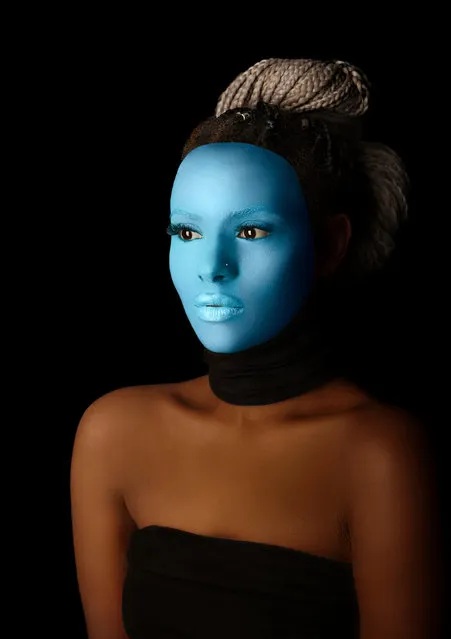
Brtukan. “Being a girl of colour in a society where the majority of the people are white, I have had to get used to all the different ways people approach me. From being asked what kind of rap music you listen to and how you wash your hair, to getting told, “you don’t sound black”, “you’re pretty for a black girl” or “you’re not that black so it’s OK”, as if being black is such a bad thing”. (Photo by Lisa Minogue/The Guardian)

As part of FLAIR Melbourne – a Flinders Lane art festival – Melbourne’s Lisa Minogue presents stylised photographic portraits of Australian women of colour, their faces painted vibrantly to accentuate their individuality and encourage the viewer to study each face more closely. Minogue asked each woman the same question: “What do the words “coloured girl” mean to you?”. (Photo by Lisa Minogue/The Guardian)
Details
17 Aug 2016 11:16:00
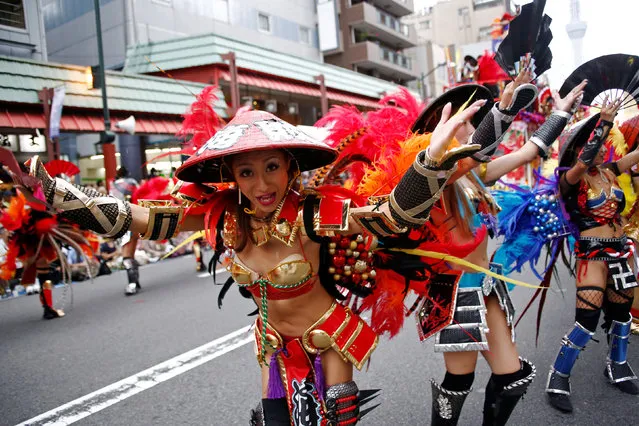
Samba dancers perform during the annual Asakusa Samba Carnival in Tokyo, Japan August 27, 2016. (Photo by Kim Kyung-Hoon/Reuters)

Samba dancers perform during the annual Asakusa Samba Carnival in Tokyo, Japan August 27, 2016. Asakusa is a district in Taitō, Tokyo. The neighborhood is famous for its annual Brazilian style carnival. There is a significant Brazilian presence in the local community and the Association of Samba Schools of Asakusa is based there. (Photo by Kim Kyung-Hoon/Reuters)
Details
28 Aug 2016 10:05:00
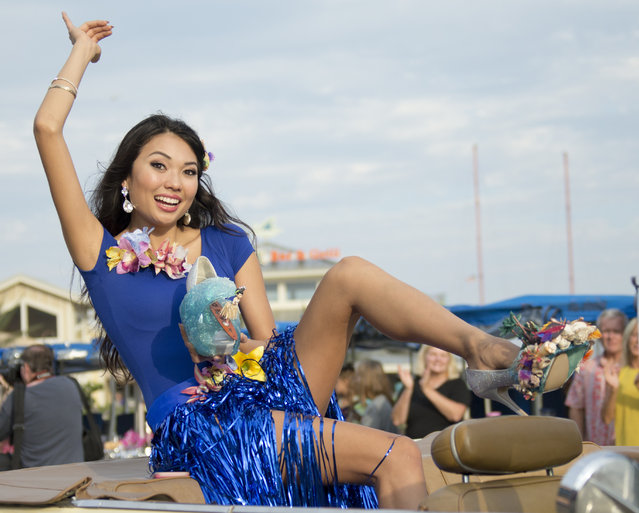
Miss Hawaii Allison Chu waves to the crowd as she holds one of her shoes during the 2017 Miss America pageant “Show Us Your Shoes” parade Saturday, September 10, 2016, in Atlantic City. (Photo by Chris Szagola/AP Photo)

Miss Hawaii Allison Chu waves to the crowd as she holds one of her shoes during the 2017 Miss America pageant “Show Us Your Shoes” parade Saturday, September 10, 2016, in Atlantic City. (Photo by Chris Szagola/AP Photo)
Details
11 Sep 2016 09:43:00
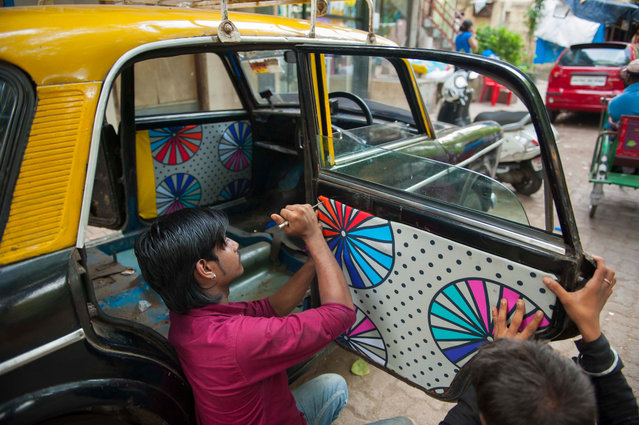
The designers are encouraged to speak to the driver they are designing for, develop a relationship and work from there: “One can’t tell the story of the other if they don’t know one-another”, they say. (Photo by Sandesh Parulkar/Taxi Fabric/The Guardian)

India’s classic Ambassador taxis and juddery auto rickshaws are iconic sights in the cities of the subcontinent. In Mumbai, one project has been using them as canvases for Indian graphic designers, giving them the opportunity to design new interiors for the vehicles. (Photo by Taxi Fabric/The Guardian)
Details
06 Feb 2016 12:50:00
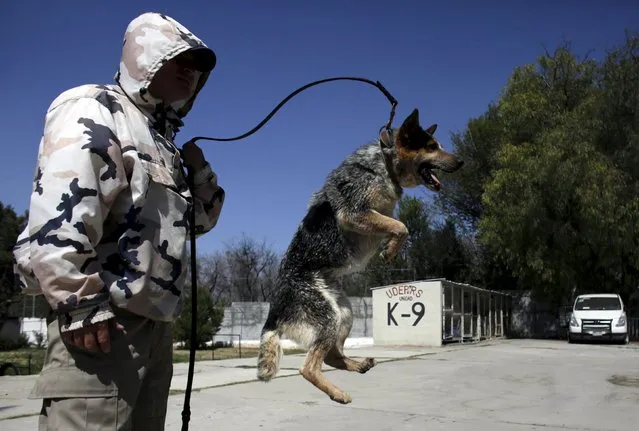
A dog trainer works with a previously abandoned dog at a police centre in Saltillo, Mexico March 4, 2016. (Photo by Daniel Becerril/Reuters)

A dog trainer works with a previously abandoned dog at a police centre in Saltillo, Mexico March 4, 2016. Stray dogs are adopted by the police from a municipal anti-rabies centre and then trained to help the police patrol the streets, and search for drugs, explosives and weapons. (Photo by Daniel Becerril/Reuters)
Details
07 Mar 2016 11:16:00
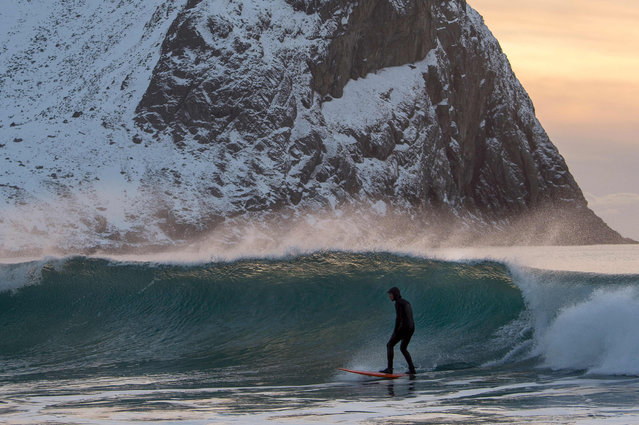
A surfer rides a wave at the snowy beach of Unstad, in Lofoten Island, Arctic Circle, on March 9, 2016. (Photo by Olivier Morin/AFP Photo)

A surfer rides a wave at the snowy beach of Unstad, in Lofoten Island, Arctic Circle, on March 9, 2016. Surfers from all over the world comes to Lofoten island to surf in extrem conditions. Ocean temperature is 6-7 °C, air temperature around 0°C in spite of a weather very unstable. (Photo by Olivier Morin/AFP Photo)
Details
15 Mar 2016 13:54:00
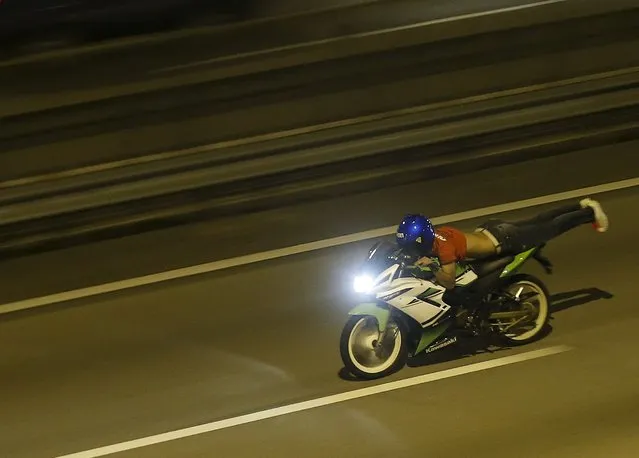
A motorcyclist performs the superman stunt on a highway in Kuala Lumpur, Malaysia, September 14, 2014. Crowds of small motorbikes ridden by racers – or “Mat Rempit”, as they are known in Malaysian slang – face off in impromptu races in the Malaysian capital after dark. The decades-old culture is widely frowned upon by largely conservative Malaysians, who fear its potential to encourage gambling, drug abuse, snatch thefts and sexual promiscuity. (Photo by Olivia Harris/Reuters)

A motorcyclist performs the superman stunt on a highway in Kuala Lumpur, Malaysia, September 14, 2014. Crowds of small motorbikes ridden by racers – or “Mat Rempit”, as they are known in Malaysian slang – face off in impromptu races in the Malaysian capital after dark. The decades-old culture is widely frowned upon by largely conservative Malaysians, who fear its potential to encourage gambling, drug abuse, snatch thefts and sexual promiscuity. (Photo by Olivia Harris/Reuters)
Details
09 Apr 2016 13:39:00
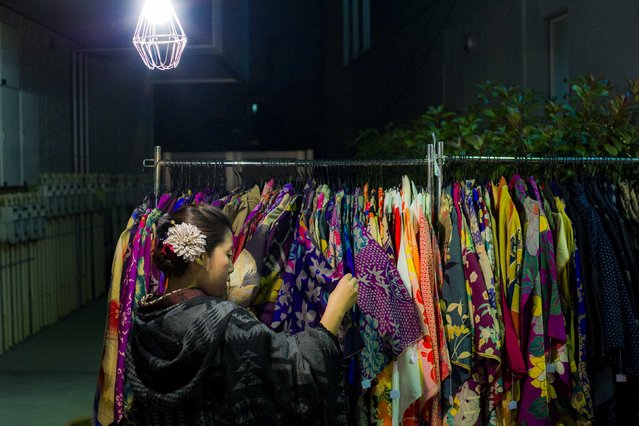
A woman browses through kimonos for sale at Boroichi flea market in Tokyo December 15, 2014. In the 16th century, Boroichi was a place for farmers to buy and sell rags, known as boro, for mending clothes and weaving sandals. Now in its 436th year, the original spirit lingers, with about 700 stands hawking fabric, used clothes and piles of rags. Others sell kitchen tools, pottery, seaweed and spices. (Photo by Thomas Peter/Reuters)

A woman browses through kimonos for sale at Boroichi flea market in Tokyo December 15, 2014. In the 16th century, Boroichi was a place for farmers to buy and sell rags, known as boro, for mending clothes and weaving sandals. Now in its 436th year, the original spirit lingers, with about 700 stands hawking fabric, used clothes and piles of rags. Others sell kitchen tools, pottery, seaweed and spices. About 200,000 people flock to the market, which is only open for four mid-winter days a year – two in December and two in January. (Photo by Thomas Peter/Reuters)
Details
19 Dec 2014 12:50:00