Loading...
Done
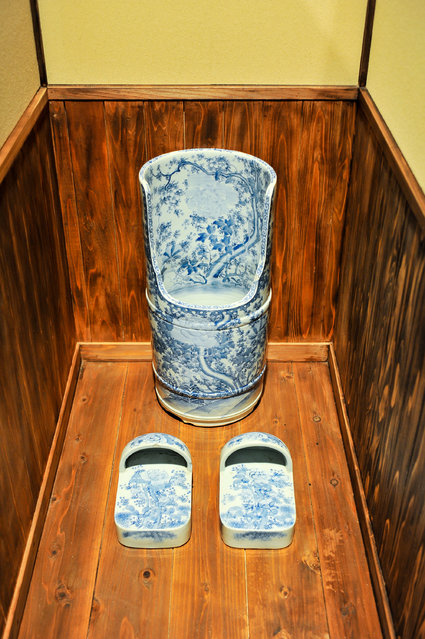
An old toilet is displayed during the “Toilet!? Human Waste and Earth's Future” exhibition at The National Museum of Emerging Science and Innovation – Miraikan on July 1, 2014 in Tokyo, Japan. The exhibition focuses on how the toilet has changed our daily lives and discovers what the most environment-friendly and ideal toilet is. (Photo by Keith Tsuji/Getty Images)

An old toilet is displayed during the “Toilet!? Human Waste and Earth's Future” exhibition at The National Museum of Emerging Science and Innovation – Miraikan on July 1, 2014 in Tokyo, Japan. The exhibition focuses on how the toilet has changed our daily lives and discovers what the most environment-friendly and ideal toilet is. (Photo by Keith Tsuji/Getty Images)
Details
03 Jul 2014 11:34:00
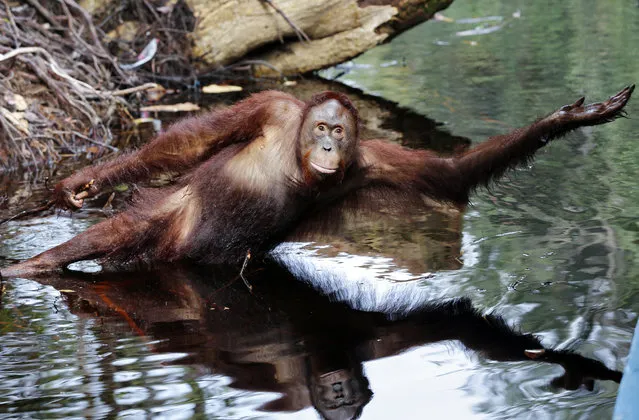
Male orangutan Percy is reflected in the Sekonyer River as he reaches over to try and touch a wooden klotok boat carrying crew and tourists, in Tanjung Puting National Park, in Kalimantan (Indonesian Borneo), Indonesia, September 4, 2013. Percy is a son, born and living in the wild, of a female orangutan named Princess, a freed former captive orangutan that anthropologist Dr Birute Galdikas rescued, rehabilitated and returned to the wild. (Photo by Barbara Walton/EPA)

Male orangutan Percy is reflected in the Sekonyer River as he reaches over to try and touch a wooden klotok boat carrying crew and tourists, in Tanjung Puting National Park, in Kalimantan (Indonesian Borneo), Indonesia, September 4, 2013. Percy is a son, born and living in the wild, of a female orangutan named Princess, a freed former captive orangutan that anthropologist Dr Birute Galdikas rescued, rehabilitated and returned to the wild. (Photo by Barbara Walton/EPA)
Details
03 Jul 2014 12:26:00
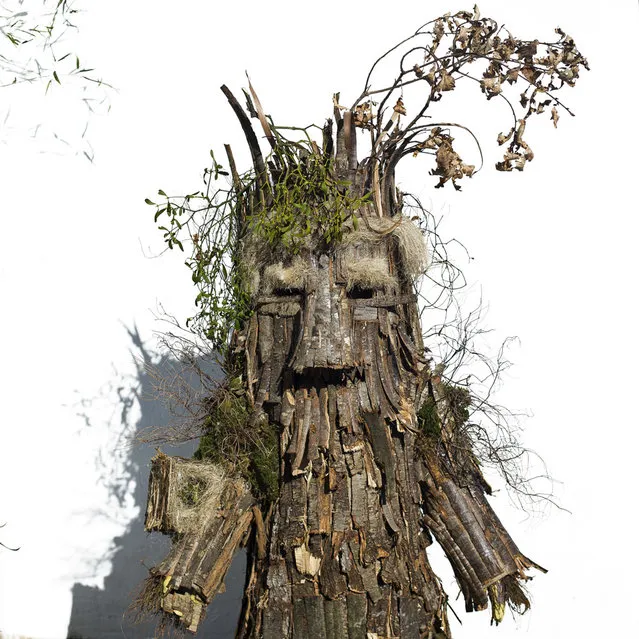
A man dressed as a  “Trapajon”, representing entities of nature, poses for a picture after taking part in the Vijanera Festival in Silio, northern Spain, Sunday, Jan. 6, 2013. The Vijanera masquerade, of pre-Roman origin, is the first carnival of the year in Europe symbolizing the triumph of good over evil and involving the participation of crowds of residents wearing different masks, animal skins and brightly colored clothing with its own complex function and symbolism and becoming the living example of the survival of archaic cults to nature. (Photo by Daniel Ochoa de Olza/AP Photo)

A man dressed as a “Trapajon”, representing entities of nature, poses for a picture after taking part in the Vijanera Festival in Silio, northern Spain, Sunday, Jan. 6, 2013. The Vijanera masquerade, of pre-Roman origin, is the first carnival of the year in Europe symbolizing the triumph of good over evil and involving the participation of crowds of residents wearing different masks, animal skins and brightly colored clothing with its own complex function and symbolism and becoming the living example of the survival of archaic cults to nature. (Photo by Daniel Ochoa de Olza/AP Photo)
Details
19 Jan 2013 13:01:00
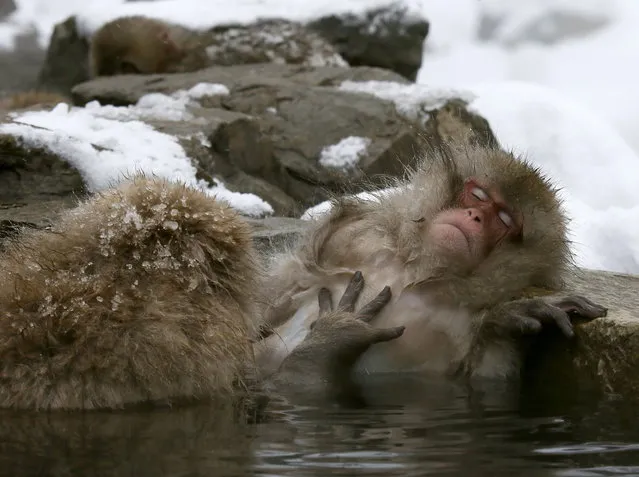
Japanese Macaque monkeys soak in the warmth of mountain hotsprings at Jigokudani Monkey Park, in Yamanouchi, central Japan, 19 January 2014. The Japanese Macaques (Macaca fuscata), also referred to as Snow Monkeys, live freely in this area that is covered by snow one third of the year. (Photo by Kimimasa Mayama/EPA)

Japanese Macaque monkeys soak in the warmth of mountain hotsprings at Jigokudani Monkey Park, in Yamanouchi, central Japan, 19 January 2014. The Japanese Macaques (Macaca fuscata), also referred to as Snow Monkeys, live freely in this area that is covered by snow one third of the year. Jigokudani is the only known place in the world where monkeys bathe in natural hot springs. As a habit, they come down from the mountains where they spend the night and bath during the day. (Photo by Kimimasa Mayama/EPA)
Details
21 Jan 2014 11:36:00
In this February 5, 2014 photo, Divaldo Aguiar, who plays the part of Pachencho, is carried in a mock coffin during the Burial of Pachencho celebration, through a cemetery in Santiago de Las Vegas, Cuba. Cuban villagers stage a mock funeral and burial of Pachencho, with a living man playing the part of Pachencho, in a boozy festival that has become an annual tradition in this small town near Havana, held each February 5 for the last 30 years. (Photo by Enric Marti/AP Photo)

In this February 5, 2014 photo, Divaldo Aguiar, who plays the part of Pachencho, is carried in a mock coffin during the Burial of Pachencho celebration, through a cemetery in Santiago de Las Vegas, Cuba. Cuban villagers stage a mock funeral and burial of Pachencho, with a living man playing the part of Pachencho, in a boozy festival that has become an annual tradition in this small town near Havana, held each February 5 for the last 30 years. (Photo by Enric Marti/AP Photo)
Details
10 Feb 2014 09:24:00
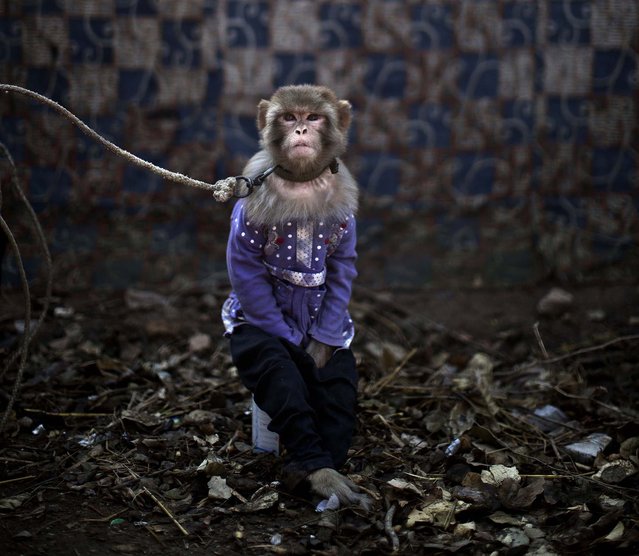
In this Tuesday, February 11, 2014, photo, a trained monkey, that makes a living for her Pakistani owner by performing to a crowd in public and private places, sits held by a leash, in Rawalpindi, Pakistan. For Pakistanis who raise and train the monkeys they are an important source of income in an impoverished country, and they form a strong bond with the animals. The monkeys are usually captured in the wild when they are babies and then trained. A trained monkey can fetch 20,000 to 30,000 rupees ($190 to $285). (Photo by Muhammed Muheisen/Associated Press)

In this Tuesday, February 11, 2014, photo, a trained monkey, that makes a living for her Pakistani owner by performing to a crowd in public and private places, sits held by a leash, in Rawalpindi, Pakistan. For Pakistanis who raise and train the monkeys they are an important source of income in an impoverished country, and they form a strong bond with the animals. The monkeys are usually captured in the wild when they are babies and then trained. A trained monkey can fetch 20,000 to 30,000 rupees ($190 to $285). (Photo by Muhammed Muheisen/Associated Press)
Details
23 Feb 2014 09:50:00
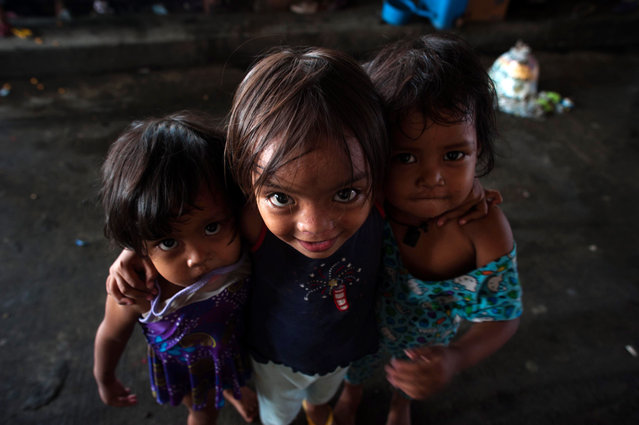
Children beg for alms in a street on August 11, 2014 in Manila, Philippines. The Philippines has one of the fastest growing populations in Southeast Asia with around 100 million people. (Photo by Dondi Tawatao/Getty Images)

Children beg for alms in a street on August 11, 2014 in Manila, Philippines. The Philippines has one of the fastest growing populations in Southeast Asia with around 100 million people. At least 12 million people live in the capital city of Manila alone, making it one of the most densely populated and largest cities in the world. Lack of space and economic opportunities has pushed around four million people to live informally along waterways, bridges and even cemeteries further straining the already weak infrastructure and straining the resources of the city. (Photo by Dondi Tawatao/Getty Images)
Details
12 Aug 2014 12:21:00
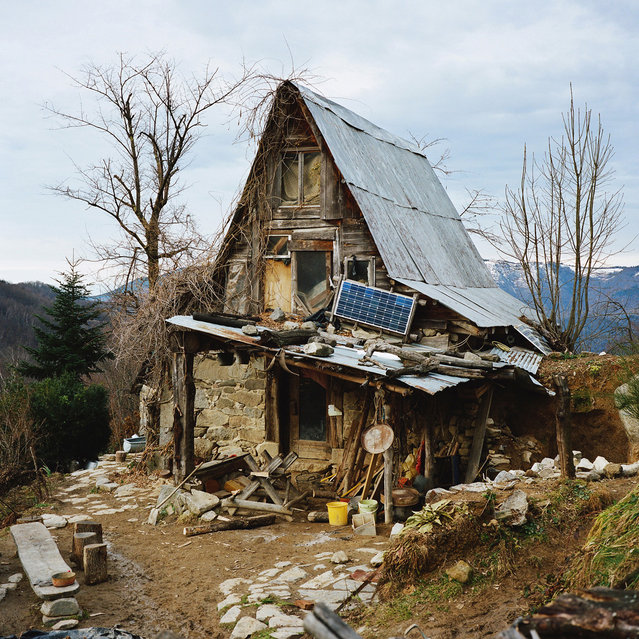
This property in the French Pyrenees is owned by a German man, who moved with his family here 25 years ago. He has since renovated the shack to be a completely self-sufficient house. There are no electrical appliances, but the solar panel powers small lights in the house. (Photo by Antoine Bruy)

Back in 2010, French photographer Antoine Bruy began hitchhiking around Europe without any fixed route. Along his travels, he met people who had entirely abandoned city life in favour of an isolated country existence they found more fulfilling. Bruy began seeking out people who lived off-the-grid. After three years on the road, staying in makeshift houses and on community farms, he has released Scrublands, a documentation of the lifestyle. While each living situation is different, Bruy found that all the people he met shared a common desire to escape the rat race and achieve a quieter life in harmony with nature. (Photo by Antoine Bruy)
Details
13 Aug 2014 09:45:00